Hi everyone, Shalom Aleichem!
Good morning GanSist everyone! 
Whenever we discuss cancer, one of the questions that often arises is why some patients survive longer than other patients, even though the diagnosis is almost the same. The answer is not as simple as the stage of the disease or the type of treatment received. Modern medical science shows that many factors determine the course of cancer, starting from age, general health conditions, genetic characteristics of the tumor, to biological factors originating from the patient’s own body.
In recent years, scientists have begun to pay attention to biological differences between men and women in the development of various diseases, including brain cancer. A number of studies have found that male patients with several types of brain cancer tend to have a lower life expectancy than female patients. This finding then raises an interesting and yet easily misinterpreted question: is it true that male brain cancer patients have a harder time recovering?
The short answer is not necessarily. There is scientific evidence that shows there are biological factors that can influence the course of the disease in men, one of which is related to the SRY gene. However, these findings do not mean that all male patients necessarily have a poor prognosis or that all female patients necessarily recover more easily. Research actually shows that this condition is much more complex than simply comparing gender.
Quote:
Getting to Know Very Complex Brain Cancer
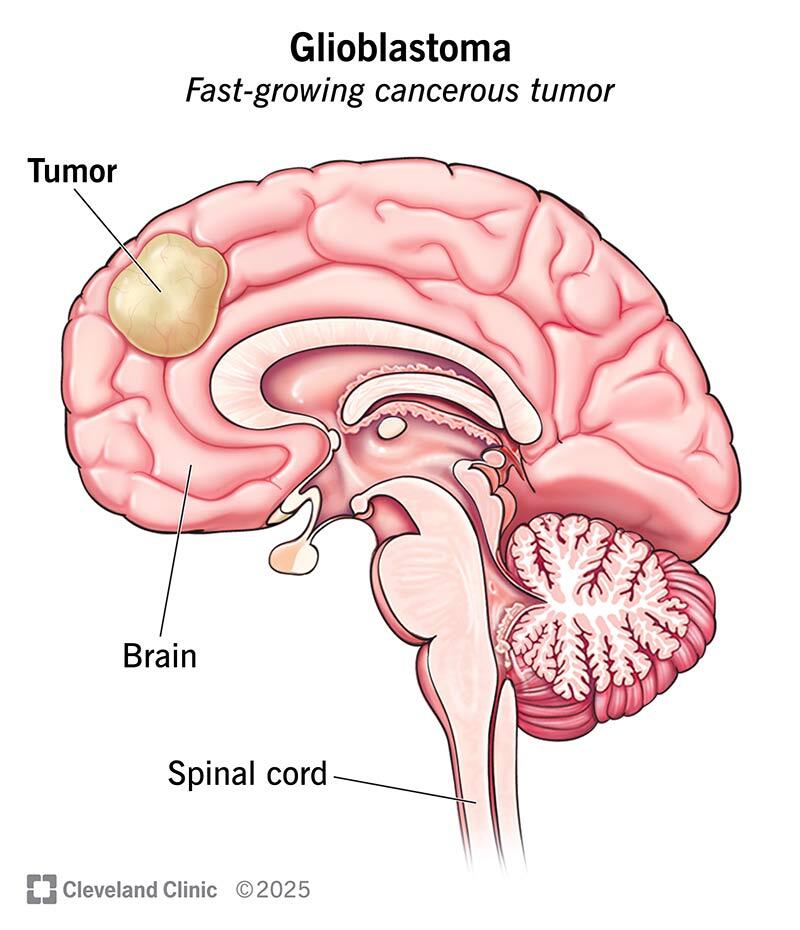
Brain cancer is not a single type of disease. This term includes various types of malignant tumors that grow in brain tissue and the central nervous system. One of the most frequent concerns is glioblastoma, which is a malignant brain tumor that grows very quickly.
Glioblastoma is known as one of the most aggressive cancers. The cells are able to infiltrate normal brain tissue, making it difficult to completely remove them through surgery. Even after surgery, patients generally still need radiotherapy and chemotherapy to control the growth of remaining cancer cells.
However, each patient’s response to therapy varies greatly. There are patients who are able to survive for years, while others experience relapses in a relatively short time. It is this variation that has prompted researchers to look for biological factors that might influence the course of the disease.
Quote:
Gender Differences Begin to Attract Researcher’s Attention
For many years, cancer research has focused more on the characteristics of the tumor. However, it was recently discovered that the patient’s own body also has an influence that is no less important.
Several epidemiological studies show that glioblastoma occurs more often in men than women. Apart from being diagnosed more often, the survival rate for male patients in several studies also tends to be lower.
This phenomenon raises interesting scientific questions. Do hormones play a role? Do male and female immune systems work differently? Or are there certain genes that only men have and that influence the behavior of cancer cells? These various possibilities are still being researched today.
Quote:
What is the SRY Gene?
One of the genes that has received a lot of attention is SRY (Sex-determining Region Y). This gene is on the Y chromosome which only males have. Its main role is to regulate the formation of the penis and testicles during embryonic development. Without this gene, the development of male reproductive organs will not occur as it should.
However, modern research shows that the function of the SRY gene does not stop with the process of sex formation. This gene was also found to be active in several other tissues, including brain tissue, and is thought to regulate the activity of various other genes that influence cell growth.
This discovery made scientists ask whether the activity of the SRY gene is also linked to the development of brain cancer.
Quote:
How Can the SRY Gene Play a Role?
Experimental research shows that the protein produced by the SRY gene can influence the expression of a number of genes related to cell division, cell migration, and mechanisms that regulate tissue growth.
In the context of glioblastoma, several studies have found that SRY activity can increase the expression of certain proteins that help cancer cells survive and grow more quickly. In addition, SRY is also thought to interact with various molecular pathways that have long been known to play a role in cancer development.
In other words, SRY is not a direct cause of brain cancer, but may be one of the factors that can worsen the biological behavior of cancer cells in some male patients.
This is still being studied because the relationship between genes in cancer is very complicated. A gene almost never works alone. Its activity is influenced by hundreds or even thousands of other genes that interact with each other.
Quote:
Why Shouldn’t These Findings Be Misinterpreted?
Here comes the most important part. Some people might immediately conclude that if the SRY gene can worsen brain cancer, it means that all male patients must have a lower chance of survival than women. This conclusion is incorrect.
First, each tumor has different molecular characteristics. Even two male patients diagnosed with glioblastoma can have very different tumor genetic profiles and therefore respond differently to therapy.
Second, cancer prognosis is influenced by many other factors, including the patient’s age; tumor size and location; successful operation to remove the tumor; certain gene mutations in cancer cells; MGMT gene methylation status; IDH mutation; overall health condition; response to radiotherapy and chemotherapy; and access to health services.
All of these factors can have a much greater influence than just one gene.
Therefore, the presence of the SRY gene should not be considered a “verdict” that male patients will definitely experience a worse course of the disease.
Quote:
Why don’t female patients necessarily recover more easily?
Another misconception that often arises is assuming that women automatically have a better prognosis. In fact, this is not the case. Many female patients continue to have very aggressive glioblastoma. On the other hand, there were also male patients who were able to survive much longer than initially estimated.
Women do not have a Y chromosome, so they do not have the SRY gene. However, they also have various other biological factors that can influence the development of cancer, both positively and negatively.
In addition, the nature of cancer is greatly influenced by mutations that occur in the tumor cells themselves. This mutation can appear in anyone regardless of gender.
Thus, gender is only one small part of the patient’s overall biological picture.
Quote:
The Role of the Immune System
Apart from genetic factors, the immune system is also thought to explain why there are differences between men and women.
In general, various studies show that women’s immune systems tend to respond more strongly to infections and certain types of cancer. This is partly influenced by the hormone estrogen as well as differences in gene expression on the X chromosome.
However, a more active immune system also has other consequences, namely an increased risk of autoimmune diseases in women.
In brain cancer, the interaction between the immune system and cancer cells is still a rapidly developing area of research. Scientists hope that a better understanding of these biological differences can lead to more effective therapies in the future.
Quote:
Towards More Precision Medicine
Knowledge of biological factors such as the SRY gene is not aimed at labeling men as being “weaker” against brain cancer. Rather, this research is part of an effort towards precision medicinenamely treatment tailored to the biological characteristics of each patient.
Nowadays, doctors no longer just look at the location of the tumor. Various molecular tests are starting to be used to determine the genetic characteristics of cancer so that therapy can be chosen more precisely.
If one day it is proven that the molecular pathway influenced by SRY really plays an important role in the development of glioblastoma, it is not impossible that drugs will be developed that specifically target this pathway. Thus, knowledge about biological differences can actually open up new therapeutic opportunities.
Quote:
Research Still Ongoing
Even though the existing research results are quite promising, scientists themselves are still careful in drawing conclusions.
Most research on SRY is still at the laboratory stage, cell culture, animal models, or molecular analysis of tumor tissue. Large-scale clinical research is still needed to determine how much influence this gene has on the course of the disease in humans.
Moreover, the link between the SRY gene and brain cancer is likely only one small part of a much more complex network of gene regulation.
Therefore, the medical world has not used the presence of the SRY gene as the sole basis for determining a patient’s prognosis.
Quote:
CONCLUSION
Scientific research does show that male patients with some types of brain cancer, especially glioblastoma, often have a slightly less favorable prognosis than female patients. One of the factors being studied is the presence of the SRY gene on the Y chromosome, which is thought to influence the activity of various molecular pathways related to cancer cell growth.
However, these findings do not mean that all male patients necessarily have more difficulty recovering. On the other hand, this does not mean that all female patients automatically have a better chance of recovery.
The course of brain cancer is determined by a combination of various factors, ranging from the genetic characteristics of the tumor, the patient’s age, health condition, the success of therapy, to each person’s biological response. Therefore, gender is just one variable among many other interacting factors.
It is hoped that the increasing development of research on genetics and molecular biology will produce a more personalized therapeutic approach, so that each patient receives treatment that best suits the characteristics of their disease, without relying on simple assumptions based solely on gender.
Quote:
SOURCE
Ceccarelli, M. et al. (2016). Molecular profiling reveals biologically discrete subsets and pathways of progression in diffuse glioma. Cell, 164(3)550–563.
Clocchiatti, A., Cora, E., Zhang, Y., & Dotto, G. P. (2016). Sexual dimorphism in cancer. Nature Reviews Cancer, 16(5)330–339.
Ostrom, Q. T., Cioffi, G., Waite, K., Kruchko, C., & Barnholtz-Sloan, J. S. (2021). CBTRUS Statistical Report: Primary brain and other central nervous system tumors diagnosed in the United States in 2014–2018. Neuro-Oncology, 23(Suppl. 3)iii1–iii105.
Sun, T., Warrington, N. M., Rubin, J. B., & others. (2020). Why does Jack, and not Jill, break his crown? Sex disparity in brain tumors. Biology of Sex Differences, 111–13.
The Cancer Genome Atlas Research Network. (2008). Comprehensive genomic characterization defines human glioblastoma genes and core pathways. Nature, 455(7216)1061–1068.
Wang, Z. et al. (2019). Molecular and clinical characterization of glioma through integrative genomic analysis. Acta Neuropathologica, 138(6)941–956.