 Image Source:Artificial Intelligence
Hi everyone, Shalom Aleichem!
Good evening GanSist everyone! 
In the previous Superwoman Series, we discussed various basics that help women become stronger, starting from building independence, controlling consumer behavior, finding self-worth, choosing productive hobbies, recognizing the characteristics of toxic men, to managing the influence of passive entertainment on the way of thinking.
Now, we will discuss a feeling that almost everyone has probably experienced, namely the feeling of emptiness.
Feeling empty doesn’t always mean someone is experiencing a mental health disorder. Sometimes, these feelings arise when routines feel monotonous, life goals become blurred, social relationships feel less meaningful, or someone lives under pressure for too long without giving themselves space to rest and grow.
However, if the feeling of emptiness persists continuously, seriously interferes with daily activities, or is accompanied by symptoms such as loss of interest in almost everything, hopelessness, or the desire to harm oneself, it is important to consult a psychiatrist or psychologist. Professional help is an important part of maintaining personal health.
For many people, there are a variety of healthy habits that can help reduce feelings of emptiness and restore a sense of meaning to life. As part of Superwoman Seriesthe 118th, let’s discuss 5 steps that can be a starting point.
Quote:
1. Take about 30 minutes every day to pursue the satisfaction built through the process
When feeling empty, many people look for escapes that provide quick pleasure, such as constantly scrolling social media, watching non-stop, or shopping impulsively. These activities can provide a momentary feeling of pleasure, but often do not provide long-lasting satisfaction.
Instead, try to set aside about 30 minutes each day to do activities that require effort and provide a sense of accomplishment. For example, learning English, reading books, painting, exercising, writing, gardening, or learning a new skill.
Activities like this provide satisfaction that grows through the process. When you see your abilities improving little by little, a sense of pride emerges that is more stable than the fleeting pleasure of instant entertainment.
In psychology, activities that match interests and involve a balanced challenge are often associated with experiences flowwhich is a condition when a person is so immersed in the activity they are doing that they feel more focused, calmer and more meaningful.
The feeling of emptiness often diminishes when a person again has a real goal to work towards each day.
Quote:
2. Don’t let negative thoughts dominate your entire mind
Everyone has had negative thoughts. Problems arise when these thoughts continue to play endlessly until they cover up all the good things that they actually still have.
One simple way supported by the positive psychology approach is to train attention to things that are successful. When negative thoughts start to dominate, try writing down three accomplishments for the day. These achievements don’t have to be big.
For example, today Sista successfully completed the Mathematics practice questions. Today Sista was able to do 30 push-ups. Today Sista tried to cook a new dish. Today Sista managed to refrain from buying things she doesn’t need. Today Sista contacted her parents or friends. This habit helps the brain realize that life is not only about shortcomings or disappointments.
Being grateful for what you have can also be part of an important practice for developing a more balanced perspective.
Quote:
3. Focus on things that can be changed
One of the causes of mental fatigue is spending too much energy thinking about things that are out of your control. For example, a person constantly thinks about hair texture, nose shape, skin color, or the past.
In fact, many things are much more likely to be developed. Sista can increase intelligence through learning. You can make your circulatory system healthy through exercise. Sista can improve leadership skills. Sista can practice empathy, discipline and wisdom. You can also take care of your appearance through healthy methods, such as maintaining personal hygiene, dressing neatly, taking care of your skin as needed, or maintaining a healthy lifestyle.
This principle is in line with Stoic thinking which distinguishes between things that are within our control and things that are beyond our control. The more attention given to something that can truly be changed, the greater the opportunity to experience progress in life.
Quote:
4. Fight thoughts that keep spinning with physical activity
When someone continues to think about things that make them sad or empty, the body often becomes passive. In fact, physical activity is one way that has been proven to help improve mood.
Brisk walking, running, cycling, rhythmic gymnastics, swimming, or strength training can help reduce tension and increase energy.
Exercise not only benefits circulatory health, but also helps regulate various biological processes related to mood.
In addition, when the body moves, attention shifts from repetitive thoughts to the activity at hand. This helps break the cycle ruminationnamely the habit of thinking about problems repeatedly without producing a solution.
What is important is not the hardest exercise, but rather exercise that is done regularly.
Quote:
5. Learn religion through real actions and gratitude
For women, a life of faith is a very important source of meaning. Studying religion is not only about controlling attitudes, but also about bringing these values to life in daily actions. One of them is practicing gratitude. Gratitude does not mean ignoring the difficulties you are facing. On the other hand, gratitude helps a person see that amidst trials, there is still much to appreciate.
Seeing the fact that many people face more serious problems can foster empathy and reduce the tendency to focus only on one’s own suffering.
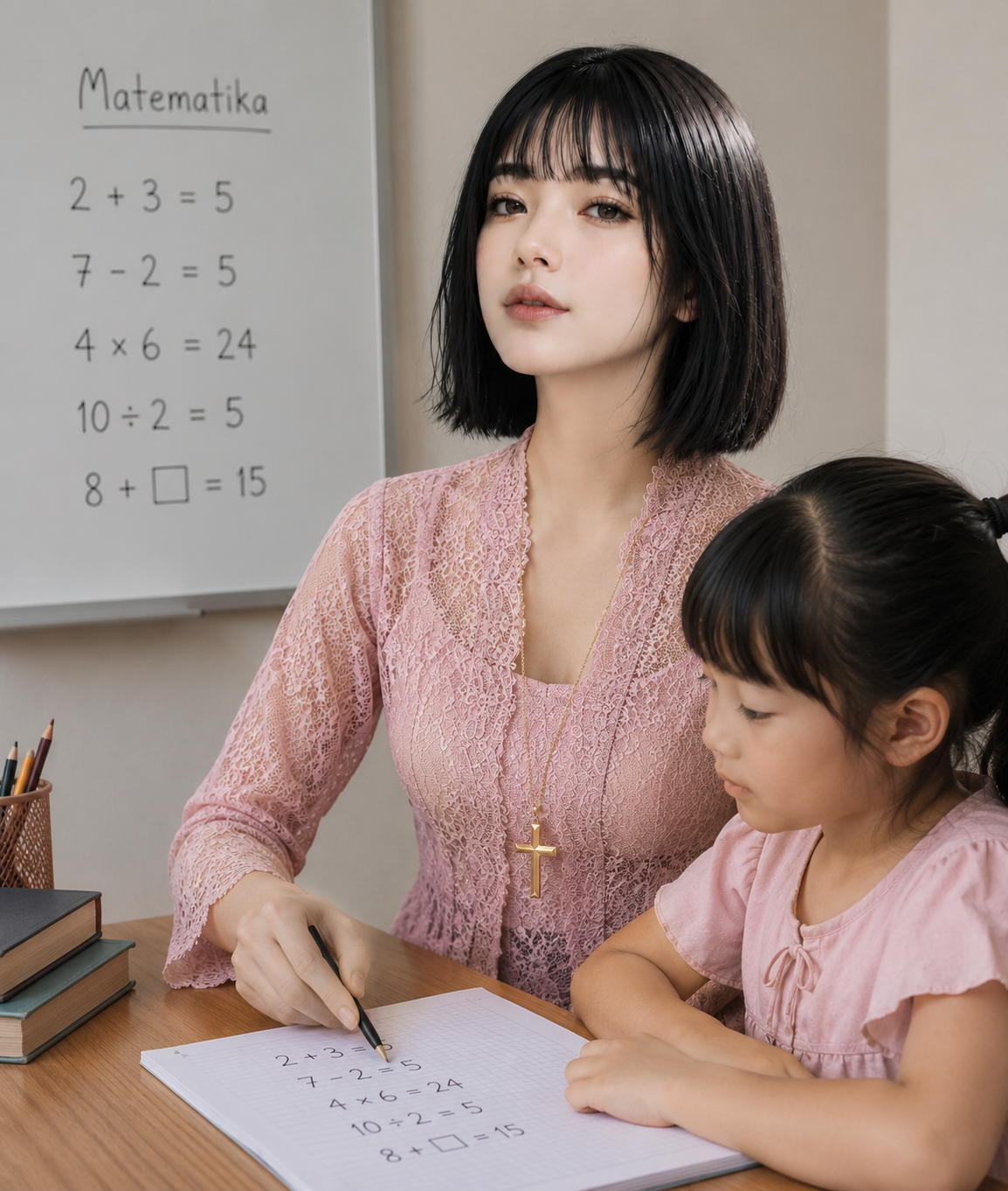
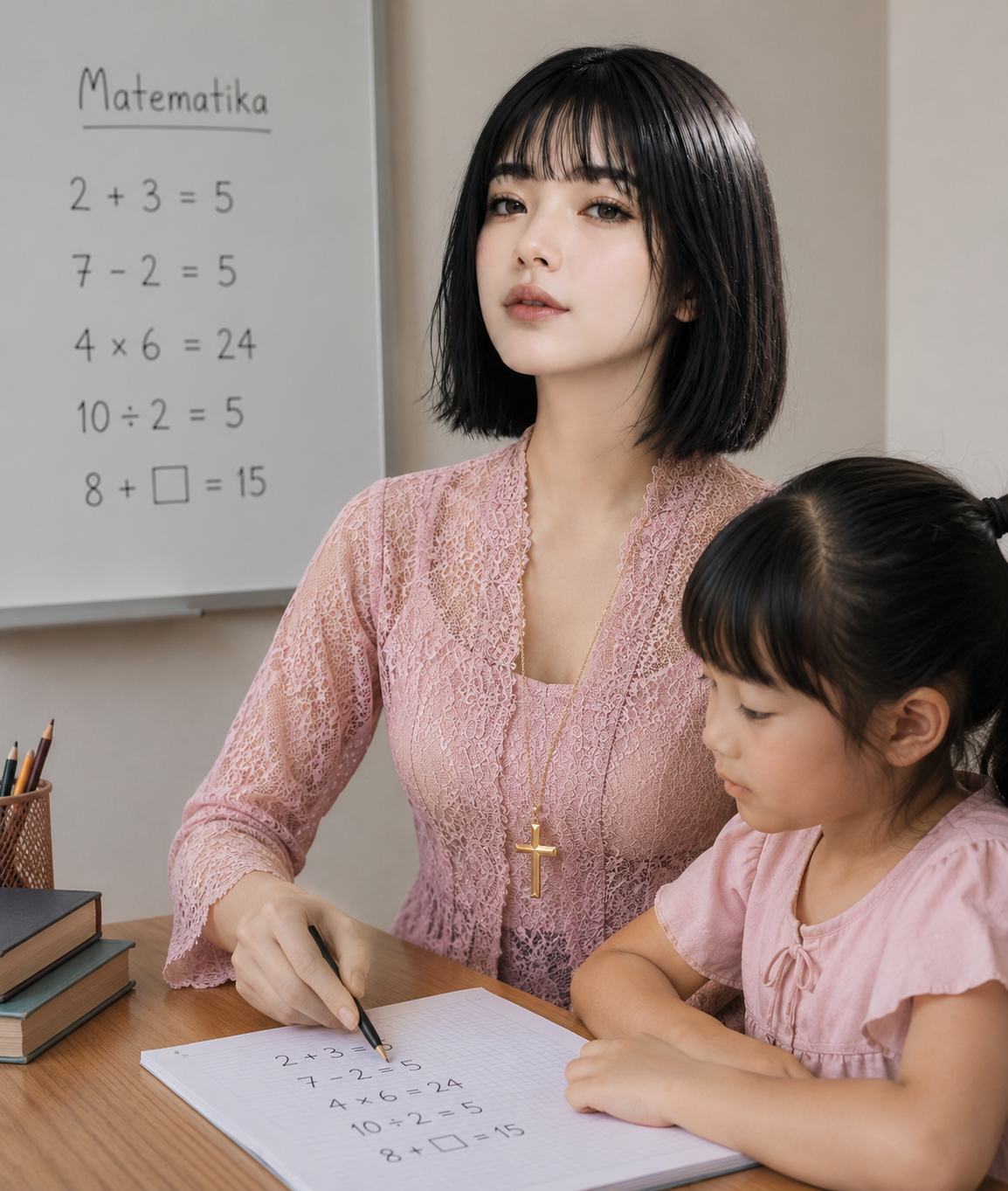
Gratitude can also be realized through real actions, such as teaching Mathematics to orphanage children (as in the illustration)share time with friends who are affected by disaster, become a volunteer, or provide attention to family.
Various studies show that prosocial behavior and gratitude are associated with increased psychological well-being and a sense of meaning in life.
Thus, religious life is not only a belief in the heart, but also a source of action that brings benefit to others.
Quote:
Feeling empty is not a sign of weakness
It is important to understand that experiencing feelings of emptiness every once in a while does not mean a person is weak. These feelings can be a signal that your body and mind need attention, rest, a new direction, or a more meaningful relationship.
What needs to be avoided is making momentary escape the only way to deal with it. Instead, building healthy habits little by little will provide a stronger foundation for psychological well-being in the long term.
If these efforts have not helped and the feeling of emptiness continues or gets worse, don’t hesitate to seek professional help. Asking for help is a form of responsibility for one’s health, not a sign of weakness.
Quote:
CLOSURE
Being Superwoman doesn’t mean always feeling happy all the time. Being a Superwoman means having the courage to face difficult times in a healthy and wise way.
The feeling of emptiness will not disappear with just a moment of entertainment or an escape that provides instant gratification. Instead, these feelings slowly diminish as life returns to being filled with purpose, learning, physical activity, meaningful relationships, gratitude, and actions that benefit others.
Through Superwoman Series #118, we are reminded that true strength is born from daily habits. Taking time to learn, develop yourself, move your body, manage your mind, and live spiritual values are small steps that, if done consistently, can help build a more meaningful life.
In the end, a strong woman is not a woman who never feels empty. A strong woman is a woman who is able to use feelings of emptiness as a reminder to develop herself again, little by little, until she rediscovers enthusiasm and meaning in her life’s journey.
Quote:
SOURCE
Y*ut*be’s account is one hundred percent male (but adapted to a female style).
American Psychological Association. (2023). Building your resilience. https://www.apa.org/topics/resilience
Csikszentmihalyi, M. (1990). Flow: The psychology of optimal experience. Harper & Row.
Emmons, R. A., & McCullough, M. E. (2003). Counting blessings versus burdens: An experimental investigation of gratitude and subjective well-being in daily life. Journal of Personality and Social Psychology, 84(2)377–389.
Gross, J. J. (2015). Emotion regulation: Current status and future prospects. Psychological Inquiry, 26(1)1–26.
Seligman, M. E. P. (2011). Flourish. Free Press.
World Health Organization. (2022). Physical activity. https://www.who.int/news-room/fact-s…sical-activity
German, R. M. (2018). Character strengths interventions: A field guide for practitioners. Hogrefe Publishing.
@vale79791@strangerfdotnet @jokingwet