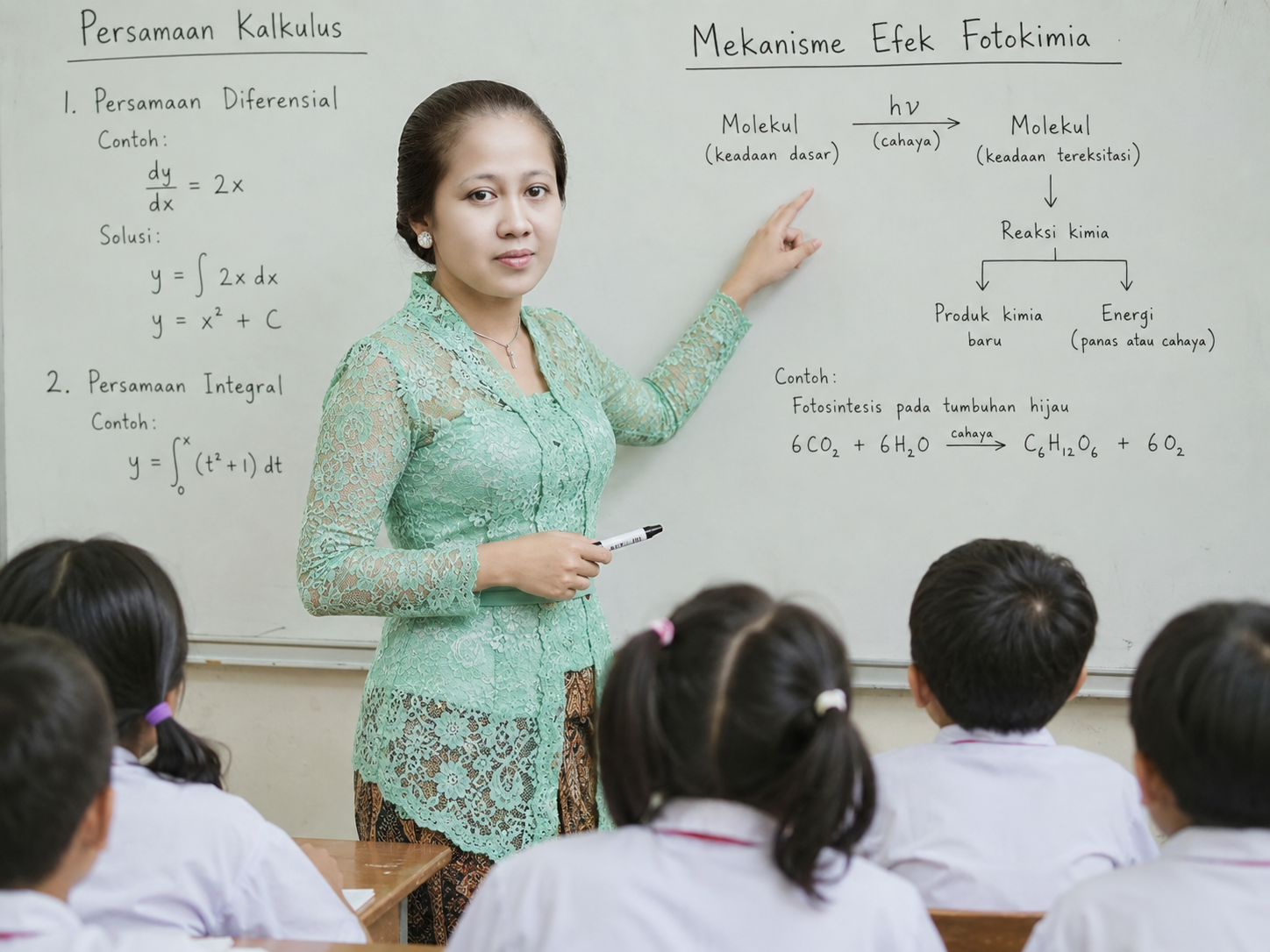
 Image Source:Artificial Intelligence
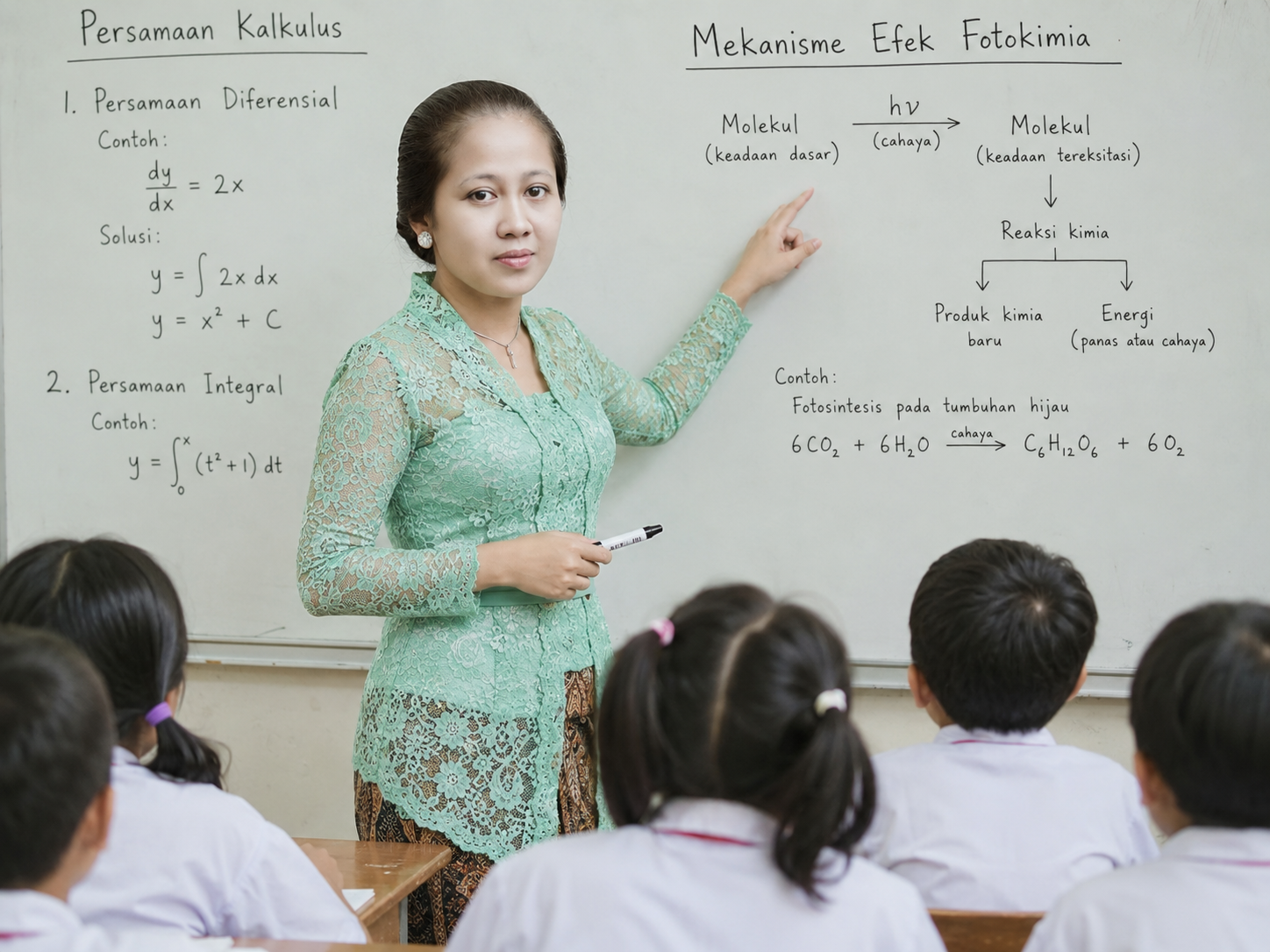
 (illustration of RA Kartini as a science teacher)
Hi everyone, Shalom Aleichem!
Good afternoon GanSist everyone!
From Superwoman Series127th, being a strong woman is not just about being able to face life’s challenges for yourself. Strength is also reflected in the ability to provide benefits to other people, especially those who are facing much tougher trials. One group that needs this support is children with cancer.
Every year, millions of children around the world undergo long, tiring and challenging cancer treatments. They have to undergo chemotherapy, radiotherapy, surgery, or other supporting therapy. Behind these various medical procedures, there is a psychological struggle that is no less difficult. Children lose the opportunity to play freely, often have to be in the hospital, and some even experience hair loss due to the side effects of chemotherapy. This condition can affect their self-confidence, enthusiasm for learning, and quality of life.
Research in the field of cancer psychology shows that social support, education and positive activities play an important role in helping children and their families face the treatment process.
Therefore, helping children with cancer does not always have to be done by health workers. The general public, including women who have empathy, can also take part through various concrete actions.
Here are 5 simple things you can do.
Quote:
1. Donate Blood
One of the most tangible assistance is to become a regular blood donor if you meet health requirements. Many children with cancer, especially leukemia, experience a decrease in the number of red blood cells and platelets due to the disease or the effects of chemotherapy. Therefore, blood transfusions often become an important part of their therapy. Without adequate blood availability, the treatment process can be delayed or become less than optimal.
Donating blood may only take a short time, but the benefits can be huge for the recipient. In fact, one bag of blood can help save more than one patient who needs a transfusion.
However, blood donation must be carried out according to medical regulations. Not everyone can be a donor all the time. Age, hemoglobin level, medication status, body weight, and time interval since the previous donation must meet the requirements so that this activity remains safe for both the donor and recipient.
In the context of the Superwoman Series, blood donation shows that a woman’s strength is not only seen from her appearance, but also from her willingness to share parts of her body that other people really need.
Quote:
2. Donate Hair
Hair loss is one of the most easily visible side effects of chemotherapy. Although hair loss does not directly affect the success of treatment, changes in appearance can affect a child’s self-confidence.
This is where hair donation takes on a huge significance. Real hair can be used to make wigs for patients experiencing hair loss due to cancer therapy.
The interesting thing is that the value of hair donation does not depend at all on a person’s hair type. Straight and curly hair is equally valuable. Black, brown or blonde hair also has benefits if it meets the length requirements and conditions set by the organization receiving the donation.
In fact, curly or straight hair does not make you more beautiful. Blonde or black hair also does not determine a person’s beauty. What makes Sista more beautiful is her enthusiasm for sharing and the courage to sacrifice a part of herself to help a child who is battling a serious illness.
Of course, hair donation needs to be done through an institution that accepts and processes hair into medical wigs so that the benefits really reach the patients who need it.
Quote:
3. Teaching Entrepreneurship Science
At first glance, entrepreneurship may sound like adult material. In fact, the form of learning can be adjusted to their age. For example, children can be taught to make simple crafts, calculate profits from their work, understand the concept of saving, recognize the value of hard work, or learn to sell the results of their creativity to charity activities.
Activities like this provide several benefits at once. First, children gain a pleasant learning experience. Second, they have the opportunity to develop creativity and self-confidence. Third, children learn that they can still be independent even though they are undergoing treatment.
Psychosocial is an important aspect of childhood cancer care. Activities that encourage social interaction, problem-solving skills, and self-confidence can help the psychological adjustment process during the therapy period.
What you need to remember is that the main goal is not to produce small businesspeople, but to provide hope that their independent development will remain guaranteed.
Quote:
4. Raise funds by selling goods
Not everyone has large funds to donate. However, almost everyone can help collect aid through simple activities.
One of them is selling merchandise, handicrafts, used books that are still in good condition, ornamental plants, clothes that are suitable for use, or various other creative items. The sales profits are then distributed to foundations or hospitals that treat children with cancer.
This fundraising model has several advantages. First, people can participate even though their economic abilities are different. Second, this activity increases social awareness because buyers know that the money paid has a humanitarian purpose. Third, this activity can involve school communities, campuses, workplaces and community organizations, so that the impact is wider.
The most important thing is to maintain transparency. Funds collected should be channeled through official institutions and accompanied by clear reports so that public trust is maintained.
A woman’s strength is not always measured by how much money she has, but rather by her ability to move others to do good.
Quote:
5. Teach Science or Art
Like the illustration in this threadchildren with cancer still have the right to learn, imagine and grow independently. Unfortunately, the treatment process often requires them to leave school for quite a long time. Therefore, additional learning activities become very beneficial.
Sista can teach various simple things according to their respective talents. For those who like science, learning can take the form of simple experiments using household materials, an introduction to astronomy, biology, mathematics, or interesting natural phenomena. For those who like art, activities can include drawing, choreography, making origami, playing music, writing poetry, or making handicrafts.
This kind of activity not only increases knowledge, but also helps children divert attention from fear, pain or boredom while undergoing therapy. Various studies show that psychosocial support and creative activities can improve the quality of life and help children’s adaptation process to the illness they are facing.
What needs to be prioritized is not perfection of competence, but rather a learning atmosphere that is fun, full of enthusiasm, and makes children feel respected as human beings who have the right to be independent and develop.
Quote:
CLOSURE
Superwoman is not a female figure who has powers like the heroine in the film. In real life, Superwoman is a woman who is able to use her abilities, time, energy and care to make other people’s lives a little better.
Donating blood may only take a few minutes. Donating hair may only be done once every few years. Teaching entrepreneurship, fundraising, or teaching science and arts may seem simple. However, for a child who is battling cancer, these actions can be a very meaningful source of encouragement. They not only need medicine, but they also need hope, attention, opportunities to learn, and confidence that there are still many people who care about their struggle.
Perhaps, we cannot cure their disease directly. However, we can help make their journey a little easier. And often, big changes start from seemingly simple concerns.
Quote:
SOURCE
Askins, M. A., & Moore, B. D. (2008). Psychosocial support of the pediatric cancer patient: Lessons learned over the past 50 years. Current Oncology Reports, 10(6)469-476.
Steele, A. C., Mullins, L. L., Mullins, A. J., & Muriel, A. C. (2015). Psychosocial interventions and therapeutic support as a standard of care in pediatric oncology. Pediatric Blood & Cancer, 62(S5)S585-S618.
Suzuki, L. K., & Kato, P. M. (2003). Psychosocial support for patients in pediatric oncology: The influences of parents, schools, peers, and technology. Journal of Pediatric Oncology Nursing, 20(4)159-174.
Wiener, L., Kazak, A. E., Noll, R. B., Patenaude, A. F., & Kupst, M. J. (2015). Standards for the psychosocial care of children with cancer and their families: An introduction to the special issue. Pediatric Blood & Cancer, 62(S5)S419-SS424.
Kazak, A. E., et al. (2015). Psychosocial assessment as a standard of care in pediatric cancer. Pediatric Blood & Cancer, 62(S5)S426-S459.
@vale79791@strangerfdotnet @jokingwet