Hi everyone, Shalom Aleichem!
Good evening GanSist everyone! 
Welcome back to the Nusantara Series, a series that invites us to get to know Indonesia through traditional culture, local wisdom, culinary delights, tourist attractions, and the natural riches that exist from Sabang to Merauke. In the previous series we discussed rica-rica, a typical North Sulawesi culinary dish which is famous for its combination of chilies and spices. This time, our Indonesian culinary journey takes us to the Malay region, especially Riau Province, to get to know one of the fermented foods that has been passed down from generation to generation, namely tempoyak.
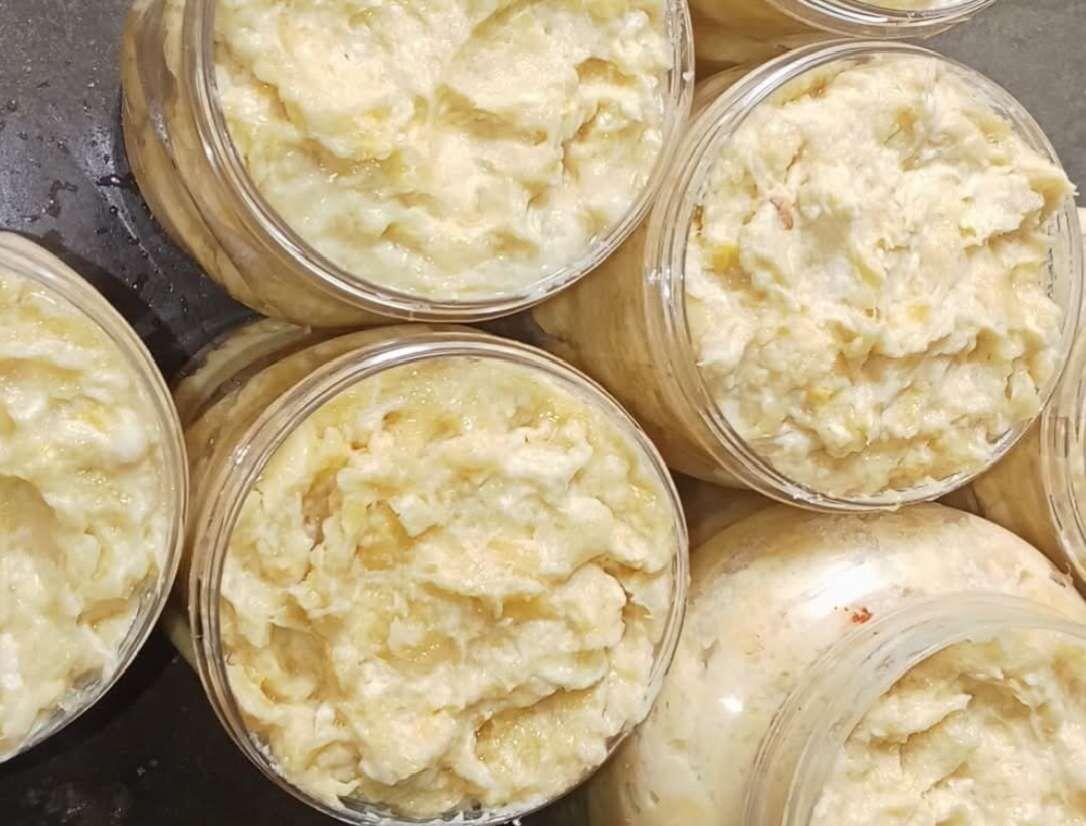
For some people, the name Tempoyak may sound foreign. However, for the Malay community in Riau, Jambi, South Sumatra, Bengkulu and several other areas, tempoyak is an important part of culinary identity. The basic ingredients are very simple, namely durian flesh which is fermented for several days. The result is no longer sweet fruit, but a sour-tasting paste with a very distinctive aroma.
Behind its strong aroma, tempoyak actually contains many interesting scientific facts. The fermentation that occurs involves microorganisms that change the chemical composition of the durian fruit, thereby producing a new taste while extending its shelf life.
So, what are some unique facts about tempoyak?
Quote:
1. Tempoyak is one of the oldest fermented foods of the Malay community
The first fact is related to its history.
Tempoyak has been known for a long time by the Malay people in Sumatra as a way to use durian which is abundant during the harvest season. Because durian fruit has a relatively short shelf life, people have developed fermentation techniques so that the flesh of the fruit can remain consumed for a longer time.
This tradition developed especially in the areas of Riau, Jambi, South Sumatra, Bengkulu, and West Kalimantan. From a simple need to preserve food, culinary delights were born which later became part of the cultural identity of the Malay people.
This shows that our ancestors understood the principles of natural food preservation long before modern refrigeration technology became available.
Quote:
2. Fermentation is dominated by lactic acid bacteria
The second uniqueness comes from the manufacturing process.
Tempoyak is made by mixing durian flesh with a little salt, then leaving it at room temperature for several days. During this process, lactic acid bacteria develop naturally and utilize the sugar contained in durian as an energy source.
Research shows that the lactic acid bacteria group is the dominant microorganism in tempoyak fermentation. Their activity produces various organic compounds that lower the pH so that the product lasts longer while having a distinctive sour taste.
This phenomenon is similar to the fermentation process in yogurt, kimchi, and several other traditional foods, although the microorganisms involved may be different.
Quote:
3. Not only contains lactic acid, but also acetic acid
Many people think that the sour taste of tempoyak only comes from one type of compound.
In fact, research on the chemical components of tempoyak shows that during fermentation several organic acids are formed, including lactic acid and acetic acid. Apart from that, there are also other organic acids in smaller amounts, while the content of simple sugars decreases because they are used by microorganisms during fermentation.
The presence of acetic acid also provides a more complex flavor character. This is why tempoyak has a different taste than just durian that is starting to rot. Fermentation produces directed chemical changes that form new products with distinctive aromas and flavors.
From a food science perspective, this process is an interesting example of how the activity of microorganisms can change the character of a food ingredient.
Quote:
4. The aroma often makes people immediately fall in love or immediately give up
This is a fact that is in accordance with the title of the thread, that tempoyak can tear your heart apart.
Tempoyak is one food that very rarely gets mediocre responses. Some people immediately fall in love with its sour, savory taste and fermented aroma. On the other hand, quite a few people find it difficult to enjoy the aroma on the first try.
This phenomenon can actually be explained scientifically. During fermentation, various volatile compounds are formed that affect the aroma of food. Perception of aroma is also influenced by genetic factors, eating experiences since childhood, culture, and a person’s habits towards fermented foods.
For this reason, tempoyak is often referred to as a culinary dish that has a strong character. Once you like it, many people actually make it one of their favorite foods.
Quote:
5. Tempoyak is very flexible as a cooking spice
The next unique thing is its very wide use.
Tempoyak is rarely eaten just like that. On the contrary, this ingredient is more often used as the main spice in various traditional dishes. One of the most famous is tempoyak catfish curry, but tempoyak is also used to cook baung fish, tapah fish, snakehead fish, shrimp, and even some processed meats.
The sour taste of tempoyak helps balance the savory taste of the fish, resulting in a unique blend of flavors. It is not surprising that people in freshwater fish producing areas are very familiar with tempoyak-based dishes.
The combination of river produce and garden produce shows how traditional culinary delights develop according to local environmental conditions.
Quote:
6. Become a Culinary Heritage Worth Preserving
The final fact relates to its cultural value.
Nowadays tempoyak is not only seen as a traditional food, but also as part of the gastronomic heritage of the Malay people. Researchers are starting to pay attention to the microorganisms that play a role in fermentation, their nutritional content, and the potential for development as a local fermented food that has higher economic value.
On the other hand, the increasing development of fast food means that some of the younger generation are starting to rarely know about traditional foods such as tempoyak. Therefore, documentation, research, culinary promotion and development of local food-based businesses are very important so that this heritage remains sustainable.
Maintaining tempoyak is not just about preserving one type of food, but also preserving local knowledge that has been passed down through many generations.
Quote:
CLOSURE
Tempoyak proves that the fermentation process has been part of Indonesian culture for a long time. From the simple flesh of durian, the Malay people succeeded in creating food with a new taste with the help of natural microorganisms. This process produces changes in taste, aroma, texture and chemical composition that make tempoyak different from fresh durian fruit.
These six facts show that tempoyak is not just a strong-flavored food. Behind every spoonful of tempoyak is stored knowledge of microbiology, food chemistry, cultural history and community creativity in utilizing natural products sustainably.
Through the Nusantara Series, we learn again that Indonesia’s wealth is not only stored in mountains, oceans or historical buildings. Traditional kitchens also store scientific knowledge that has been practiced for hundreds of years. Tempoyak is proof that local wisdom is often born from the needs of life, then develops into a cultural identity that persists to this day.
Hopefully more people will know and appreciate traditional culinary delights such as tempoyak. Because, preserving traditional food means protecting history, science and national identity.
Quote:
SOURCE
Aisyah, A., Kusdiyantini, E., & Suprihadi, A. (2014). Isolation, characterization of lactic acid bacteria, and proximate analysis of fermented food “Tempoyak”. Biology Academic Journal, 3(2)31-39.
Anshory, L., et al. (2023). Exploring tempoyak, fermented durian paste, a traditional Indonesian indigenous fermented food: Typical of Malay tribe. Journal of Ethnic Foods, 10.
Leisner, J. J., Vancanneyt, M., Rusul, G., Pot, B., Lefebvre, K., Fresi, A., & Tee, L. K. (2001). Identification of lactic acid bacteria constituting the predominating microflora in an acid-fermented condiment (tempoyak). International Journal of Food Microbiology, 63(1-2)149-157.
Juliana, N. (2010). Organic acids component of tempoyak. Journal of Food Technology and Industry, 16(1).
@salamsehaat@strangerfdotnet @jokingwet