5 Reasons You Should Go to Sulamadaha Beach, Number 2 Makes You Fall in Love!!
7 min read
3
×
5 Reasons You Should Go to Sulamadaha Beach, Number 2 Makes You Fall in Love!!
Share this article
Hi everyone, Shalom Aleichem!
300x600
300x600
Good evening GanSist everyone!
Welcome back to the Nusantara Series, a series that discusses Indonesia’s wealth from various angles, starting from traditional culture, local wisdom, typical culinary delights, national parks, to various tourist destinations that have scientific, historical and environmental value. In the previous series we got to know tempoyak, a fermented food typical of the Malay people which was born from creativity in processing durian. This time, our journey turns to eastern Indonesia, specifically to Ternate City, North Maluku Province, to visit one of the beaches which is famous for its water clarity, namely Sulamadaha Beach.
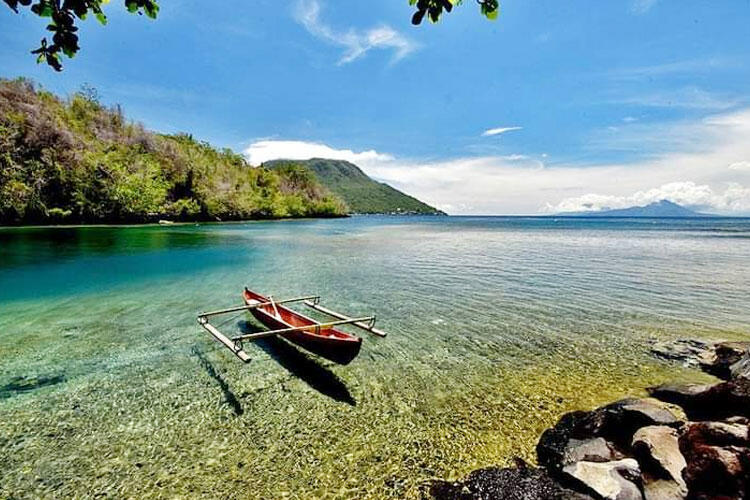
Ternate is known as the Spice Island which was once the center of the world’s clove trade. Apart from having a long history, this volcanic island is also blessed with extraordinary natural panoramas. One of the destinations most frequently visited by tourists is Sulamadaha Beach, a beach located on the west coast of Ternate Island with the majestic Mount Gamalama as a backdrop.
At first glance, Sulamadaha Beach looks like a typical tropical beach. However, if you look deeper, this beach has many unique features that make it different from other beaches in Indonesia. The clarity of the water, underwater richness, geological conditions, and natural atmosphere make this beach attractive not only for tourists, but also for researchers and environmental lovers.
Then, what are the reasons why Sulamadaha Beach deserves to be included in the must-visit destination list?
Quote:
1. The sea water is so clear that the bottom of the water is easily visible
The first and most famous reason is the clarity of the water.
Sulamadaha Beach is often dubbed as one of the beaches with the clearest water in North Maluku. In clear weather, tourists can see the seabed very clearly without having to dive too deep. Corals, small fish and various marine organisms can be observed directly from the surface of the water.
This clarity is influenced by several factors, such as the lack of sediment carried by large rivers, sea currents which help maintain water circulation, and the relatively stable condition of volcanic rocky beaches. Clear water is also an indicator that the quality of the coastal environment is still quite good when compared to coastal areas that have experienced heavy pollution.
For photography lovers, this condition provides an opportunity to produce interesting underwater photos. Meanwhile, for ordinary tourists, the clarity of the water presents a different swimming experience because the view below the surface can be enjoyed easily.
Quote:
2. Paradise for Snorkeling with Enchanting Marine Biodiversity
This is the reason that makes many people immediately fall in love.
Sulamadaha Beach is one of the favorite snorkeling locations on Ternate Island. Not far from the beach, tourists can find various types of colorful coral fish and coral reefs that are still quite well maintained.
Indonesia is in the region Coral Trianglenamely the region that has the highest level of marine biodiversity in the world. North Maluku is an important part of the area so that many species of fish, hard coral, soft coral, mollusks and other marine biota can be found in the surrounding waters.
For local people, the existence of coral reefs does not only beautify the underwater scenery. This ecosystem is also a breeding ground for various types of fish that support fishermen’s livelihoods.
Therefore, when tourists enjoy snorkeling at Sulamadaha Beach, they are actually witnessing one of the most productive marine ecosystems in the world. This experience often makes you confused Njung wants to come back to this beach again.
Quote:
3. Located on a volcanic island which has high geological value
Sulamadaha beach is not only attractive from the sea side.
This beach is on Ternate Island which was formed due to volcanic activity. Mount Gamalama, which rises in the center of the island, has shaped the landscape of Ternate for thousands of years through various geological processes.
Volcanic material carried to coastal areas produces beaches with different rock characteristics compared to white sandy beaches in general. The combination of volcanic rocks, blue sea and tropical vegetation creates a very distinctive panorama.
From an earth science perspective, areas like this are a clear example of how volcanic activity can form beautiful coastal landscapes while supporting the life of various marine organisms.
There are not many places in the world that allow someone to enjoy views of active volcanoes and tropical seas in the same location.
Quote:
4. Has a relatively calm atmosphere to enjoy nature
Many famous beaches experience overcrowding, especially during the holiday season. Sulamadaha Beach is still able to maintain a relatively calm atmosphere during many times outside the peak visiting season.
The trees that grow around the beach provide natural shade so that tourists can rest while enjoying the sea breeze. The waves also tend to be friendlier in normal weather conditions, making it suitable for swimming or just playing in the water on the beach.
The quieter environment means visitors can enjoy the sound of the waves, the wind, and the panoramic views of the sea without too many distractions. From an environmental psychology perspective, exposure to green spaces and blue spaces such as beaches is known to help reduce stress and improve mood, although these benefits are still influenced by each person’s condition.
In other words, Sulamadaha Beach offers not only visual beauty, but also a relaxing recreational experience.
Quote:
5. Becomes a door to getting to know the history and culture of Ternate
Traveling to Sulamadaha Beach also means opening up the opportunity to get to know the long history of Ternate.
Ternate Island was once one of the world’s spice trade centers. The Sultanate of Ternate had a big role in the history of the archipelago and international trade relations in the past. Not far from the beach area, tourists can also visit various historical relics such as colonial forts, the Ternate Sultanate area, and various other cultural sites.
Travel trips also become more complete. In one day, someone can enjoy panoramic views of the sea, learn the history of spices, taste typical North Maluku culinary delights, as well as get to know the culture of the people of Ternate.
This combination of natural tourism and historical tourism is what makes Ternate Island have an attraction that is difficult to find in many other areas.
Quote:
CLOSURE
Sulamadaha Beach is proof that Indonesia has a tourist destination that is not only beautiful to look at, but also rich in scientific and cultural values. Very clear sea water, underwater biodiversity, volcanic landscape, calming atmosphere, and its proximity to the history of the Sultanate of Ternate make this beach worthy of being on the list of tourist destinations for anyone who wants to get to know Indonesia more closely.
Through the Nusantara Series, we learn again that each region has different specialties. There are areas that are famous for their culinary delights, there are those that are known for their traditional culture, and there are also those that are alluring for their natural beauty. Sulamadaha Beach shows that these three elements can be present simultaneously in one relatively small area, but have enormous value.
Hopefully more tourists will come with a passion for preserving the environment. Coral reefs, marine life and clean beaches are assets that cannot be replaced if they are damaged. Enjoying natural beauty is important, but ensuring that beauty remains sustainable for future generations is much more important.
Quote:
SOURCE
Bunaken National Park Hall. (2022). Coral reefs and marine biodiversity in Indonesia. Ministry of Environment and Forestry.
Ministry of Tourism and Creative Economy of the Republic of Indonesia. (2023). The charm of Sulamadaha Beach, Ternate. Jakarta: Ministry of Tourism and Creative Economy.
Indonesian Institute of Sciences. (2020). Status of Indonesian coral reefs. Jakarta: LIPI Oceanographic Research Center.
Veron, J. E. N., Devantier, L. M., Turak, E., Green, A. L., Kininmonth, S., Stafford-Smith, M., & Peterson, N. (2009). Delineating the Coral Triangle. Galaxea, Journal of Coral Reef Studies, 11(2)91-100.
World Resources Institute. (2021). Reefs at Risk Revisited. Washington, DC: World Resources Institute.