Hi everyone, Shalom Aleichem!
300x600
300x600
Good afternoon GanSist everyone!
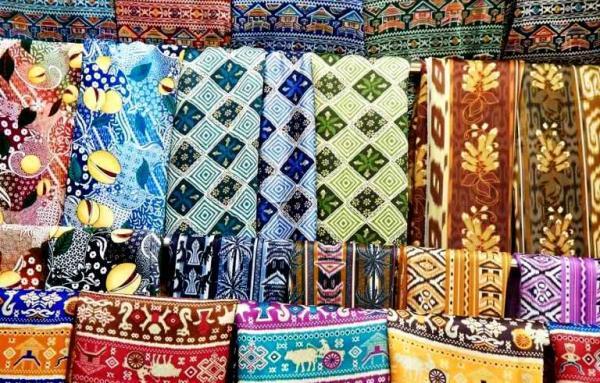
Welcome back to the Nusantara Series, a series that invites us to explore Indonesia’s riches from various points of view, starting from culture, history, local wisdom, to its natural beauty. After in the previous series we discussed the eye of the moon, a local wisdom from NTT which is related to night blindness due to vitamin A deficiency, this time we will move on to North Sulawesi to get to know one of the cultural heritages that is starting to become increasingly well known, namely Minahasa Batik.
For years, when many people hear the word “batik”, they immediately imagine Yogyakarta, Solo, Pekalongan, or Cirebon. In fact, almost every region in Indonesia now has batik with its own identity. One thing that attracts attention is Minahasa Batik, a typical North Sulawesi batik that elevates the rich culture of the Minahasa people into unique and meaningful motifs.
The uniqueness of Minahasa Batik lies not only in its pattern which is different from Javanese batik, but also in the philosophy taken from nature, history, social life, and the cultural symbols of the Minahasa people. Each motif becomes a medium for introducing regional identity while preserving cultural heritage that has developed over centuries. So, what makes Minahasa Batik so special?
Quote:
1. The motif is inspired by Minahasa culture
The first thing that makes Minahasa Batik different is the source of its inspiration. Many Minahasa Batik motifs are taken from local cultural elements, such as the Walewangko traditional house, traditional Kolintang musical instruments, the Kabasaran dance, typical North Sulawesi flowers, endemic birds, and various traditional Minahasa carved ornaments. Thus, each piece of cloth not only functions as clothing, but also becomes a medium for introducing the cultural identity of the Minahasa people.
This approach shows that batik is not just the art of decorating cloth, but also a means of documenting regional cultural riches in visual form. Many craftsmen deliberately maintain elements of local culture so that the younger generation still knows them even though they live in the modern era.
Through these motifs, Minahasa Batik is an example of how traditional art can develop without losing its cultural roots.
Quote:
2. Do not copy Javanese Batik motifs
The next unique thing is the courage of Minahasa Batik to build its own identity. Even though the manufacturing technique uses the same batik principles, Minahasa Batik does not simply copy classical motifs from Java. The designers actually developed motifs that truly reflect the character of North Sulawesi.
Therefore, people can immediately recognize the difference. If classic Javanese batik uses many parang, kawung or mega mendung motifs, Minahasa Batik emphasizes the forms of flora, fauna, traditional symbols and natural elements typical of North Sulawesi. This courage to build a local identity is one of the reasons why Minahasa Batik is increasingly appreciated as part of Indonesia’s batik wealth.
Quote:
3. The colors tend to be bright and bold
One of the visual characteristics of Minahasa Batik is the use of striking colors. Many craftsmen use a combination of red, yellow, green, blue, orange and gold in one design. These colors reflect the character of the people of North Sulawesi, which is dynamic, open, and close to the richness of tropical nature.
The choice of bright colors also makes Minahasa Batik easy to recognize compared to some batik from other regions which tend to use sogan colors or earth tones.
Apart from showing an aesthetic side, the use of bright colors also makes Minahasa Batik more easily accepted in the world of modern fashion. Many designers combine this batik with contemporary clothing pieces so that it can be used on various occasions, both formal and casual events.
Quote:
4. Become a Media for Preserving Regional Identity
In the era of globalization, many local cultures face challenges to survive. Minahasa batik exists as a way to maintain this cultural identity.
Each motif contains a story about community life, the natural environment, and Minahasa cultural values. When someone wears Minahasa Batik, they are indirectly introducing North Sulawesi culture to the wider community.
Regional governments, MSMEs and cultural communities are also actively promoting Minahasa Batik through exhibitions, cultural festivals, batik training and national fashion events. This step aims to ensure that North Sulawesi’s typical batik is not only known in its region of origin, but is also able to compete at national and even international levels.
Thus, Minahasa Batik has a dual function, namely as a work of art as well as a means of cultural preservation.
Quote:
5. The motive continues to develop with the times
The final uniqueness is its dynamic nature. In contrast to the opinion that batik must always maintain old patterns, Minahasa Batik actually continues to develop following the creativity of its craftsmen. New motifs continue to emerge while maintaining local cultural elements as the main identity.
Now, we can find motifs that combine the tourist icons of North Sulawesi, the underwater riches of Bunaken National Park, endemic flowers, and unique animals such as the manguni bird (Sulawesi owl) and tropical sea fish.
These developments show that culture is not something rigid. Culture can adapt to changing times without losing the values on which it is based. Minahasa batik is an example that innovation and cultural preservation can go hand in hand.
Quote:
CLOSURE
Indonesia has thousands of cultural heritages spread from Sabang to Merauke. Minahasa batik is proof that the art of batik has developed into a living cultural identity in various regions, including North Sulawesi.
These five facts show that Minahasa Batik is not just a beautiful patterned cloth. Behind each style is a story about culture, history, nature, and the spirit of the Minahasa people in maintaining their regional identity. Motifs inspired by local culture, bold colors, a distinctive visual identity, and its ability to adapt to current developments make Minahasa Batik have a unique appeal.
Through the Nusantara Series, we learn again that Indonesia’s wealth lies not only in its natural landscape, but also in the creativity of its people in preserving culture. The more we know about batik from various regions, the more we understand that each region has a different way of telling its identity through a piece of cloth.
It is time for us to see batik not only as traditional clothing, but as a work of art, a medium for cultural education, as well as a symbol of Indonesia’s diversity that we should be proud of.
Quote:
SOURCE
Region XVII Cultural Preservation Center. (2023). Minahasa cultural heritage and its development. Ministry of Culture of the Republic of Indonesia.
Directorate General of Intellectual Property. (2022). Batik as Indonesian Communal Intellectual Property. Ministry of Law and Human Rights of the Republic of Indonesia.
North Sulawesi Provincial Government. (2023). North Sulawesi Arts and Culture Profile. North Sulawesi Province Regional Culture Service.
Waani, JO, & Rengkung, MM (2021). Development of batik motifs based on local Minahasa culture as regional identity. DASENG Architectural Journal, 10(2)120-129.
Indonesian Batik Foundation. (2021). Indonesian Batik: Cultural Heritage and Development. Indonesian Batik Foundation.
@hahahaha@strangerfdotnet @jokingwet