Hi everyone, Shalom Aleichem!
Good afternoon GanSist everyone! 
Welcome back to the Nusantara Series, a series that invites us to explore Indonesia’s riches, starting from traditional culture, local wisdom, tourist attractions, to various natural phenomena that have high scientific value. In the previous series, we got to know Kayan Mentarang National Park, one of the last strongholds of tropical rainforest in Kalimantan. This time, our journey continues to Sumba Island in East Nusa Tenggara Province to get to know a conservation area that may not be very popular, but has extraordinary ecological value, namely Laiwangi Wanggameti National Park.
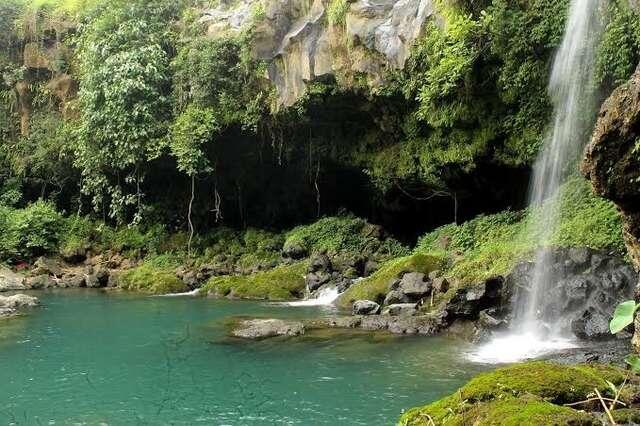
For some people, Sumba Island is better known for its beautiful savanna, Pasola culture, or its stunning beaches. However, in the eastern part of the island stands a forest area which is home to various endemic species found nowhere else in the world. Laiwangi Wanggameti National Park is not just a green area, but the last bastion of Sumba Island’s biodiversity.
The uniqueness of this national park makes it an important location for ecological research, wildlife conservation, and community-based natural resource management.
Here are 7 interesting facts that make this area worthy of more attention.
Quote:
1. Becomes the Second National Park on Sumba Island
Laiwangi Wanggameti National Park is the second national park on Sumba Island after Manupeu Tanah Daru National Park. This conservation area has an area of around 47,000 hectares and is located in East Sumba Regency. Its existence is very important because it protects the various types of ecosystems that remain on the island, from lowland rainforests to mountain forests.
As one of the national parks in Sumba besides Manupeu Tanah Daru, this area has a big role in maintaining the balance of the ecosystem as well as being a source of water for the surrounding community.
Quote:
2. Has a combination of rainforest and steppe
Many people imagine that national parks are always filled with dense forests. Laiwangi Wanggameti actually has a unique combination of natural landscapes.
About 60 percent of the area is steppe, while the rest is tropical rainforest stretching from the lowlands to the mountains. In the higher parts there are even moss forests (elfin forest) which is relatively rare in Indonesia. The combination of these various types of ecosystems creates a very diverse habitat for flora and fauna.
The diversity of the landscape also makes this national park interesting for researchers who study the adaptation of plants and animals to changes in altitude and climate.
Quote:
3. Becomes home to many endemic animals on Sumba Island
The next uniqueness lies in its residents.
Laiwangi Wanggameti National Park is a habitat for around 176 species of birds, including various species endemic to Sumba Island. Among them are the small orange-crested cockatoo, the Sumba hornbill, and various other birds that can only be found on this island. Apart from birds, this area is also a habitat for mammals such as Timor deer, wild boars, civets and various types of bats. In fact, more than 100 types of mammals and around 115 types of butterflies have been recorded as inhabiting this area.
This biological richness shows that Laiwangi Wanggameti is one of the most important biodiversity centers in the Nusa Tenggara region.
Quote:
4. Become a support for the Sumba Island Water Management System
Apart from being a home for wildlife, this national park has a very important function for human life.
The forests in Laiwangi Wanggameti act as a water catchment area that supplies various springs and rivers on Sumba Island. Vegetation that is still maintained helps absorb rainwater, reduces the risk of erosion, and maintains water availability in the dry season. For this reason, this area has received attention since the past as a hydrological protected area before finally being designated as a national park.
Without the existence of these forests, surrounding communities would face a greater risk of drought and environmental damage.
Quote:
5. Mount Wanggameti is the highest roof on Sumba Island
This is the fact that makes you fall in love the most.
Within the national park area stands Mount Wanggameti, the highest point on Sumba Island with a height of around 1225 meters above sea level. From the slopes to the peaks, the vegetation changes gradually, from lowland forests to moss forests shrouded in mist. This complete ecosystem change allows various animals to make seasonal movements according to the needs of their habitat.
The view from this mountainous area shows the unspoiled natural landscape of Sumba. It is not surprising that many researchers and nature lovers consider this area to be one of the most beautiful locations on Sumba Island.
Quote:
6. Local Wisdom of the Community Supports Conservation
The success of protecting Laiwangi Wanggameti does not only depend on national park officials.
The Sumba indigenous people have a close relationship with nature through various customary rules regarding the use of forests and natural resources. In area management, modern conservation approaches are combined with local knowledge to create mutually beneficial cooperation. Community involvement is also carried out through environmental education, economic empowerment, and ecotourism development.
This approach shows that nature conservation will be more successful if the community is part of the solution.
Quote:
7. Become a Natural Laboratory for Biodiversity Research
The final fact is of scientific value.
With forests that are still relatively intact and many endemic species, Laiwangi Wanggameti National Park is an important location for research on ecology, conservation, climate change and species evolution. Various universities and research institutions use this area to carry out inventory of flora and fauna, monitor animal populations, and develop long-term conservation strategies.
Data obtained from this area is not only beneficial for Indonesia, but also contributes to the world’s understanding of the conservation of tropical forests and endemic species.
Quote:
CLOSURE
Laiwangi Wanggameti National Park proves that Sumba Island is not only famous for its culture and natural panorama, but also for its extraordinary biological riches. As one of the national parks on Sumba Island, this area plays an important role in maintaining the survival of endemic animals, protecting water sources, and maintaining ecosystem balance.
Through these 7 facts, we can see that Laiwangi Wanggameti is not just a natural tourist destination. This area is a living laboratory that holds various lessons about conservation, the relationship between humans and the environment, and the importance of maintaining Indonesia’s biodiversity.
Through the Nusantara Series, we are reminded again that every corner of Indonesia has a different story. There are those that preserve the history of kingdoms, there are those that show geological wonders, and there are also those that preserve the lives of thousands of species behind the dense forests. Hopefully more and more people will know about Laiwangi Wanggameti National Park and will support its conservation, because protecting a forest area means helping to protect Indonesia’s natural future.
Quote:
SOURCE
Laiwangi Wanggameti National Park Hall. (2026). Profile of Laiwangi Wanggameti National Park. Ministry of Forestry of the Republic of Indonesia.
Laiwangi Wanggameti National Park Hall. (2026). About Us: History and Management of the Area. Ministry of Forestry of the Republic of Indonesia.
Directorate General of Natural Resources and Ecosystem Conservation. (2026). Profile of Laiwangi Wanggameti National Park. Ministry of Forestry of the Republic of Indonesia.
Key Biodiversity Areas Partnership. (2014). Laiwanggi Wanggameti (Site 15952): Site Factsheet. Key Biodiversity Areas.
@which@strangerfdotnet @jokingwet