Hi everyone, Shalom Aleichem!
Good afternoon GanSist everyone! 
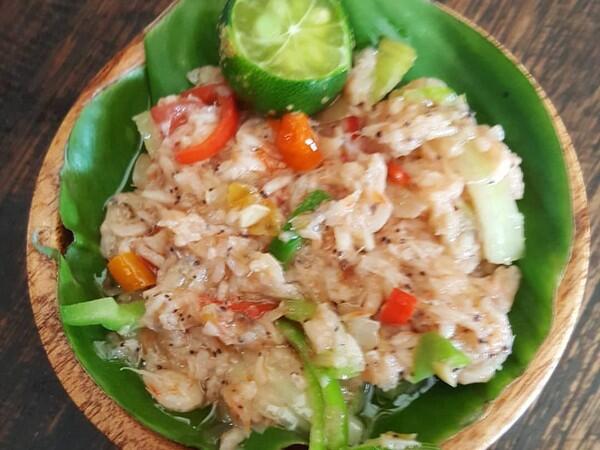
Welcome back to the Nusantara Series, a series that invites us to explore Indonesia’s riches from various sides, starting from traditional culture, local wisdom, typical culinary delights, tourist attractions, to the richness of the archipelago’s seas. In the previous series we visited Jayapura, the main gateway to the Land of Papua which offers an extraordinary combination of nature, history and culture. This time, our journey returns to Sumatra Island, specifically to the Malay cultural area in Riau Province, to get to know one of the unique fermented foods, namely cincalok.
For the people of Riau, Riau Islands, Bangka Belitung, West Kalimantan, and some other coastal areas of Sumatra, cincalok is not a foreign food. Cincalok is made from small shrimp (rebon) which are fermented using salt and a little sugar or rice as a source of carbohydrates for fermenting microorganisms. The result is a food that tastes sour, salty and slightly sweet with a distinctive aroma.
At first glance, the shape of cincalok is simple. However, behind its appearance, various nutritional substances are stored that come from rebon shrimp and the fermentation process. Of course, because the salt content is quite high, cincalok still needs to be consumed in reasonable quantities. If used as a complement to food and not consumed excessively, cincalok can be one of the foods
an interesting source of nutrients.
So, what nutritional content does cincalok have?
Quote:
1. High Quality Protein to Help Repair Body Tissue
The first most prominent nutritional content is protein.
Rebon shrimp as the main ingredient in cincalok contains protein with a fairly complete composition of essential amino acids. Protein functions as a building block for body cells, helps repair damaged tissue, forms enzymes and hormones, and supports the immune system.
During the fermentation process, some proteins are also broken down into simpler peptides and amino acids which can affect the taste and characteristics of the product.
However, it should be remembered that cincalok is generally consumed as a complement to food, so the main source of protein should still come from side dishes in adequate portions.
Quote:
2. Rich in Calcium to Maintain Bone Health
Rebon shrimp are consumed with their shells still very soft. This is what makes cincalok contain quite good amounts of calcium.
Calcium is the main mineral that composes bones and teeth. In addition, this mineral also plays a role in muscle contraction, blood clotting, as well as the transmission of nerve impulses.
When consumed as part of a balanced diet, foods made from rebon shrimp can help meet daily calcium needs along with other calcium sources such as milk, cheese, soft-boned fish or green vegetables.
Quote:
3. Contains zinc which plays a role in hair health
This is the nutritional content according to the thread title.
Shrimp is a source of zinc, a mineral that plays a role in cell division, protein synthesis, wound healing, antibody formation and hair health.
Zinc deficiency is known to cause various disorders, one of which is increased hair loss in some people. Therefore, adequate zinc intake helps support the normal hair growth cycle.
However, it is important to understand that hair loss has many causes, such as genetic factors, hormonal changes, stress, certain diseases, or other nutritional deficiencies. This means that consuming cincalok alone cannot be the sole solution to prevent hair loss.
However, the zinc content in rebon shrimp remains an interesting nutritional value.
Quote:
4. Contains phosphorus which supports body metabolism
Apart from calcium, rebon shrimp also contain phosphorus.
This phosphorus mineral works together with calcium in forming the structure of bones and teeth. Phosphorus also plays a role in the formation of ATP (adenosine triphosphate), a molecule that is the main source of energy for body cells.
In addition, phosphorus helps maintain acid-base balance and supports various metabolic processes.
Because it is found in many seafood, consuming seafood in appropriate amounts can be one way to meet daily phosphorus needs.
Quote:
5. Contains Vitamin B12 which is Important for Nerves and Red Blood Cell Formation
Seafood products are generally a source of vitamin B12, including rebon shrimp which is the basic ingredient for cincalok.
Vitamin B12 is needed in the formation of red blood cells, DNA synthesis, and maintaining nervous system function. Long-term deficiency of this vitamin can cause megaloblastic anemia and nervous disorders.
For people who consume seafood as part of their daily diet, shrimp is a good source of vitamin B12.
Fermentation does not remove all of the vitamin content, although the amount can be influenced by processing and storage.
Quote:
6. Contains Micro Minerals such as Selenium
Apart from the main minerals, cincalok also contains selenium which comes from shrimp.
Selenium is a mineral that the body needs in small amounts, but has a very important function. This mineral is part of various antioxidant enzymes that help protect cells from damage caused by free radicals.
In addition, selenium also plays a role in thyroid function and the immune system.
Because the daily requirement is relatively small, consuming various types of seafood can help meet selenium needs naturally.
Quote:
7. Contains Lactic Acid Bacteria from Fermentation
The final uniqueness comes from the manufacturing process.
Cincalok fermentation involves various microorganisms, especially the lactic acid bacteria group. These microorganisms produce organic acids which help preserve the product while forming a distinctive taste.
A number of studies have found the presence of lactic acid bacteria in cincalok which have the potential to act as beneficial microorganisms. However, it should be understood that not all fermented products can automatically be called probiotic foods. In order for a product to be claimed as a probiotic, scientific evidence is needed regarding the type of microorganism, its number, and its health benefits in humans.
Thus, cincalok is more appropriately viewed as a traditional fermented food that contains fermented microorganisms, rather than being directly considered a probiotic.
Quote:
CLOSURE
Cincalok is proof that Indonesian people have long been familiar with fermentation technology as a way to preserve food while creating new flavors. Behind its distinctive aroma, this traditional food contains various nutritional contents such as protein, calcium, zinc, phosphorus, vitamin B12, selenium, as well as fermented microorganisms which make it interesting to study.
However, like other traditional foods that are fermented using salt, cincalok should be consumed in reasonable quantities. The sodium content is relatively high so excessive consumption is not recommended, especially for people on a low-salt diet.
Through the Nusantara Series, we again learn that Indonesia’s culinary richness not only presents a variety of tastes, but also contains knowledge about nutrition, microbiology and culture. Cincalok is an example that traditional culinary heritage can be a source of learning about the relationship between humans, local food ingredients, and fermentation processes that have been known for a long time.
Hopefully more people will know and preserve traditional foods such as cincalok. Because, maintaining regional culinary delights means maintaining cultural identity while respecting local knowledge passed down from generation to generation.
Quote:
SOURCE
AOAC International. (2019). Official Methods of Analysis of AOAC International(21st ed.). AOAC International.
Food Security Agency, Ministry of Agriculture of the Republic of Indonesia. (2021). Indonesian Local Food Directory. Jakarta: Ministry of Agriculture.
Fardiaz, S. (1992). Food Microbiology 1. Jakarta: Gramedia Pustaka Utama.
Leisner, J. J., Vancanneyt, M., Rusul, G., Pot, B., Lefebvre, K., Fresi, A., & Tee, L. K. (2001). Lactic acid bacteria associated with fermented seafood products in Southeast Asia. International Journal of Food Microbiology, 63(1-2)149-157.
Ministry of Health of the Republic of Indonesia. (2020). Indonesian Food Composition Table (TKPI). Jakarta: Ministry of Health of the Republic of Indonesia.
World Health Organization. (2020). Healthy diet. Geneva: World Health Organization.
@which @strangerfdotnet @jokingwet