7 Unique Facts About Rica-rica, Number 3 Makes You Love Me Even More!!
7 min read
3
×
7 Unique Facts About Rica-rica, Number 3 Makes You Love Me Even More!!
Share this article
Hi everyone, Shalom Aleichem!
300x600
300x600
Good evening GanSist everyone!
Welcome back to the Nusantara Series, a series that invites us to get to know Indonesia through traditional culture, local wisdom, history, culinary delights, tourist attractions, and natural riches spread from Sabang to Merauke. In the previous series we visited Laiwangi Wanggameti National Park on Sumba Island which is home to many endemic animals. This time, our trip shifts to North Sulawesi to discuss one of the most famous culinary delights from the Land of Minahasa, namely rica-rica.
When they hear the name rica-rica, many people immediately imagine a very spicy dish. This assumption is not completely wrong. Rica-rica is synonymous with abundant chilies, but actually this culinary dish is much more interesting than just its spicy taste.
Behind a plate of rica-rica chicken, rica-rica pork, or various other preparations, lies the history of the entry of chilies into the archipelago, the richness of Indonesian spices, and the philosophy of the Minahasa people who like fresh, strong and aromatic flavors.
So, what are the unique facts that make rica-rica one of Indonesia’s culinary identities?
Quote:
1. The name “Rica” means chili in Manadonese
The first fact relates to the origin of its name.
The word “rica” comes from Manadonese which means chili. Therefore, the name “rica-rica” basically refers to a dish that uses chilies as the main ingredient in the seasoning.
The repetition of the word “rica-rica” emphasizes that the dish is indeed rich in chilies and has a strong spicy flavor.
Even though it is synonymous with chicken rica-rica, this spice can actually be used in various food ingredients, from fish, pork, beef, to tofu and tempeh. In other words, rica-rica is more accurately understood as a type of spice, not the name of a particular type of dish.
This is what makes rica-rica very flexible and easy to develop into various culinary variations.
Quote:
2. The chilies that are characteristic of Rica-rica are not native to Indonesia
The second fact is quite interesting from a historical point of view.
Chilli (Capsicumspp.) actually comes from the Americas. After ocean exploration in the 15th and 16th centuries, the Portuguese and Spanish brought these plants to various regions of Asia, including the archipelago. Gradually, chilies were accepted by the local community and even became an important part of the culinary identity in various regions, including North Sulawesi.
What’s interesting is that the Minahasan people didn’t just adopt chili as a new spice. They processed it with various local spices such as shallots, garlic, ginger, lemongrass, lime leaves and basil so that the distinctive taste of rica-rica was born which is known to this day.
This phenomenon shows that culinary culture always develops through the process of meeting various cultures. Materials that come from abroad can become part of local identity if they are processed according to the character of the local community.
Quote:
3. Not only spicy, Rica-rica relies on a complex aroma of spices
This is the fact that makes many people love rica-rica even more.
Some people think that the deliciousness of rica-rica only comes from its intense spicy taste. In fact, the main strength of this dish lies in the combination of various spices.
Chili provides a spicy sensation, but shallots provide a natural sweet taste, garlic provides a savory aroma, ginger creates a warm taste, lemongrass provides a fresh aroma, lime leaves provide a citrus touch, while basil provides a distinctive fragrance.
The combination of these various ingredients produces a balanced taste. Spicy is the main character, but it doesn’t cover up the original taste of the food ingredients used.
From a food science perspective, the use of various spices also enriches the content of bioactive compounds such as flavonoids, essential oils and various natural antioxidants. Although spices are not a substitute for medicine, many studies show that various spices have interesting biological activities that are worth continuing to study. Therefore, rica-rica not only whets the appetite, but also shows the rich biodiversity of Indonesian spices.
Quote:
4. Suitable for combining with various types of food ingredients
The next uniqueness is its flexibility.
Not all traditional dishes can be combined with many food ingredients. Rica-rica is actually one of the spices that is very adaptable.
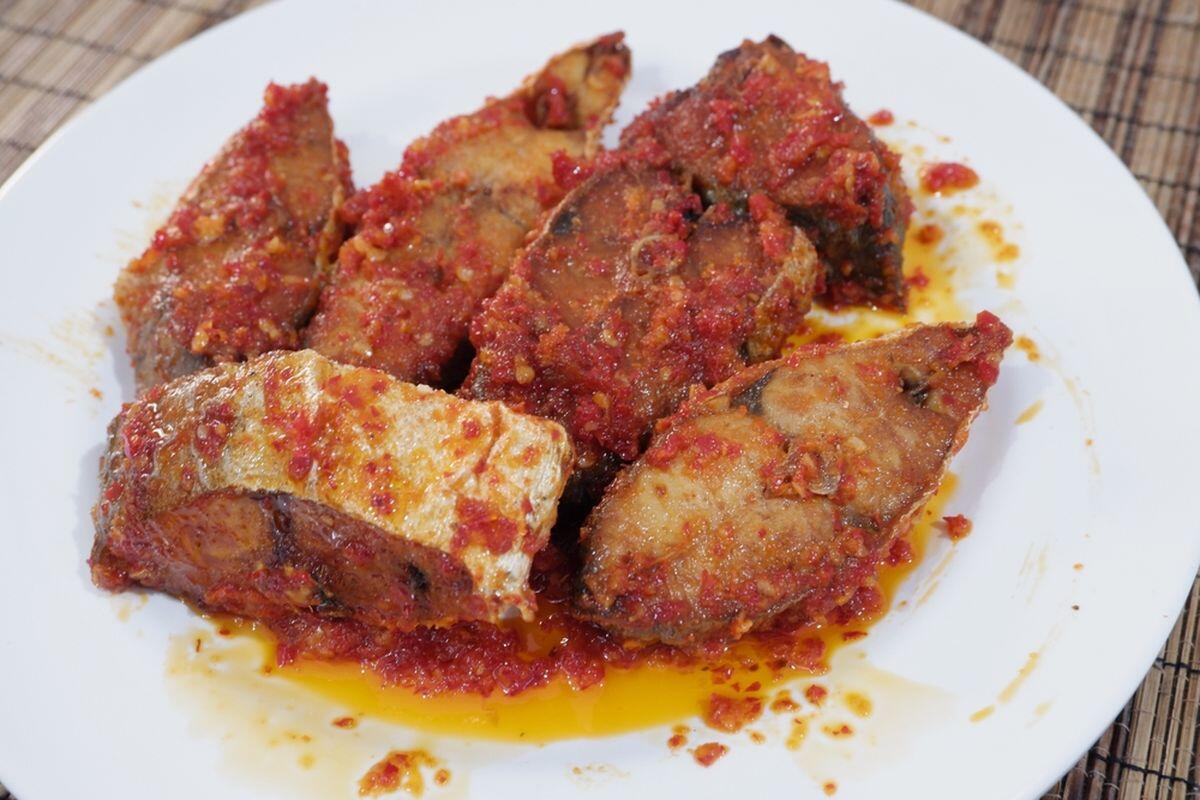
Ayam rica-rica is perhaps the most famous variation. However, the people of North Sulawesi also know rica-rica fish, rica-rica shrimp, rica-rica squid, rica-rica duck, and various other preparations that use similar spices.
This shows that the identity of rica-rica lies in the spices, not the main ingredients. This flexibility makes rica-rica easily accepted in various regions in Indonesia.
In fact, currently many restaurants use rica-rica spices to process local food ingredients according to their respective regions.
Quote:
5. Reflects the Wealth of Indonesian Spices
Indonesia has long been known as one of the world’s spice trade centers.
Rica-rica is an example of how spices are used optimally in traditional cooking. Apart from chilies, this seasoning usually uses shallots, garlic, ginger, lemongrass, lime leaves, spring onions, tomatoes and basil.
This combination produces a distinctive aroma while showing how rich Indonesia’s biological resources are.
It is not surprising that many foreign tourists consider rica-rica to be one of the Indonesian culinary delights that has the strongest flavor characteristics.
Quote:
6. Become one of the Culinary Icons of North Sulawesi
When talking about Minahasa culinary delights, the name rica-rica is almost always mentioned along with other famous dishes such as tinutuan, woku, skipjack fufu, and sambal dabu-dabu.
The popularity of rica-rica has made it one of the gastronomic identities of North Sulawesi. Now this dish can be found in various cities in Indonesia, and has even been introduced at various international culinary festivals.
The spread of rica-rica shows that traditional culinary delights are able to develop without losing the identity of their region of origin.
Quote:
7. Rica-rica is proof that culinary is part of culture
The last fact is perhaps the most important.
Food not only serves to fill the stomach. Culinary is also a medium for storing history, language, local knowledge and identity of a society.
Rica-rica shows how the Minahasa people use natural products, spices and cooking creativity to create distinctive flavors. This dish is also a symbol of cultural openness, because it combines plants originating from outside the archipelago with local culinary traditions to produce a very strong new identity.
Every time rica-rica is served, what is actually served is not only food, but also a piece of the long history of Indonesia’s cultural journey.
Quote:
CLOSURE
Rica-rica is proof that Indonesia’s culinary richness lies not only in the many types of food, but also in the stories hidden behind each dish. Starting from the meaning of its name, the history of the entry of chilies into the archipelago, the complex combination of spices, the flexibility of its use, to its role as a culinary icon of North Sulawesi, everything shows that rica-rica has cultural value that goes far beyond just its spicy taste.
Through the Nusantara Series, we learn again that traditional food can be a window to understanding history, culture, and even science. Rica-rica teaches that a simple recipe can unite agricultural products, historical journeys, and community identity in one dish that can be enjoyed across generations.
Hopefully culinary riches such as rica-rica will continue to be preserved and introduced to the younger generation. Because, preserving traditional food not only maintains the taste, but also maintains an important part of the identity of the Indonesian nation.
Quote:
SOURCE
Directorate General of Intellectual Property. (2023). Communal intellectual property as part of Indonesia’s culinary cultural heritage. Ministry of Law of the Republic of Indonesia.
Indonesia Travel. (2025). Get to know the history and origins of the Minahasa tribe. Ministry of Tourism of the Republic of Indonesia.
iNews Manado. (February 10, 2025). This is the origin of Rica in North Sulawesi.
Parengkuan, F. E. (2006/2025). A Contribution to the History of Mapalus in the Minahasa, North Sulawesi. Journal of Society and Culture, 8(2).
World Health Organization. (2020). Healthy diet. World Health Organization.