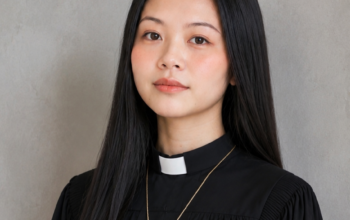
Let me introduce myself, I am Shiva Zulfahira, a student of the Sharia Banking Study Program, Faculty of Islamic Economics and Business, Sultan Maulana Hasanuddin University, Banten. I wrote this article as part of the study in the Strategic Management course taught by Dr. Hj. Syaeful Bahri, S.Ag., MM, CHCM.
Enjoy reading, I hope this article can add insight and become material for discussion together.
Profit is important, but does it have to sacrifice ethics?
When you hear the word business, what first comes to mind, bro and sista?
Maybe most will answer: profit.
There is nothing wrong with making a profit. In fact, profit is the “breath” for a business to keep running, pay employees, develop products, and open up jobs.
However, have we ever asked:
Are all profits justified if they are obtained by dishonest means?
Unfortunately, in the current era we still often find business practices that prioritize profits over ethics. Starting from excessive advertising, products of inappropriate quality, price manipulation, to misuse of customer data.
However, in Islam, profit is not the only measure of the success of a business.
Islam does not prohibit seeking profit
There is an opinion that if you do business in an Islamic way, profits will be smaller than in regular business.
In my opinion, that assumption is not correct.
Islam actually encourages its followers to work hard, trade and develop businesses. Rasulullah SAW himself was a successful trader before being appointed a prophet.
What is different is not the size of the profitbut rather how to obtain these benefits.
This means that a Muslim may pursue the highest possible profit as long as it is done in a halal, honest manner and does not harm other people.
Honesty Is the Biggest Capital
In the modern business world, capital is often defined as money.
Even though there is capital that is much more expensive, namely trust.
The Prophet SAW got a nickname Al-Aminwhich means trustworthy.
Because of this characteristic, many people entrust their merchandise to him.
Now let’s look around us.
Why are many people willing to buy products from certain stores even though the prices are a little more expensive?
The answer is simple.
Because they believe.
They trust the quality of the product.
They trust his service.
They believe the seller is honest.
This kind of trust cannot be bought with any amount of advertising.
Don’t let profit defeat your conscience
Business competition is getting tougher.
Sometimes there is a temptation to take shortcuts.
For example:
(ul)(li) reducing the quality of materials to make production costs cheaper, (/li)(li) raising prices unreasonably when goods are scarce, (/li)(li) making false testimonials, (/li)(li) hiding product deficiencies, (/li)(li) or providing misleading information. (/li)(/ul) Maybe methods like this can generate profits in a short time.
But will customers still believe if one day they find out the reality?
In Islam, business is not just about transactions.
Business is also a trust.
Ethics is actually a business advantage
Now customers are getting smarter.
They don’t just look at price.
They also pay attention to how a company treats its consumers.
Honest companies usually find it easier to get loyal customers.
On the other hand, companies that often create controversy will have difficulty maintaining their reputation.
Therefore, ethics is not an obstacle to profits.
Ethics actually becomes a long-term investment.
Profit and Blessings Can Go Together
In Islam there is a very interesting concept, namely blessing.
Big profits don’t necessarily bring peace.
On the other hand, profits obtained halally often bring a sense of contentment, calm and wider benefits.
A successful business usually has several characteristics:
✔ The products sold are halal and useful.
✔ Do not cheat customers.
✔ Provide decent wages to employees.
✔ Running business honestly.
✔ Protect the environment.
✔ Do not take advantage in a way that is detrimental to other parties.
This is what differentiates Islamic businesses from businesses that only pursue sales figures.
Islamic Business Strategy in the Digital Era
Currently, almost all business activities have moved to the digital world.
Starting from online stores, social media, marketplaces, to the use of Artificial Intelligence (AI).
So, are business ethics still important?
In fact, it’s increasingly important.
In the digital era, a business’s reputation can be destroyed just because of one bad review that goes viral.
On the other hand, good service can make customers voluntarily promote products to other people.
Technology can change.
However, values such as honesty, trust and responsibility remain the main foundation.
What Can We Implement?
If you and Sista are running a business, there are several simple things you can start implementing.
(ul)(li)Be honest in explaining the product.(/li)(li)Don’t exaggerate promotions.(/li)(li)Serve customers in a friendly manner.(/li)(li)Make delivery promises.(/li)(li)Don’t be afraid to admit mistakes if they occur.(/li)(li)Continue to improve product quality.(/li)(li)Set aside some profits to share with others.(/li)(/ul)It seems simple.
However, it is precisely these small habits that will build a business reputation in the long term.
Cover
In my opinion, the success of a business is not only measured by how much profit it makes.
More than that, success can also be seen from how the profits are obtained.
Islam teaches that seeking profit is something good. However, these profits must be obtained in a way that is halal, honest, fair, and brings benefits to many people.
In the midst of increasingly tough business competition, perhaps this is the time for us to remember again that customers don’t just buy products.
They also buy trust.
And trust can only be built through ethics.
What do you think, bro and sista?
Is it still possible in this era to run a business that still prioritizes ethics while making big profits?
Come on, share your opinions or experiences, Bro and Sista, in the comments column. Who knows, it could be an inspiration for other Kaskusers.
About the Author
Name: Shiva Zulfahira
NIM: 231420190
Study Program: Sharia Banking
Faculty: Islamic Economics and Business
University: Sultan Maulana Hasanuddin University Banten
Course: Strategic Management
Instructing Lecturer: Dr. Hj. Syaeful Bahri, S.Ag., MM, CHCM