Hi everyone, Shalom Aleichem!
Good morning GanSist everyone! 
In the previous two series, Superwoman Seriesdiscusses how women can be a source of hope through real action for children suffering from cancer and how to build discipline to fight laziness. Both discussions have the same common thread, namely building women who are strong physically, mentally, socially and spiritually.
However, there is another challenge that is often not realized, especially by many women, namely the desire to always please everyone. In modern psychology, this behavior is known as people pleasing.
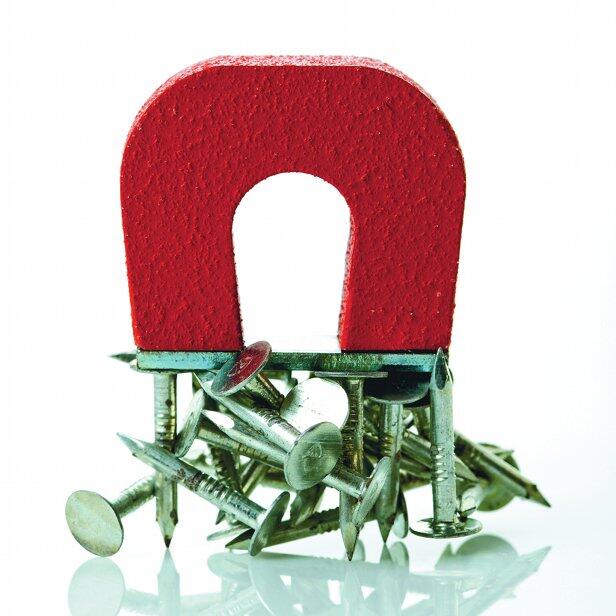
In Indonesian society, there is a proverb that is quite interesting, namely “There is no magnet looking for iron, the presence of iron looks for a magnet.” This proverb is often used to describe that someone who has good qualities, competencies and values will be more easily appreciated without having to constantly chase recognition from other people.
Of course, proverbs are not natural laws that apply absolutely in every situation. However, as a metaphor, this sentence contains quite deep lessons about self-esteem, social relationships, and how to build healthy relationships.
Unfortunately, some people actually do the opposite. They spend their energy trying to gain acceptance from everyone. They fear rejection, fear disappointing others, and feel guilty when they say “no.” As a result, they continue to sacrifice their own needs. In fact, loving and being a people pleaser are two very different things.
Quote:
Loving Is Not the Same as People Pleasing
Loving is a healthy caring attitude. On the other hand, people pleasing is a habit of sacrificing oneself in order to gain acceptance or avoid rejection.
The difference seems simple, but the impact is huge. People who love still have clear boundaries. He is willing to help when he is able, but also understands that he has physical, mental and emotional needs that must be taken care of.
On the other hand, a people pleaser often feels that he is obliged to fulfill everyone’s wishes. He finds it difficult to refuse requests, even when the request is detrimental to himself.
Psychology explains that people pleasing behavior is often related to the need for external validation. A person’s self-esteem becomes very dependent on the judgments of others. As a result, he easily feels anxious if he is not liked or does not receive recognition.
In the long term, this condition can increase stress, emotional exhaustion (burnout), and even reduce psychological health.
Quote:
Loving Yourself Doesn’t Mean Being Selfish
Many people still think that putting themselves first is a form of selfishness. In fact, psychology actually shows that someone who is able to treat themselves well is usually better able to provide healthy support to others.
This concept is known as self-compassion or compassion for oneself. People who have self-compassion are able to accept their shortcomings without constantly blaming themselves. He understands that he also has the right to rest, develop and maintain health.
Loving yourself doesn’t mean always following your personal desires. On the other hand, loving yourself means keeping your physical, mental and emotional condition healthy so you can provide benefits to others on an ongoing basis. It is difficult to help others when you are tired yourself. It’s hard to give encouragement when your own heart is empty.
Therefore, Loving yourself actually becomes the basis for loving others.
Quote:
People Pleasing Can Actually Harm Other People
At first glance, people pleasing seems like a very good attitude. However, in reality this is not always the case.
Imagine someone who always teaches his friends the answers to Mathematics questions without providing motivation for his friends to learn on their own. For some time, his friend felt helped. However, over time their friends become spoiled, dependent, lose opportunities to grow, lose opportunities to develop their abilities, and over time they can lose the ability to answer exam questions honestly.
In educational psychology, a person’s development requires opportunities to face challenges and solve problems independently. If all problems are always solved by other people, the development process will actually be hampered.
In other words, people pleasing sometimes makes other people become too dependent. In fact, one of human rights is the right to develop, learn and build independence. In the previous Superwoman series, the attitude of people pleasing was not only an act of violence against oneself, but also an act of violence against other people, because it made other people lazy and spoiled without ever being motivated to develop..
Helping does not mean taking on all other people’s responsibilities. The best help is help that makes someone more independent and developed, not more spoiled.
Quote:
Competent People Don’t Need to Chase Validation
The proverb about magnets and iron also teaches something else. Magnets have attraction because they have magnetic properties. Magnets don’t need to pretend to be magnets to get iron to approach them.
Likewise humans. If someone has a good attitude, continually developing skills, integrity, and a pleasant attitude, other people will usually appreciate it.
That doesn’t mean everyone will like it, because that’s impossible. However, the rewards that come from being good at yourself are much more lasting than the rewards that come from constantly trying to please everyone.
Research on self-esteem shows that people who develop competence and purpose in life tend to have better psychological well-being than those who rely heavily on social acceptance.
Therefore, the energy you have should be used to improve abilities, expand knowledge, maintain health, and improve attitudes. The most important validation is when we know that we are growing into a better person.
Quote:
The Magnet Must Still Move
The adage “no magnet finds iron” is often misinterpreted as a suggestion to just wait. However, magnets can still move. The magnet remains active. Magnetism continues to develop. Magnet continues to improve its quality.
In the context of social relationships and life in general, women should not be silent and wait. Women can expand relationships. Women can develop a career. Women can perform. Women can express their opinions politely. Women can take the initiative to develop healthy communication. What should not be done is the pursuit of acceptance at the expense of self-esteem.
In the context of romance, traditional Asian culture has long positioned women as the ones who “attract the opposite sex” through their personal qualities, while men have been the ones who actively pursue women’s love. This tradition has certainly experienced many changes nowadays. However, whatever the form of the relationship, the principle that remains relevant is that healthy relationships are built on mutual respect, not because one party constantly pursues validation to the point of sacrificing himself.
Magnetism doesn’t mean it’s still. The magnet continues to develop so that its attraction becomes stronger.
Quote:
CLOSURE
A strong woman is not a woman who always says “yes” to everyone. A strong woman is a woman who is able to differentiate between caring and unhealthy sacrifice, helps without losing herself, gives without ignoring her own needs, is able to say “no” when it is necessary, and continues to develop her abilities so that she is appreciated for her qualities, not because of her habit of pleasing everyone.
The proverb “There is no magnet looking for iron, the presence of iron looking for a magnet” reminds us that self-quality has a much stronger attraction than the endless pursuit of validation.
As part of Superwoman Series #129, the message to be conveyed is simple. Build charm. Strengthen competencies. Take care of your physical and mental health. Be caring for others, but don’t lose yourself in the process.
Because, a truly strong woman is not a woman that everyone likes, but a woman who remains herself while bringing benefits to as many people as possible.
Quote:
SOURCE
Brown, B. (2010). The Gifts of Imperfection. Hazelden Publishing.
Neff, K. D. (2011). Self-Compassion: The Proven Power of Being Kind to Yourself. William Morrow.
Neff, K. D. (2003). Self-compassion: An alternative conceptualization of a healthy attitude toward oneself. Self and Identity, 2(2)85-101.
Ryan, R. M., & Deci, E. L. (2000). Self-determination theory and the facilitation of intrinsic motivation, social development, and well-being. American Psychologist, 55(1)68-78.
Seligman, M. E. P. (2011). Flourish: A Visionary New Understanding of Happiness and Well-being. Free Press.
Tavris, C., & Aronson, E. (2020). Mistakes Were Made (But Not by Me)(3rd ed.). Mariner Books.
@vale79791 @strangerfdotnet @jokingwet