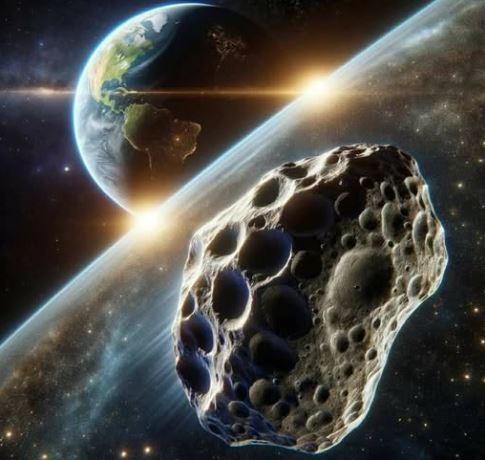

On April 13, 2029, the asteroid Apophis will pass very close to Earth (about 32,000 km) but safely, closer than geosynchronous satellites, and visible to the naked eye from some regions. This will provide a unique opportunity for NASA (the OSIRIS-APEX mission) to study the effects of Earth’s gravity on it, which will alter Apophis’ orbit and make it a member of the “Apollo” group of asteroids.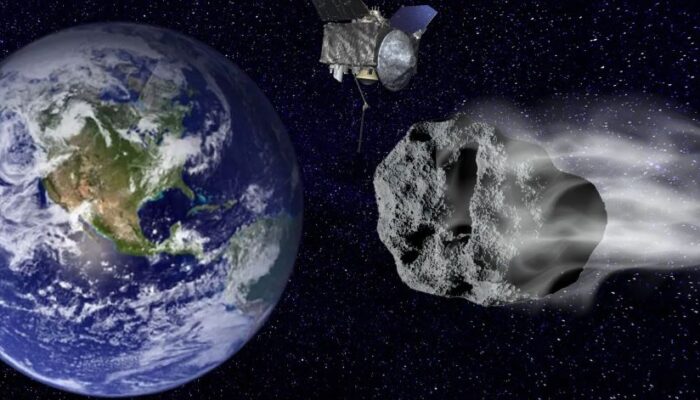

What is Apophis?
The asteroid is about 340 meters across.


It was discovered in 2004 and named after the ancient Egyptian god of chaos.
It was initially classified as “potentially hazardous” due to past estimates of impact risk, but further observations have ruled out such a risk for the next 100 years.
April 13, 2029 Event:
Close Approach: It will pass about 32,000 km from Earth’s surface, the closest ever observed to an asteroid of its size.
Visibility: Visible to the naked eye (like a faint star) in Europe, Africa, and parts of Asia due to its movement across the sky.
Gravitational Effects: Earth’s strong gravitational force will push and compress Apophis, permanently altering its rotation and orbit.
NASA Mission (OSIRIS-APEX):
This mission (formerly OSIRIS-REx) will study the impact of Earth’s gravity on Apophis to understand the asteroid’s response to external forces.
This is crucial for future planetary protection in the event of another asteroid threat.
Conclusion:
Despite previous concerns, the 2029 Apophis approach is a significant scientific event, not a collision threat, that will provide valuable data about the asteroid.