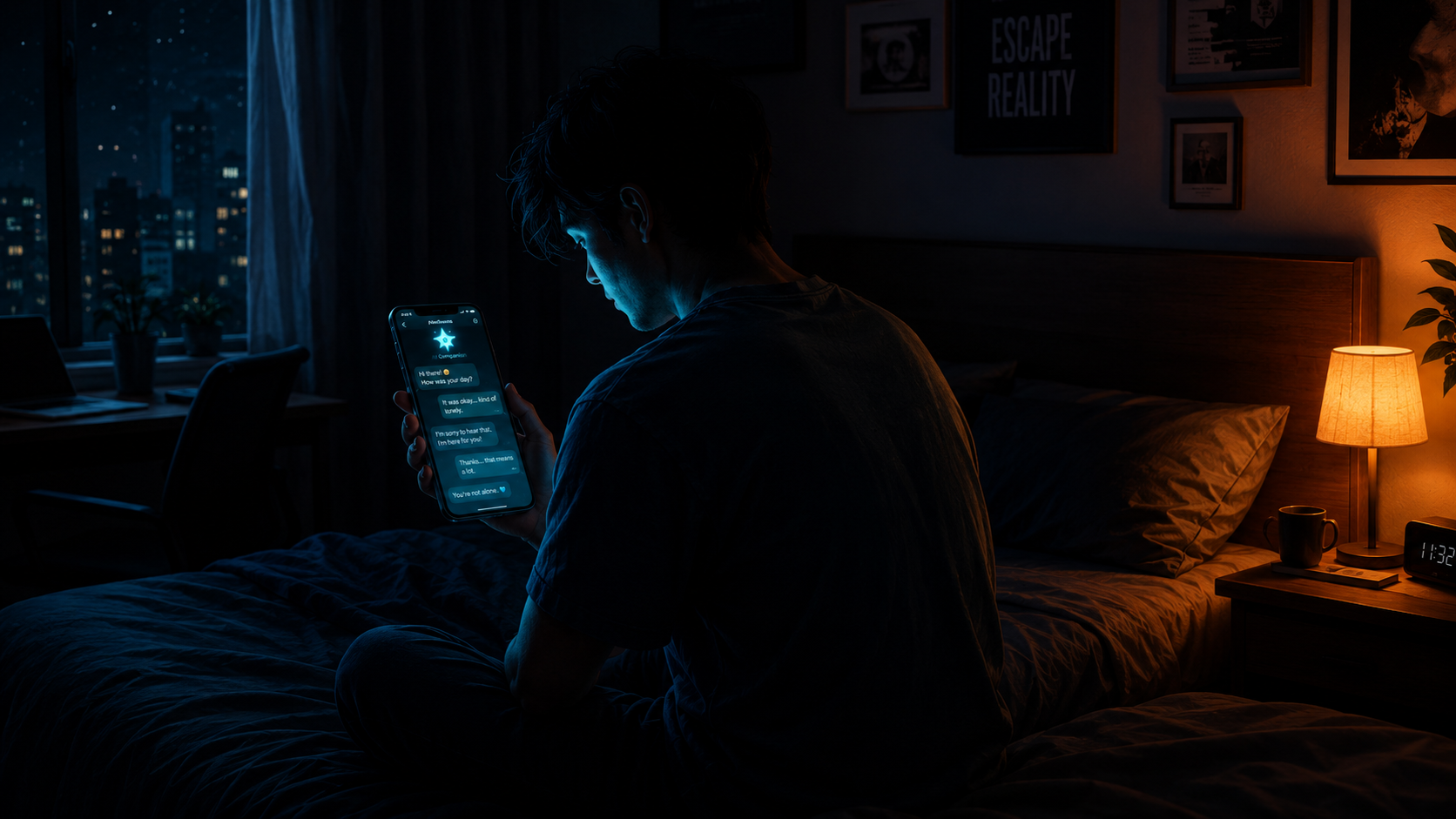
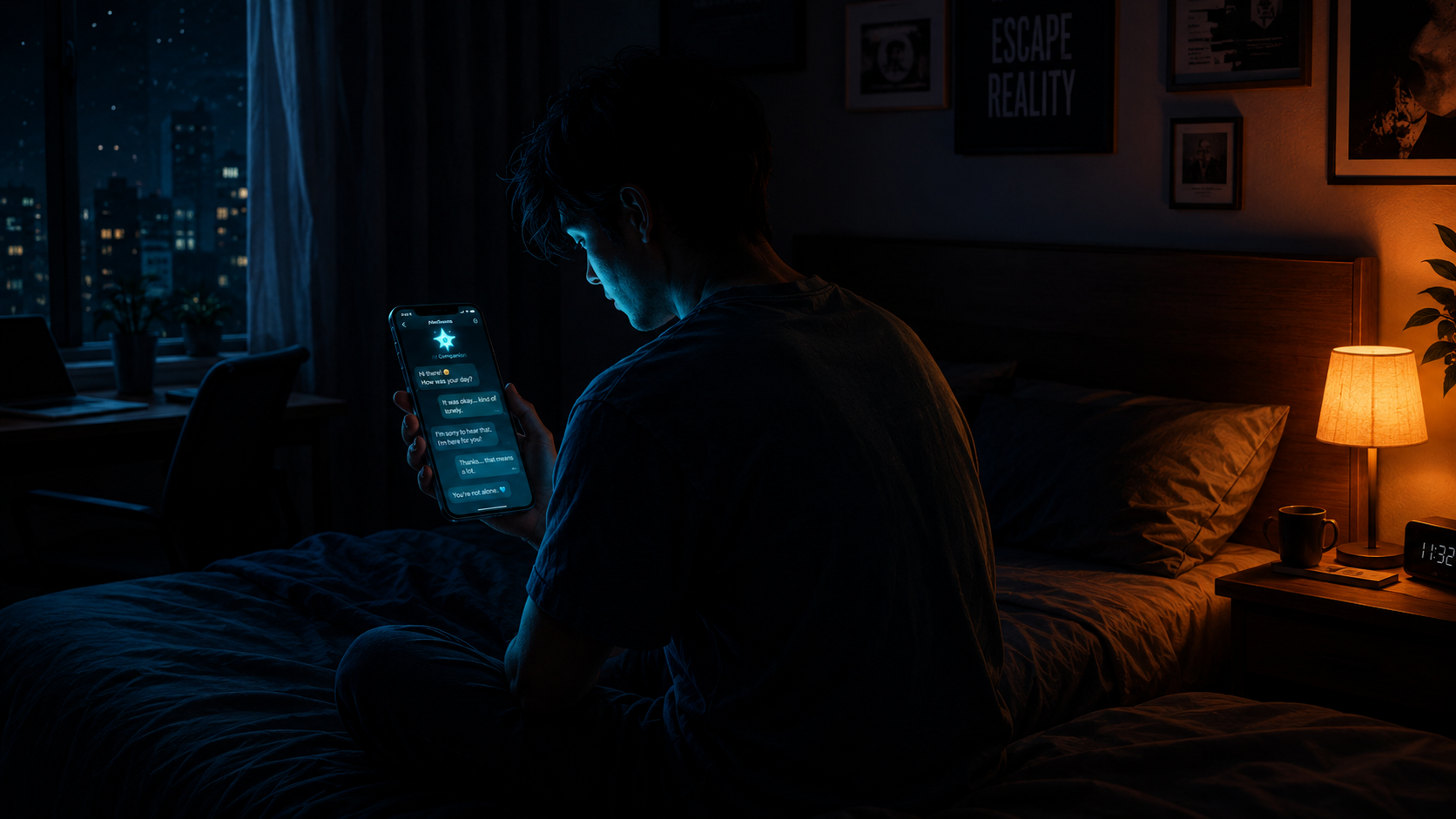
In the past, when someone was upset, anxious or confused, they chose to tell friends, relatives or family. But in recent years, new options have emerged that never really existed before. Not humans, not counselors, but AI-based chatbots that can be spoken to at any time.
The existence of this phenomenon does not mean that humans stop telling stories to each other. However, a number of studies and surveys show that more and more people are starting to use AI as a place to seek emotional support, advice, or just express their thoughts. If this trend continues to grow, what will AI’s position be in human emotional life?
AI is Starting to Become a Place for Storytelling
Many people know AI as a tool to find information, or help with work. However, the use of AI has developed further than that. Recent surveys and research show that some users use chatbots to discuss personal problems, seek other views, or get emotional support when facing difficult situations.
This phenomenon can be seen quite clearly among young people. In a survey conducted in several European countries, many respondents admitted that they had used chatbots to discuss personal problems. Some of them describe AI as a place to ask for advice or a friend who is always available.
Their reason is quite simple. Chatbots can be accessed at any time without needing to make an appointment, wait for a reply to a message, or worry about disturbing other people. For some users, this convenience makes AI the first place to express thoughts before speaking to other humans.
Surprising Research Results
This phenomenon became even more interesting after research emerged comparing emotional support from humans and AI. The results show that in certain situations, chatbot responses are rated as effective as human responses. In some conditions involving anger and fear, the AI’s responses were even rated as more helpful by study participants. For situations related to sadness, the results tend to be equivalent to human responses.
This finding does not mean that AI cares more about or understands human feelings better than humans themselves. The researchers actually found that the most influential factor was AI’s ability to provide clear, actionable advice. When someone complains about a problem, AI often offers concrete steps such as breathing techniques, ways to look at the situation from a different perspective, or simple actions that can be tried immediately.
In other words, the study does not conclude that AI is a better companion than humans. Research only shows that in certain contexts, AI responses can be perceived as helpful because they provide practical, structured direction.
Why Are Some People Comfortable Confiding in AI?
There are several reasons that often arise. One of them is because AI is always available. When someone is restless at night, the chatbot can respond immediately without having to wait for the other person to wake up or have free time. Apart from that, many users feel more comfortable talking to AI because they don’t worry about being judged by the person they are talking to.
But it’s important to understand that this convenience doesn’t necessarily mean AI is better than human conversation. What users feel is ease of access and fast response. Existing research so far has been more about how people use AI for everyday support, rather than proving that AI can replace real social relationships.
Where Do the Concerns Lie?
If AI is helping so many people, then why is there concern? This question is what researchers and psychologists are starting to discuss. A survey from the American Psychological Association shows that many psychologists have found patients are using AI for emotional support, to help with therapy, and even as an additional place to seek advice about mental health.
The problem isn’t that people are talking to AI. The problem is when AI starts to become the only place someone looks for emotional support. A number of experts warn that chatbots do not have the ability to fully understand human conditions such as social relationships in the real world. AI can provide responses, but it doesn’t actually live the experience with the user.
Some research also suggests that AI use may help reduce feelings of loneliness in the short term, but very intense use could potentially be associated with dependency and reduced direct social interaction. Because of this, many experts see AI as a complementary tool, not a replacement for human relationships.
Why is the Government Starting to Intervene?
This development is even starting to attract the attention of regulators. In July 2026, China will implement special regulations for AI companion or virtual companion services. The main focus is not because AI has succeeded in replacing humans, but because the government sees the potential risks that arise when users build increasingly close emotional relationships with chatbots.
The emergence of these regulations shows that AI companion is now seen as a social issue, not just a new technology feature. As technology begins to impact the way people seek support, build closeness, and interact on a daily basis, the attention of regulators becomes something that is hard to avoid.
So, Will AI Replace Humans?
Based on existing references, the answer does not lead to that. Available research shows that AI can be helpful in certain situations and some people are starting to use it as a place to seek emotional support. But there are no findings to suggest that AI has or will soon replace the role of friends, family, partners, or mental health professionals.
What is visible now is a change in habits. In the past, someone might directly tell another person, now some people choose to talk to AI first. After that they may continue to talk to friends, family, or other trusted parties.
Perhaps this is the most important point of this trend. It’s not that AI is replacing humans, but rather that AI is occupying a new space that was previously more often occupied by conversations between humans. This space is not a work or information search space, but rather a private conversation space. And for many people, that change is what makes this phenomenon worth paying attention to.
Reference
American Psychological Association. (2026, June 16). Psychologists say patients are turning to chatbots as mental health professionals. https://www.apa.org/news/press/relea…-mental-health
IAPP. (2026, July 15). China’s regulation on AI companions takes force. https://iapp.org/news/a/chinas-regul…ns-takes-force
KAGS-TV. (2026, July 16). More teens are turning to AI chatbots for mental health support. Here’s what parents need to know. https://www.kagstv.com/article/news/…7-9dc6ec25c217
Manchester University. (2026, July 23). AI chatbots can be as effective as humans at emotional support and sometimes better. https://www.manchester.ac.uk/about/n…etimes-better/
Reuters. (2026, May 5). Young Europeans turn to AI chatbots for emotional support, survey shows. https://www.reuters.com/technology/y…ws-2026-05-05/
Tech Xplore. (2026, July 22). AI chatbots can be as effective as humans at emotional support, sometimes better. https://techxplore.com/news/2026-07-…emotional.html
Tech Xplore. (2026, July 23). China has cracked down on AI companions: What can we learn from this? https://techxplore.com/news/2026-07-…ompanions.html