


Have you ever thought about traditional food like tiwul, gathot, corn rice, or grontol turns out to hold a story of resistance?
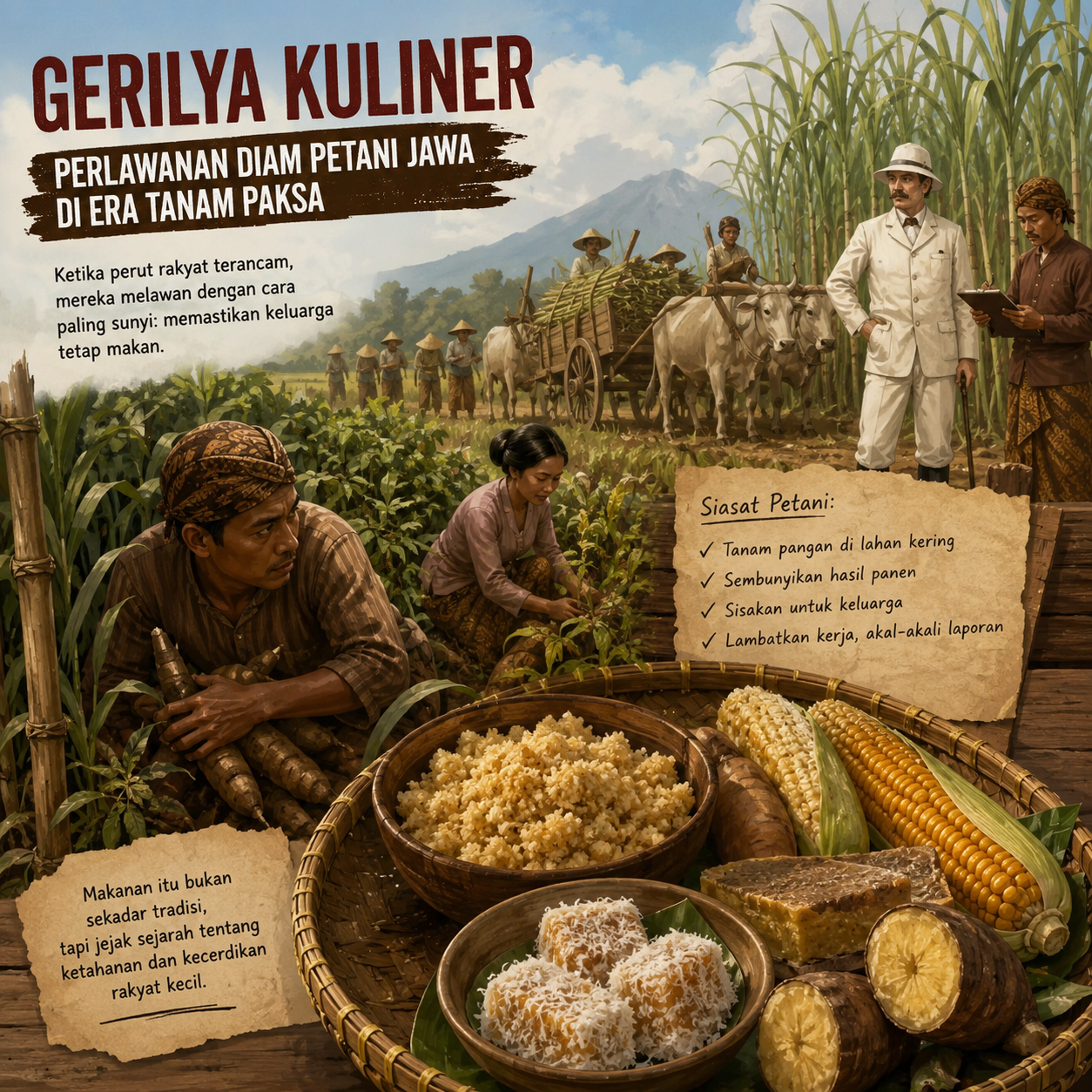
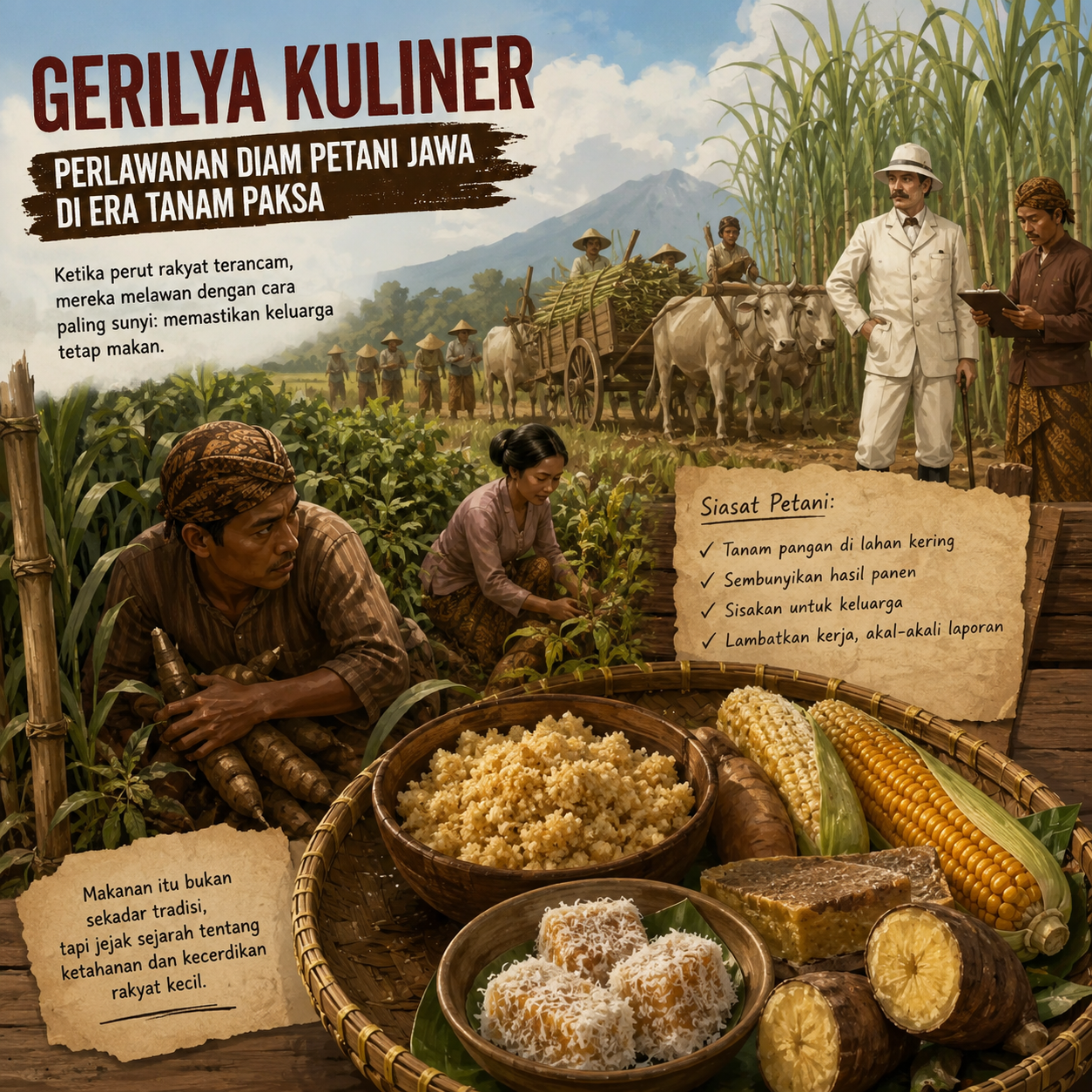
During forced cultivation in the 19th century, many Javanese farmers were forced to grow export commodities such as sugar cane. The land for growing food is getting narrower, while their families still have to eat.
Instead of fighting with weapons, many farmers chose smarter methods. They plant corn and tubers on land that can still be used, save some of the harvest, and look for various strategies to keep the kitchen stocked.
This resistance was almost unheard of, but its impact was real: they managed to survive amidst the pressure of the colonial system.
Historians refer to it as daily matchsmall actions that may not be recorded as rebellion, but are a form of resistance to injustice.
That’s why foods like tiwul or corn rice are not just village culinary delights. Behind the taste, there is a story about the resilience, ingenuity and struggle of ordinary people facing one of the most severe colonial policies in Indonesian history.
Sometimes, the greatest history is hidden on our dinner plates.