Karamunting Fruit, The Black Purple Good For Health
7 min read
2
×
Karamunting Fruit, The Black Purple Good For Health
Share this article
Hi everyone, Shalom Aleichem!
300x600
300x600
Good morning GanSist everyone!
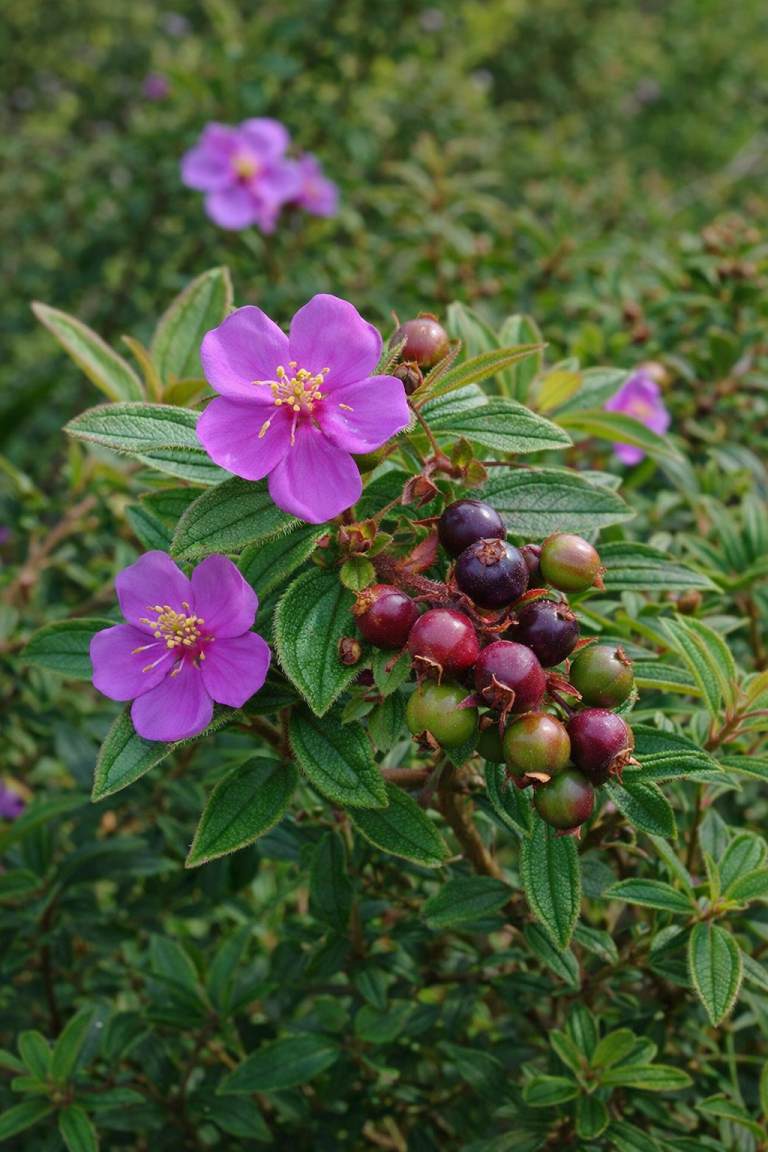
Indonesia is known as one of the countries with the greatest biodiversity in the world. There are quite a few local plants that actually have high nutritional value and health benefits, but are still little known by the wider community. One of them is caramunting fruit. This small blackish purple fruit is often found growing wild in bushes, open land, and secondary forest areas. Even though it is often considered an ordinary wild fruit, various scientific studies show that caramunting contains a variety of bioactive compounds that have the potential to provide health benefits.
Karamunting has a scientific name Melastoma malabathricum L. This plant belongs to the Melastomataceae family and is widespread in Southeast Asia, including Indonesia, Malaysia, Thailand, the Philippines and India. In various regions in Indonesia, this plant has different local names, such as karamunting, senbangun, harendong, or senggani.
Ripe caramunting fruit has a distinctive blackish purple color. This color does not just provide an attractive appearance, but comes from natural pigments called anthocyanins. This pigment is one of the reasons why caramunting fruit is starting to attract the attention of researchers in the fields of food and health.
Quote:
Small Fruit with High Antioxidant Content
One of the main advantages of caramunting fruit is its antioxidant content. Antioxidants are compounds that help protect body cells from damage caused by free radicals. Free radicals themselves can be formed due to normal metabolic processes or exposure to pollution, cigarette smoke, ultraviolet light, and various other environmental factors.
Fruits that are red, blue, purple or black are generally rich in anthocyanins. Likewise with caramunting fruit. Anthocyanins are a group of flavonoids that have been widely studied for their ability to help reduce oxidative stress in the body.
Various studies show that fruit extracts and other parts of plants Melastoma malabathricumhas quite high antioxidant activity. This activity is related to the content of phenolic compounds, flavonoids, tannins and anthocyanins contained in it.
In other words, despite its small size, caramunt fruit holds great potential as a source of natural antioxidants.
Quote:
Contains a variety of bioactive compounds
Apart from anthocyanins, caramunting also contains various other bioactive compounds, including flavonoids, tannins, saponins and various phenolic compounds.
Flavonoids have long been known as a group of compounds that have various biological activities, such as helping to ward off free radicals, supporting blood vessel health, and playing a role in cell protection processes.
Meanwhile, many phenolic compounds are also associated with high antioxidant activity. The combination of these various compounds makes caramunting fruit one of the interesting local plants to continue researching.
However, it is important to understand that the content of bioactive compounds does not mean that this fruit is a medicine. Most of the existing research is still carried out at the laboratory or experimental animal stage so its benefits in humans still require further research.
Quote:
Potentially Helps Maintain Body Health
Several studies show that the compounds contained in caramunting have anti-inflammatory potential, namely helping to reduce the inflammatory process.
Inflammation is actually the body’s natural mechanism for dealing with infection or injury. However, if it occurs excessively or chronically, inflammation can be associated with various diseases.
Various preliminary studies show that caramunting plant extract is able to exhibit anti-inflammatory activity through various biological mechanisms. However, the results of this research are not enough to make caramunting fruit the main therapy for a disease.
Therefore, caramunting fruit is more appropriately seen as part of a healthy diet rather than as a substitute for medical treatment.
Quote:
Blackish purple color that is a special feature
One of the main attractions of caramunting fruit is its very dark color when ripe. Young fruit is usually green, then turns pink, purplish red, and finally becomes blackish purple.
This color change occurs due to increased levels of anthocyanin pigments during the fruit ripening process. The more ripe the fruit, generally the darker the color will be.
Anthocyanin pigments not only function to provide natural color, but also help protect plant tissue from exposure to sunlight and various environmental factors. In humans, anthocyanins have been widely studied for their antioxidant activity.
It is not surprising when various dark purple fruits, such as blueberries, blackberries, black grapes, and caramunting, are equally the focus of researchers.
Quote:
Has Long Been Used in Traditional Medicine
People in various regions of Southeast Asia have used the caramunting plant for hundreds of years as part of traditional medicine.
Not only the fruit, the leaves, roots, stems and even the flowers are also used for various purposes. In traditional medicine, this plant is used to help treat minor wounds, diarrhea, and several other complaints.
However, it should be understood that traditional usage does not always coincide with modern scientific evidence. Scientific research is needed to ensure safety, effectiveness, proper dosage, and possible side effects. Therefore, the use of medicinal plants still needs to be done wisely and does not replace examination or treatment by health workers if you experience a serious illness.
Quote:
Potential to Become a Local Functional Food
Currently, the world is starting to pay more attention to functional food, namely food that not only meets nutritional needs, but also has the potential to provide additional health benefits.
Karamunting fruit is one of the local Indonesian plants that has the opportunity to be developed as a functional food.
Apart from being able to be consumed directly, this fruit also has the potential to be processed into various products such as jam, syrup, juice, fermented drinks, and even natural food coloring because of its high pigment content.
The development of local plant-based products such as caramunting can also increase the economic value of the community, especially if they are cultivated sustainably.
Quote:
Needs More In-Depth Research
Although the research results on karamunting are quite promising, most of the research is still at the preclinical level.
This means that clinical trials on humans are still needed in larger numbers to ensure the benefits, safety, dosage, and possible interactions with certain drugs.
Therefore, people should not easily believe claims that state that caramunting fruit is able to cure certain diseases for sure. Such claims have not been supported by strong scientific evidence.
The wisest attitude is to view caramunting as one of the local fruits that is rich in beneficial compounds and worthy of being part of a balanced diet.
Quote:
CLOSURE
Behind its small size, caramunting fruit apparently has quite large potential. The purple-black color comes from the anthocyanin content which is rich in antioxidants, while various other bioactive compounds such as flavonoids and phenolics also make this fruit interesting to study.
Although various studies show potential health benefits, caramunting is not a miracle cure that can replace medical therapy. In fact, its greatest value lies in its role as a local food source that is rich in natural compounds and has the potential to support a healthy lifestyle.
Indonesia has many native plants that are not yet widely known. Karamunting is an example that the archipelago’s biological riches still have a lot of potential waiting to be researched and utilized responsibly. Sometimes, humans are busy chasing expensive imported fruit, while wild fruit in their own yard secretly contains contents that amaze researchers. Nature often works without much promotion.
Quote:
SOURCE
Abdelwahab, S. I., Zaman, F. Q., Mariod, A. A., Yaacob, M., Abdelmageed, A. H. A., & Khamis, S. (2011). Chemical composition, antioxidant and antibacterial properties of the essential oils of Melastoma malabathricumL. Food and Chemical Toxicology, 49(10)2602-2606.
Joffry, S. M., Yob, N. J., Rofiee, M. S., Affandi, M. M. R. M. M., Suhaili, Z., Othman, F., Akim, A. M., & Zakaria, Z. A. (2012). Melastoma malabathricum (L.) Smith ethnomedicinal uses, chemical constituents, and pharmacological properties: A review. Evidence-Based Complementary and Alternative Medicine, 2012Article 258434.
Lim, T. K. (2012). Edible Medicinal and Non-Medicinal Plants: Volume 4, Fruits. Springer.
World Health Organization. (2003). WHO guidelines on good agricultural and collection practices (GACP) for medicinal plants. World Health Organization.
Xu, D. P., Li, Y., Meng, X., Zhou, T., Zhou, Y., Zheng, J., Zhang, J. J., & Li, H. B. (2017). Natural antioxidants in foods and medicinal plants: Extraction, assessment and resources. International Journal of Molecular Sciences, 18(1)96.