Hi everyone, Shalom Aleichem!
300x600
300x600
Good afternoon GanSist everyone!
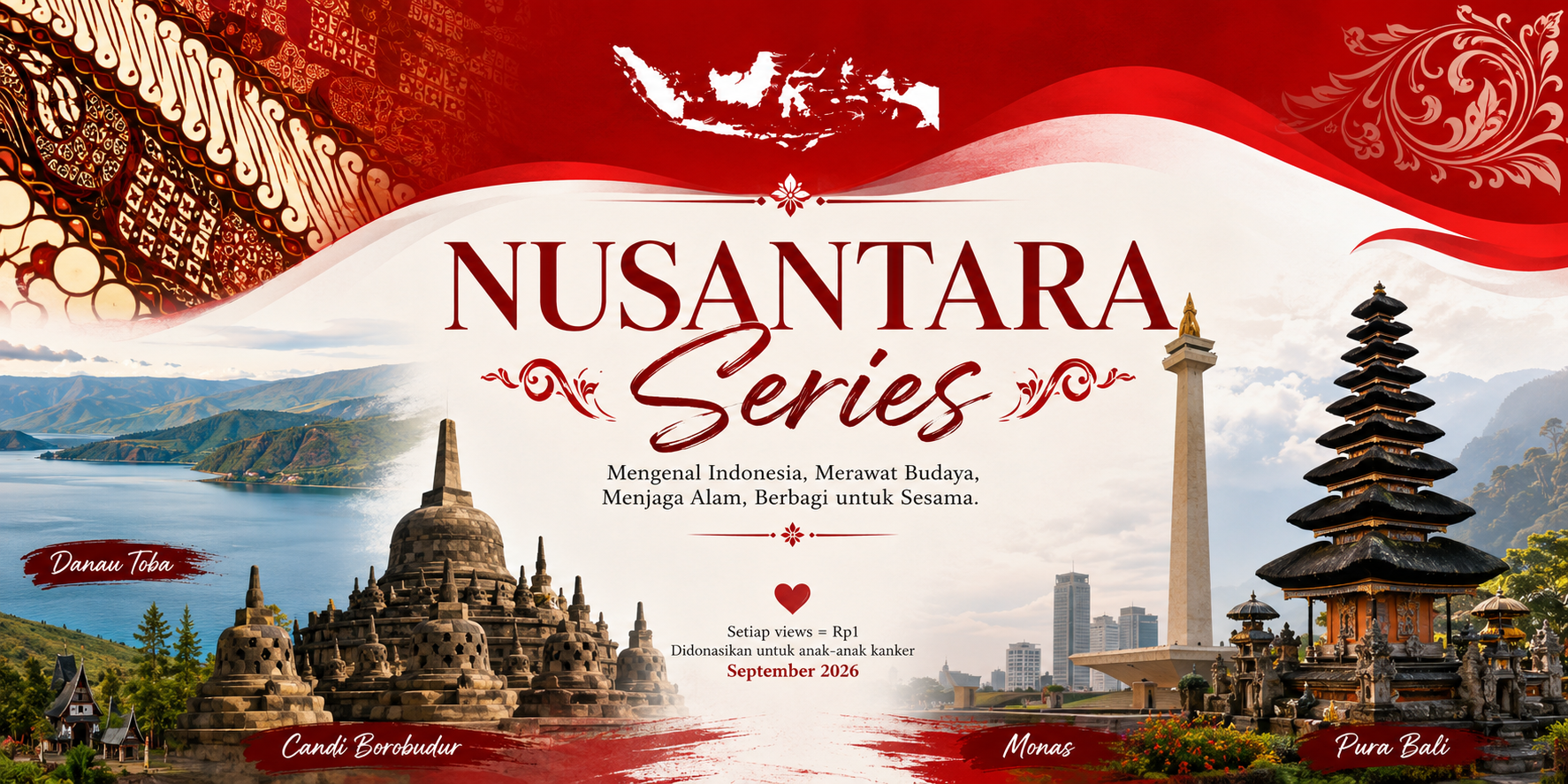
Welcome back to the Nusantara Series, a series that invites us to get to know Indonesia more closely through the rich culture, local wisdom, history and natural phenomena that each region has. In the previous series we explored the uniqueness of Pulau Weh in Aceh, which is Indonesia’s westernmost gateway. This time, we will move to the eastern region of Indonesia, specifically the Province of East Nusa Tenggara (NTT), to get to know a very interesting traditional knowledge, namely the eye of the moon.
At first glance, the term “eye of the moon” sounds like the name of a tradition or even a mythological creature. In fact, this term is a local term used by some people in NTT to describe the condition of someone who has difficulty seeing at night or when in a place with minimal light. In the medical world, this condition is known as nearsightedness (nyctalopia)which is one of the early symptoms of vitamin A deficiency.
Interestingly, the people of NTT recognized this condition long before modern medical knowledge developed widely in remote areas. They give special names based on the symptoms experienced by sufferers. This shows that traditional societies have the ability to observe the relationship between disease symptoms and body conditions through experiences passed down from generation to generation.
So, what exactly is the eye of the moon? Why is this condition so closely related to vitamin A? And what can we learn from this local wisdom?
Quote:
Getting to Know the Eye of the Moon
In various public health studies in East Nusa Tenggara, the term moon eye is used to refer to impaired vision at night. Sufferers can still see quite well during the day, but begin to have difficulty when the sun goes down or when entering a dark room.
Now, medical science explains that these symptoms occur because the retina, especially rod cells, need vitamin A to form the visual pigment in the form of rhodopsin. This pigment helps the eyes adapt to low light conditions. If the body lacks vitamin A for a long time, the process of rhodopsin formation is disrupted, so that the ability to see at night decreases. In other words, what people have long called the eye of the moon turns out to have a very strong scientific explanation.
Quote:
Local Wisdom Born from Observation
One of the interesting things about traditional Indonesian society is their ability to recognize various diseases based on visible signs.
NTT people may not be familiar with the terms “nictalopia” or “vitamin A deficiency”. However, they are able to differentiate this disorder from other eye diseases. Because the symptoms appear on moonlit nights, the condition has come to be known as moon eye.
This kind of naming shows that local wisdom is often born from observations that last for tens or even hundreds of years. This knowledge is then passed down orally so that it becomes part of the community’s culture.
This is proof that traditional knowledge does not always conflict with modern science. On the contrary, the two often complement each other.
Quote:
Why is Vitamin A So Important?
Vitamin A is a micronutrient that has many important functions for the body. Apart from maintaining eye health, vitamin A also plays a role in maintaining the body’s immune system, supporting children’s growth, maintaining healthy skin and epithelial tissue, and helping the development of various body organs.
Lack of vitamin A does not only cause nearsightedness or moon eyes. If it lasts for a long time, the condition can develop into xerophthalmianamely dryness of the eyes which can progress to corneal damage and even permanent blindness if left untreated.
Because the impact is quite serious, the World Health Organization (WHO) and the Ministry of Health of the Republic of Indonesia have made preventing vitamin A deficiency one of the important public health programs.
Quote:
Why have so many cases of the Moon’s Eyes been discovered?
East Nusa Tenggara has different geographical conditions compared to many other regions in Indonesia. Rainfall is relatively low, the dry season lasts longer, and some areas have less fertile land. This condition has influenced people’s consumption patterns in the past so that vitamin A intake from green vegetables, orange fruit or animal foods was not always sufficient.
As a result, vitamin A deficiency has become a public health problem in several areas of NTT. This condition is what makes the term moon’s eye quite well known by the local community.
Now, the situation is much better thanks to improved health services, nutritional education, and programs to provide vitamin A capsules to babies and toddlers.
Quote:
Modern Handling Does Not Erase Local Wisdom
Progress in medical science does not mean eliminating the value of local wisdom. On the other hand, the term eye of the moon can actually be an entry point for providing health education to the public. Health workers can use terms that are familiar to the public so that the information becomes easier to understand.
This approach has proven to be more effective than using complicated medical terms. When people know that moon eyes are related to vitamin A deficiency, they will more easily accept the importance of consuming nutritious foods and following a vitamin A supplementation program.
This is an example of how local culture can work side by side with modern science.
Quote:
Prevention is Better than Cure
Vitamin A deficiency can actually be prevented through a balanced diet. Sources of vitamin A can be obtained from liver, eggs, milk, fish, and various green vegetables such as spinach and Moringa leaves. Apart from that, yellow or orange fruit and vegetables, such as carrots, pumpkin, papaya and mango, are also rich in provitamin A in the form of beta-carotene which the body can convert into vitamin A.
The Indonesian government also runs a program to provide high-dose vitamin A capsules to babies and toddlers every February and August through posyandu and health facilities. This program aims to prevent vitamin A deficiency which can disrupt children’s eye health and growth.
Quote:
CLOSURE
Indonesia has so much local wisdom born from people’s life experiences. The eye of the moon is an interesting example from NTT. This simple term shows that people have long recognized the symptoms of night blindness even though they do not yet understand the biological mechanism.
Now, science explains that moon eyes are one of the early signs of vitamin A deficiency. Modern knowledge reinforces what society has observed for years. From here we learn that tradition and science are not always on opposite sides. The two can actually complement each other to improve public health.
Through the Nusantara Series, we again discover that Indonesia’s wealth is not only in the form of dance, traditional houses or natural panoramas. Local knowledge about health is also part of the cultural heritage that is worthy of respect. As long as it is studied scientifically and combined with modern health services, local wisdom such as the eye of the moon can be a bridge that strengthens health education in society.
Quote:
SOURCE
Ministry of Health of the Republic of Indonesia. (2024). Vitamin A Giving Month. https://kampungkb.kemendukbangga.go….rian-vitamin-a
East Nusa Tenggara Provincial Health Service. (2022). East Nusa Tenggara Province Health Profile in 2021. East Nusa Tenggara Provincial Government.
East Nusa Tenggara Provincial Government. (2025). NTT One Data Portal: Coverage of Toddlers Getting Vitamin A in 2022-2024.
World Health Organization. (2009). Global prevalence of vitamin A deficiency in populations at risk 1995-2005. World Health Organization.
@jokingwet@salamsehaat @salamsehaat