Hi everyone, Shalom Aleichem! 
Good afternoon all of you! 
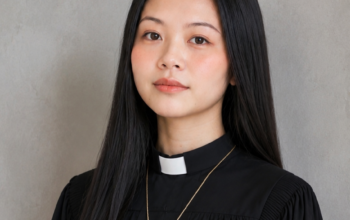
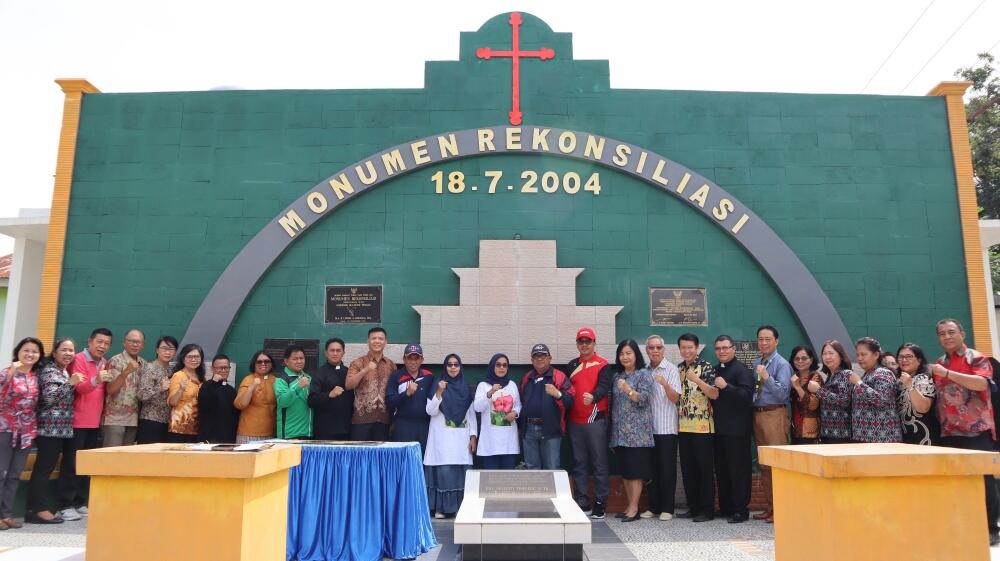
On the evening of the date 18 July 2004when the congregation was attending worship at the Central Sulawesi Christian Church (GKST) Effatha Congregation in Palu, the solemn atmosphere that should have been a peaceful space turned into a bloody tragedy that left physical and emotional wounds. A young priestess named Susianti Tinulele shot right when he was reading the Word and leading worship in the church pulpit. The bullet hit his forehead and took his life instantly in front of the congregation present.
This incident is not just an ordinary criminal record. This incident is a symbol of the fragile security of civil society at a time when Central Sulawesi was still haunted by various forms of post-conflict violence. Twenty-two years have passed, but the memory of that night remains alive in the memories of many people, especially church members, the people of Central Sulawesi, and the families of the victims.
Quote:
A Worship Turns Into Tragedy
Based on various media reports and human rights monitoring organizations, the attack occurred while Sunday evening services were taking place at Effatha Church, Palu. When Pastor Susianti Tinulele stood on the pulpit leading the service, a group of armed men came to the church and opened fire inside the building. One of the bullets hit Pastor Susianti’s forehead, causing the priest to die on the spot. Apart from the fatalities, a number of congregants were also injured as a result of a series of shots fired by the perpetrators.
Reports that emerged at that time stated that the perpetrators came on motorbikes and carried long-barreled weapons. The attack was very fast, but its impact was enormous. The congregation, which was previously worshiping, was suddenly struck by panic. Many people tried to save themselves when the sound of gunfire broke the night.
The incident immediately attracted national attention. At that time, the National Police Chief even went straight to Palu to monitor the progress of the investigation. The central government and security forces are aware that attacks on religious leaders in the middle of worship have the potential to trigger wider tensions in areas that have previously experienced prolonged communal conflict.
Quote:
Injured Victims and Wounds That Are Not Always Visible
When people remember this tragedy, attention often focuses on the death of Pastor Susianti. In fact, that night also left deep wounds for the congregation who were victims of gunfire.
Four members of the congregation were reported to have suffered serious injuries as a result of the attack. One of the victims was a 16 year old teenage girl with the initials D. D suffered a gunshot wound to the right temple which caused damage to the sinus cavity and serious nose bleeding. In such emergency situations, the victim’s chances of survival often depend on the speed of medical attention and the extent of tissue damage that occurs.
Luckily, D managed to get through the critical period after undergoing a series of operations and finally recovered. Now, after more than two decades have passed, D has lived a normal life, married and had children. However, the gunshot wound that D experienced left long-term effects in the form of disorders of some of the facial nerves.
This story reminds us that the impact of violence does not always stop when the victim leaves the hospital. Many survivors carry physical and psychological scars for years. In studies of victims of conflict and armed violence, conditions like this are known as long-term consequences of violencenamely long-term impacts that can continue to affect a person’s quality of life even after the medical healing process is complete.
Quote:
Central Sulawesi in the Shadow of Conflict
To understand why this tragedy was so shocking, we need to look at the broader context.
The early 2000s was a difficult period for Central Sulawesi, especially the Poso region and its surroundings. The communal conflict that has been going on since the late 1990s has caused large numbers of casualties, damaged social relations, and created a long-lasting sense of insecurity.
Even though various peace efforts have been made, including through the Malino Agreement in 2001, a number of armed groups still carry out sporadic acts of violence. International monitoring organizations such as Christian Solidarity Worldwide(CSW) and various other reports noted that throughout 2004 there were still a series of shootings against civilians, community figures and religious leaders in Central Sulawesi.
In this context, the murder of Pastor Susianti is not an isolated event. This incident occurred in the midst of a series of violence that attempted to disrupt the stability and reconciliation process that society was building.
What makes this event so surprising is its location and timing. The attack was carried out inside the church while services were in progress. In many religious traditions and universal human norms, places of worship are seen as safe spaces that must be respected by everyone. When violence enters the space, the psychological impact far exceeds the recorded number of victims.
Quote:
Case Disclosure Process
In the years after the incident, security forces continued to investigate. An important development occurred when a number of suspects linked to violent networks in the Poso and Palu areas were arrested.
A reconstruction of the case carried out in 2007 revealed the chronology of the attack in more detail. Based on police information and ANTARA reports, one of the suspects named Basri was named as the perpetrator who opened fire at Pastor Susianti while the victim was preaching on the pulpit. Reconstruction shows that the perpetrators previously surveyed the church location before carrying out their action.
Disclosure of this case is an important step in law enforcement. However, for the families of victims and survivors, the legal process does not necessarily erase the trauma that has formed. In various cases of conflict-motivated violence, legal justice is important, but social and psychological recovery is also no less important.
Quote:
Why Should This Event Be Remembered?
There is a question that often arises when discussing tragedies that have passed decades, why do they still need to be remembered? The answer is simple. Remembering does not mean maintaining hatred. Remembering means learning.
A society that forgets history risks repeating the same mistakes. The tragedy of Pastor Susianti’s murder teaches how high the price must be paid when intolerance, extremism and violence are allowed to grow.
This incident also shows that the victims of conflict are not only those on the front lines of conflict. Ordinary civilians, teenagers, children, religious leaders, even worshipers can become victims in a matter of seconds.
In addition, this tragedy shows the importance of protecting freedom of religion and worship. The right to worship safely is part of universally recognized human rights. When someone loses their life while carrying out their worship, it is not only that person who is hurt, but also the principles of humanity itself.
Quote:
A Legacy of Peace that Must Be Preserved
More than twenty years after the incident, Central Sulawesi has experienced many changes. Various efforts at reconciliation, inter-religious dialogue and social development have helped create a situation that is much more conducive than the dark times of the early 2000s.
However, peace is not something that can be considered complete. Peace must continue to be maintained through education, respect for differences, fair law enforcement, and the community’s willingness to reject all forms of violence.
Remembering Pastor Susianti Tinulele is not just about remembering a victim. Remembering also about honoring the courage of a church servant who breathed his last while carrying out his ministry duties. Remembering the congregation who were hurt but continued to live. Remembering families who have lost loved ones. And most importantly, remembering the community’s determination to ensure that a similar tragedy never happens again.
Quote:
CLOSURE
On July 18 2004, bullets stopped the sound of a priest who was reading the Word in the pulpit of the Effatha Church in Palu. However, bullets were unable to erase the meaning of this event. Two decades later, the name of Pastor Susianti Tinulele is still remembered as part of a dark history that reminds this nation about the importance of tolerance, humanity and peace.
Refusing to forget doesn’t mean living in the past. Refusing to forget means ensuring that the suffering of the victims has meaning for the future. As long as their stories continue to be told, as long as the lessons from this tragedy continue to be passed down, the hope for a more peaceful Indonesia will remain alive.
Quote: