Hi everyone, Shalom Aleichem!
Good evening GanSist everyone! 
In Superwoman Series #110, we learn that there are more important things than just having a partner. In Superwoman Series #111, we discuss the importance of controlling oneself from shopping addiction as a form of maturity. Furthermore, Superwoman Series #112 reminds that a woman’s worth is not only determined by beauty and wealth, while Superwoman Series #113 discusses how to choose hobbies that help women grow physically, mentally, socially, spiritually and financially.
Now, at Superwoman Series114th, we enter a discussion that is no less important, namely how to recognize unhealthy relationships.
Many women think that a relationship that lasts a long time must be a good relationship. In fact, the length of a relationship does not always reflect its quality. There are relationships that last for years but are filled with manipulation, threats, psychological pressure and control that slowly destroy mental health.
In psychology, various forms of emotional manipulation have been widely studied because they can have an impact on increasing fear, depression, low self-esteem, and difficulty in having the courage to stand up for the truth. What makes this situation dangerous is the fact that the manipulation often occurs so gradually that the victim does not immediately realize what is happening.
A Superwoman is not only strong at work, smart at managing finances, and disciplined in maintaining health. A strong woman is also able to recognize when a relationship begins to threaten her courage, strength, and psychological well-being.
Here are 6 signs that should be a serious warning.
Quote:
1. King of playing victim: Always feels like he is the victim even though he is actually the one who is at fault
In every conflict, a wise person is able to admit mistakes and take responsibility for his actions. On the other hand, people who like to play the victim (playing victim) almost always shifts the blame to someone else.
For example, after saying harsh words, he actually said that it was Sista who made him angry. After breaking his promise, he blamed the situation or even blamed Sista for being too demanding. This pattern makes conflict resolution impossible because there is no room for personal responsibility.
In the long term, a partner who constantly plays the victim can make you start to doubt your own judgment. Every conflict will end with the conclusion that Sista is always the cause of the problem, even though that is not actually the case.
Healthy relationships require the ability to evaluate each other, not a race to determine who suffers the most.
Quote:
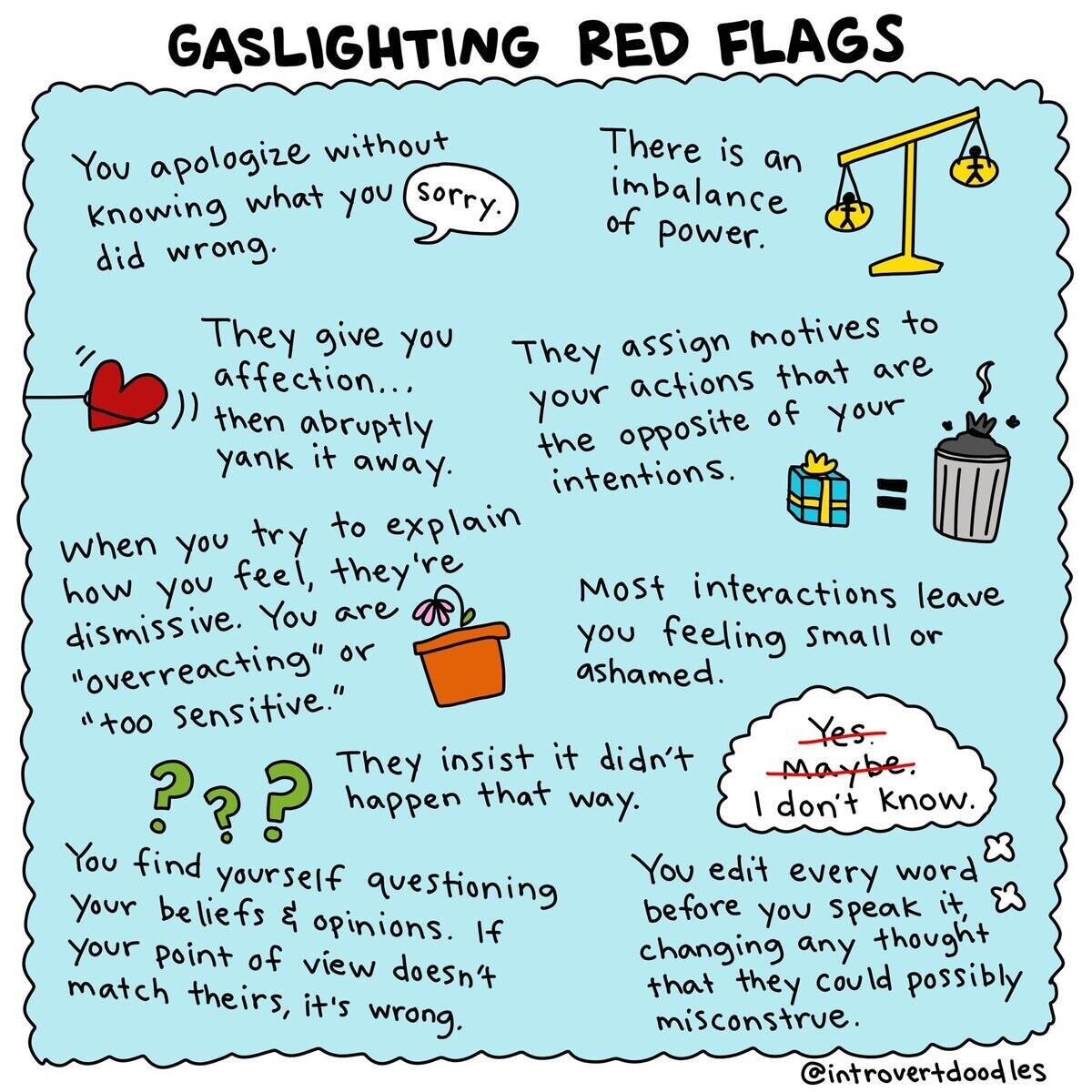
2. Gaslighter: Erodes your sanity by making you doubt reality
One of the most discussed forms of psychological manipulation in recent years is gaslighting. Gaslighting occurs when someone repeatedly causes their partner to doubt their own memories, perceptions, or judgment.
For example, your partner says that an incident never happened, even though you remember it clearly. Or, your partner calls you too sensitive, too much, or “imagining things” every time you express feelings that are actually normal. Over time, the victim begins to lose confidence in his own thoughts. Victims become dependent on the perpetrator’s explanations regarding what is considered right or wrong.
Research shows that this kind of psychological manipulation can erode self-esteem, increase anxiety, and make it more difficult for victims to leave the relationship.
Differences of opinion are normal. However, making someone constantly doubt the reality they are experiencing is not a form of love.
Quote:
3. Guilt trip maker: Makes you always feel guilty
Guilt is a normal emotion when someone has done something wrong. However, in a manipulative relationship, guilt is actually used as a tool to control the partner.
For example, when Sista wants to meet family or friends, her partner says that this action shows that Sista doesn’t love him. When you refuse an unreasonable request, your partner says that you are selfish or don’t care.
This technique is known as a guilt trip, namely making someone feel guilty in order to comply with someone else’s wishes.
If it goes on continuously, the victim will get used to being people pleaserto avoid guilt.
Healthy relationships respect personal boundaries. Mature partners do not use guilt as a tool to gain compliance.
Quote:
4. Silent treatment practitioner: Make Sista lose her confidence
Everyone needs time to calm down when they are angry. However, this is different from silent treatment which is used as a form of punishment.
In silent treatment, someone deliberately ignores their partner, refuses to communicate, does not answer messages, or pretends as if their partner is not there, with the aim of making their partner feel tired and ultimately inferior to themselves. Victims often start to think that they have to apologize even though they have done nothing wrong. In fact, he felt he had to constantly seduce his partner so that he wouldn’t be ignored again.
Research on social exclusion shows that being intentionally ignored can lead to a marked decrease in self-confidence, because humans have a basic need to be accepted and appreciated.
Healthy communication may involve a temporary pause to calm emotions, but it is always followed by a willingness to discuss openly. Using silence as a weapon to control your partner is not healthy behavior.
Quote:
5. Love bomber: Makes Sista feel like she is living in a golden cage
At the beginning of a relationship, attention and affection are certainly pleasant things. However, love bombing is different from genuine affection.
Love bomber men usually give excessive attention in a short time, gift lots of things, constantly contact their partner, or make big promises before the relationship really develops naturally.
At first glance, this behavior seems romantic. However, once the victim begins to become emotionally dependent, this concern often turns into control. Love bomber men start to regulate who they can meet, how they dress, and even the victim’s personal decisions. The victim feels like he is living in a golden cage. From the outside it appears to be filled with affection, but in fact it lacks the freedom to develop.
Healthy relationships provide space for each person to maintain courage, purpose in life, and balanced social relationships.
Quote:
6. King of intimidation: Threatening to hurt yourself or others so that you obey
This is one of the most dangerous signs in a relationship. There was a man who said, “If you fight, I will kill myself.” There are also men who threaten to kill their parents, friends, or even partners if they don’t comply with their wishes.
This kind of threat is not proof of love. Threats are a form of intimidation that aims to create fear so that the victim feels they have no choice but to persist.
According to various institutions that deal with violence in relationships, threats to oneself or others are an important risk factor that should not be taken lightly.
When a threat like this arises, safety must be the top priority. Victims need to seek support from family, trusted friends, or authorized professional institutions to help develop safe steps.
No one is responsible for another person’s decision to commit violence against themselves or against others.
Why is recognizing these signs so important? Emotional manipulation rarely begins with very obvious actions. Often, the behavior develops little by little so that the victim adapts without realizing that their personal boundaries are continually being violated. As a result, many women lose their self-confidence, move away from family and friends, sacrifice their personal dreams, and even feel unable to live without their partners.
In fact, healthy relationships actually provide a sense of security, encourage growth, respect opinions, and support the independence of each party.
Healthy love does not silence someone’s courage. Healthy love is not built on fear. Healthy love doesn’t require pressure.
Quote:
CLOSURE
Being a strong woman doesn’t just mean being able to work hard, having achievements, or maintaining a healthy body. True strength can also be seen from the courage to set limits on behavior that undermines courage and self-confidence.
If you find patterns such as playing victim, gaslighting, guilt trip, silent treatment, love bombing, or intimidation that are repeated and do not show change even though they have been communicated well, don’t think of it as normal. These behaviors are signs of an unhealthy relationship and can develop into more serious forms of psychological violence.
As part of Superwoman Series #114, this discussion reminds us that strong women are not women who are able to survive every relationship. A strong woman is a woman who is able to differentiate between healthy love and manipulation, and has the courage to leave a relationship that continually damages her safety, strength and future.
A good relationship will make you grow. On the other hand, a relationship filled with manipulation will make you slowly lose yourself. Choose a relationship that provides a sense of security, mutual respect, honest communication, and the opportunity for both parties to develop into better people.
Quote:
SOURCE
One Hundred Percent Male Y*ut*be Account (but adapted to a female style)
American Psychological Association. (2023). Healthy relationships. American Psychological Association. https://www.apa.org
Evans, P. (2010). The verbally abusive relationship: How to recognize it and how to respond(Expanded 2nd ed.). Adams Media.
National Domestic Violence Hotline. (2023). Warning signs of abuse. https://www.thehotline.org
Stark, E. (2007). Coercive control: How men entrap women in personal life. Oxford University Press.
Sweet, P. L. (2019). The sociology of gaslighting. American Sociological Review, 84(5)851–875.
World Health Organization. (2021). Violence against women prevalence estimates, 2018. World Health Organization.
Williams, K. D. (2007). Ostracism. Annual Review of Psychology, 58425–452.
@vale79791 @strangerfdotnet @jokingwet