So that you don’t become like YTR, here’s how you can free yourself from dark romance!!
7 min read
20
×
So that you don’t become like YTR, here’s how you can free yourself from dark romance!!
Share this article
Hi everyone, Shalom Aleichem!
300x600
300x600
Good evening GanSist everyone!
Welcome back to Superwoman Seriesthe 108th, a series that discusses how women can become strong individuals physically, mentally, socially and spiritually.
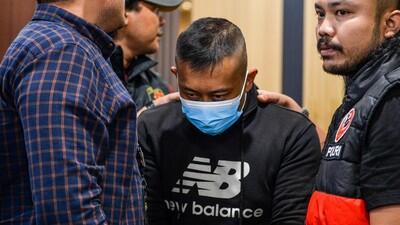
At the end of June 2026, the Indonesian public was again shocked by news about alleged cases of torture and confinement in dating relationships that went viral on social media and various news portals. This case reminds many people of a number of cases of violence against women that have shocked Indonesia, such as the case involving artists Ardina Rasti and Eza Gionino, as well as the case involving Manohara Odelia Pinot and Tengku Muhammad Fakhry Petra.
These cases have one common thread, namely a romantic relationship that turned into a relationship full of obsession, fear, violence and suffering. In recent years, this phenomenon is often referred to as dark romance, namely a relationship that is glorified even though it contains elements of manipulation, domination, threats or violence.
It needs to be understood that a relationship full of possessiveness, threats, or violence is not a form of deep love. Many studies actually show that healthy relationships are characterized by a sense of security, mutual respect, good communication, and the freedom for each person to dare to develop.
So, how can a woman not be trapped in that kind of relationship?
As part of Superwoman Series #108, here are five steps that can help you escape the trap of dark romance.
Quote:
1. Don’t take obsessive behavior as proof of love
One mistake that often occurs is taking obsessive behavior as a sign of affection. For example, a partner forbids meeting friends, asks for social media passwords, regulates how to dress, gets angry when messages are not answered immediately, and always wants to know the partner’s location.
At the beginning of a relationship, this behavior sometimes seems romantic because it is seen as a form of attention.
In fact, research on unhealthy relationships shows that controlling behavior is often an early sign of emotional abuse and can develop into other forms of violence.
Healthy love is not built on fear. Healthy love actually provides space for someone to grow, make friends, dare to be themselves, have privacy, and develop themselves.
A Superwoman understands that attention is different from mastery. If someone starts trying to control all aspects of your life, that’s something you should be wary of.
Quote:
2. Don’t glorify rude and temperamental attitudes
Movies, novels, and social media sometimes portray men who get angry easily, are excessively jealous, or are aggressive as “very loving.”
However, uncontrolled anger and aggressive behavior are not indicators of love. Research in the field of violence in relationships shows that perpetrators of violence often have a pattern of irritability, difficulty controlling aggression, like to blame others, and use threats or intimidation to control.
A healthy relationship does not make someone live in anxiety. If you feel like you always have to be careful so that your partner doesn’t get angry, is afraid to express your opinion, or often feels intimidated, your romantic relationship needs to be evaluated.
A strong woman is not a woman who is able to endure infinite suffering. A strong woman is a woman who dares to admit that she has the right to be treated politely.
Quote:
3. Maintain Relationships with Family and Friends
Many perpetrators of unhealthy relationships try to separate their victims from the social environment. Victims begin to rarely see their family, stay away from friends, no longer have a place to talk to, and become completely dependent on their partner.
This condition is very dangerous. Research shows that social support is an important protective factor against violence in relationships. Friends and family can often spot red flags that someone in love isn’t aware of.
Therefore, never sacrifice all your social relationships just for the sake of one romantic relationship. Healthy love does not ask someone to abandon everyone they love.
A Superwoman maintains good relationships with parents, siblings, friends and a positive community. A healthy social network can be a refuge when facing problems.
Quote:
4. Build Emotional and Financial Independence
One of the reasons why some people find it difficult to get out of an unhealthy relationship is addiction. This dependency can be in the form of emotional dependency, economic dependency, and social dependency. A person feels that he will not be able to live without a partner, even though the relationship is painful.
In fact, research shows that independence and self-confidence can help someone make healthier decisions in relationships.
Building independence can be done in various ways, such as having sufficient competence, managing finances well, maintaining friendships, developing hobbies and personal abilities, and learning to recognize one’s own emotional needs.
Being independent doesn’t mean you don’t need other people. On the other hand, independence helps a person build relationships based on healthy choices, not on fear of being alone.
A Superwoman does not make her partner the only source of her identity.
Quote:
5. Believe in Danger Signs and Dare to Escape
Many victims of violence in relationships admit that they actually saw the signs of danger from the start. For example, he often lies, is very obsessive, likes to insult women, gets angry easily, likes to threaten, and commits small acts of violence which then escalate.
However, these signs are often ignored because they love their partner too much, hope their partner will change, are afraid of losing the relationship, and feel empathetic towards their partner.
In fact, research shows that patterns of violence in relationships often repeat themselves if there is no real change and clear accountability from the perpetrator.
Therefore, one of the greatest forms of courage is to admit that a relationship is no longer safe.
Running away from an unhealthy relationship is not a sign of cowardice. Rather, it is a form of self-protection. No romantic relationship is worth maintaining if it costs you fear, physical violence, psychological trauma, and loss of self-esteem.
A Superwoman understands that she is valuable and deserves a healthy relationship.
Quote:
CLOSURE
Cases of violence in relationships that have come to public attention should be a reminder that love does not always come in a beautiful form. There are relationships that appear romantic on the surface, but are actually filled with control, manipulation, and violence.
In order not to get trapped in a dark romance, there are 5 important steps you can take:
1) Don’t take obsessive behavior as proof of love 2) Don’t glorify rude and temperamental attitudes 3) Maintain relationships with family and friends 4) Build emotional and financial independence 5) Trust the danger signs and have the courage to run away from an unhealthy relationship
As part of Superwoman Series #108, there is an important message to remember, that healthy love makes a person feel safe, appreciated, and dare to grow. If a relationship is filled with fear and suffering, what needs to be asked is not how much love there is, but rather how safe the relationship is to maintain.
Because, in the end, a strong woman is not a woman who is able to survive in all forms of relationships, but a woman who dares to choose healthy relationships and dares to leave relationships that damage her.
Quote:
SOURCE
American Psychological Association. (2023). Healthy relationships. American Psychological Association.
Centers for Disease Control and Prevention. (2024). Preventing intimate partner violence. U.S. Department of Health and Human Services.
Herman, J. L. (2015). Trauma and recovery: The aftermath of violence—from domestic abuse to political terror. Basic Books.
Stark, E. (2007). Coercive control: How men entrap women in personal life. Oxford University Press.
World Health Organization. (2021). Violence against women prevalence estimates, 2018. World Health Organization.
World Health Organization. (2024). Violence against women. World Health Organization.
Walker, L. E. A. (2017). The battered woman syndrome(4th ed.). Springer Publishing Company.
National Domestic Violence Hotline. (2023). Warning signs of abuse. National Domestic Violence Hotline.