Bro, Sis — when you talk about the world’s most famous serial killers, names like Jack the Ripper, Ted Bundy, or Jeffrey Dahmer immediately come to mind. But have you ever thought… does Indonesia have a similar dark history? And if so, why do we almost never hear the story?
This thread is not fiction. This is a reconstruction based on Dutch colonial archives, newspaper reports The Locomotive And Surabaiasch Handelsbladas well as records of the Dutch East Indies Police (Politie Indies Nederlandsch) from the 1930s which are now partially stored in the National Archives of the Republic of Indonesia (ANRI).
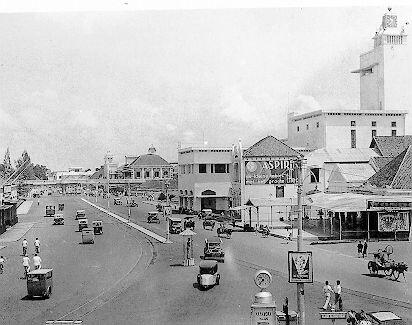
Surabaya, 1932 — A Restless City
Surabaya in the early 1930s was the second largest port city in the Dutch East Indies. With a densely mixed population — natives, Chinese, Arabs and Europeans — the city is alive day and night. The Atom Market doesn’t exist yet, but the Chinatown area in Kembang Jepun is already busy. The narrow alleys in Peneleh and Ampel are home to thousands of workers and small traders.
This is where the terror began. Between late 1932 and mid-1934, at least seven female bodies were found in various corners of the city — always in areas close to rivers or waterways, always in the early hours of the morning, and always in the same condition: the victims appeared not to be struggling, as if asleep.
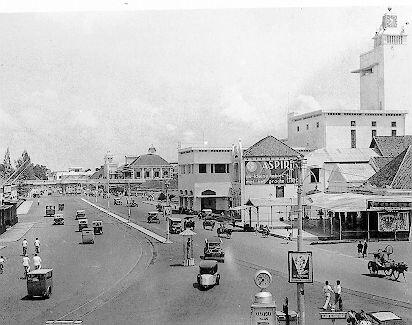
Past Photos of Surabaya
What makes this case unique — and frightening — is the consistency of the pattern. Colonial police initially thought this was an isolated case: a woman had disappeared and drowned, which was not unusual in a port city. But an inspector named Christiaan de Vries suspecting the same hand behind all these deaths.
De Vries noted three similarities he couldn’t ignore:
Quote:
De Vries then gave the perpetrator an informal nickname in his internal notes: “The Shadow Man” — which in Indonesian means Shadow Man. The name was leaked to local journalists and became an urban legend that haunted Surabaya for years.
Who Is The “Shadow Man”?
This is the most interesting and saddest part of this story, bro. De Vries’ investigation led to a middle-aged man who worked as a loader at Tanjung Perak Port. This man — archival records refer to him by the initials “SK” to protect his family — was known to be quiet and always out late at night.
But before any arrests could be made, something happened that changed everything: political upheaval. 1933–1934 was a time of high tension in the Dutch East Indies following the warship mutiny Seven Provinces. The colonial government’s focus shifted completely to political security. Criminal police budgets were cut. De Vries was transferred to Batavia.
Quote:
After De Vries left, there were no longer any officials who were truly enthusiastic about investigating this case. And what is even more surprising: after mid-1934, similar cases stopped occurring. Is the perpetrator dead? Moving cities? Or were you caught in another unrelated case?
We don’t know. And that’s what makes this case so haunting.
Why Did It Disappear from History?
There are several factors that explain why this story never made it into Indonesian crime history books:
Firstthe victims were women from the lower social class. In the very strict hierarchy of colonial society, their deaths received little attention from the Dutch-language press which focused more on the European community. Only one or two short reports appeared in local newspapers.
Secondcolonial police archives are largely still not digitized and are stored in imperfect conditions. Many documents were damaged by the tropical climate or lost during the 1945–1949 independence struggle.
Third — and this is perhaps the most important thing — Indonesia as an independent nation has never had a strong tradition of documenting pre-independence criminal history. The focus of our historiography is always on resistance, heroes and nation-building. Dark stories like this don’t fit into that narrative.
Epilogue: What Remains
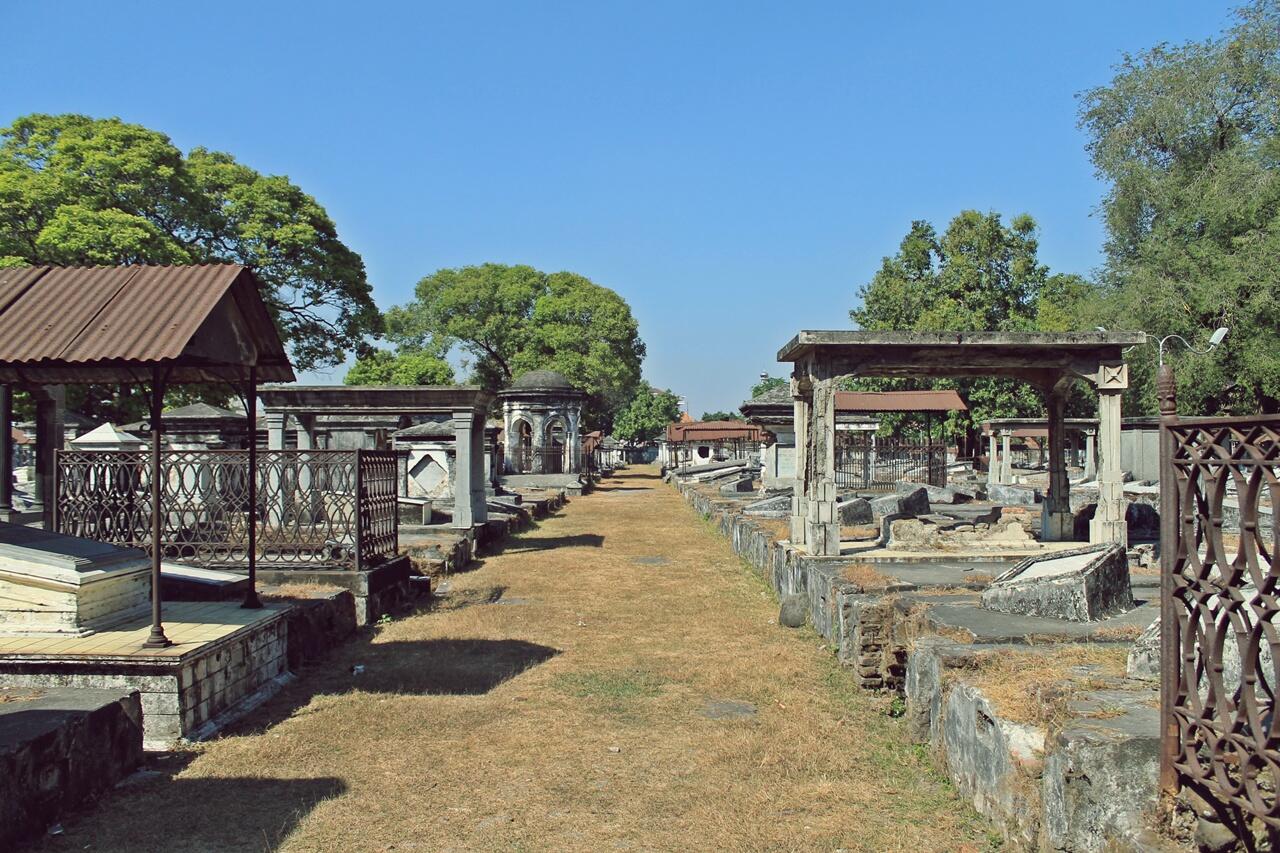
Today, if you walk in the Peneleh area — one of the old villages in Surabaya that still retains its colonial architecture — you will pass narrow alleys that used to be the perpetrator’s night route. Many of Peneleh’s old graves have inscriptions that cannot be read. Maybe some of them are victims who never got justice.
The case of the “Shadow Man” will never be solved. But it is worth remembering — not as a sensation, but as a reminder that behind the grand narratives of history, there are always small stories about ordinary people whose lives ended tragically and were forgotten.
Sources & References:
1. Bloembergen, Marieke. Policing the Colony: The Colonial Police in the Netherlands Indies. Amsterdam University Press, 2011.
2. Surabaiasch HandelsbladJanuary–December 1933 edition (microfilm, National Library of the Republic of Indonesia).
3. The LocomotiveMarch 1934 issue (via Delpher.nl — digital archive of Dutch newspapers).
4. National Archives of the Republic of Indonesia (ANRI), Algemeen Secretarie collection, inventory no. 1574–1576.
5. Taylor, Jean Gelman. The Social World of Batavia. University of Wisconsin Press, 2009. (Social context of the colonial city)