

Shalom Aleichem! 


Good evening GanSist everyone! 

Have you ever noticed that blood stains (especially menstrual blood) on cotton clothes are often much more difficult to clean than other food or drink stains? Even after washing with soap, sometimes stubborn brown spots remain. This phenomenon is not just a matter of drying blood, but is closely related to the chemical properties of blood and the structure of the cotton fabric itself.
Behind these seemingly simple stains, it turns out there are quite interesting chemical interactions. Blood contains a complex molecule called hemoglobin which has the ability to bind with various compounds. Meanwhile, cotton fabric is composed of cellulose which also has active chemical groups. When the two meet, a bond is formed which makes blood stains difficult to remove.
So, how does this process happen?
Quote:
Blood and Hemoglobin: Complex Oxygen Transporters
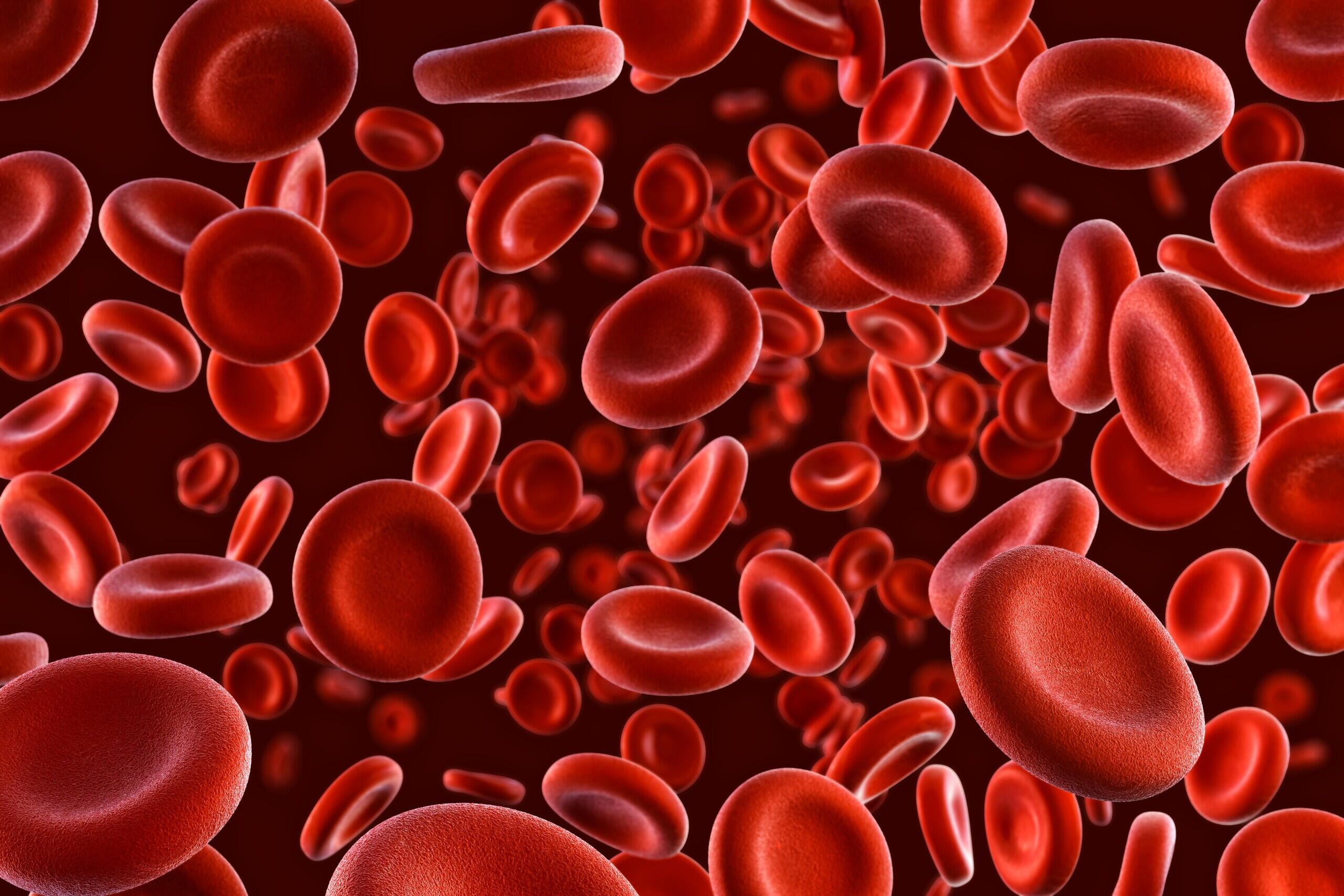
Blood consists of various components, such as plasma, white blood cells, platelets and red blood cells. Of all these components, red blood cells are the part that plays the most role in the formation of blood stains on clothes.
Red blood cells contain a protein called hemoglobin. This molecule is what gives blood its red color and is responsible for transporting oxygen from the lungs to the rest of the body.
Hemoglobin is not an ordinary protein. This molecule is composed of four protein subunits, each of which contains a heme group. In each heme group there is one iron atom (Fe) which is the oxygen binding center.
To make it easier to imagine, the structure of hemoglobin can be analogous to a gold bracelet.
1) The gold bracelet represents one hemoglobin molecule
2) The four gold wires that make up the bracelet symbolize the four hemoglobin protein chains
3) The four diamond stands represent the four heme groups
4) Four diamonds represent four iron atoms
Thus, one hemoglobin molecule has four heme groups and four iron atoms which can bind oxygen. This structure is the key to why blood stains are so difficult to clean.
Quote:
What is a Heme Group?
The heme group is an organic metal compound consisting of a porphyrin ring with an iron atom in the center. This iron atom can form coordination bonds with various other molecules.
In coordination chemistry, metal atoms in the center of a molecule can bond with other molecules or ions called ligands. Because the iron atom in the heme group has these properties, heme is able to interact with various chemical groups in its environment.
When blood sticks to fabric, the iron atoms in the heme group not only interact with oxygen in the air, but can also interact with the fabric fibers themselves. This is where the chemical process that makes blood stains become stubborn begins to occur.
Quote:
Cotton and Cellulose: Natural Fibers with Active Groups
Cotton is one of the most widely used textile materials in the world. Most cotton fibers are composed of cellulose.
Cellulose is a polysaccharide consisting of long chains of glucose and has many hydroxyl groups (OH groups). This hydroxyl group is very important because it can participate in various chemical interactions, from the formation of hydrogen bonds to the formation of coordination complexes.
When blood hits cotton fabric, hemoglobin molecules will enter between the fabric fibers. After that, the heme group and the iron atoms in it can interact with the hydroxyl groups on cellulose. This interaction results in the formation of a complex compound or ligand compound between the iron atom in the heme and certain groups in the cotton fiber.
As a result, blood molecules are no longer just physically attached, but also chemically bound.
This is the main reason why blood stains are very difficult to clean using just plain water.
Quote:
Why Do Blood Stains Get Harder to Remove Once They Dry?
Many people find that freshly attached blood is easier to clean than blood that has been drying for several hours.
This can also be explained scientifically.
When blood dries up, the water in it evaporates (dehydration). Blood proteins, including hemoglobin, begin to denature and clump. At the same time, the interaction between heme groups and cellulose fibers becomes stronger. In addition, the iron atoms in hemoglobin can undergo an oxidation process to form a more stable brown pigment.
As a result, stains that were originally bright red turn dark red or brown and become increasingly difficult to remove.
Therefore, textile and household chemistry experts generally recommend that blood stains be cleaned immediately before they have time to dry.
Quote:
Why can hot water actually make the situation worse?
Some people think that hot water is always more effective at removing stains. However, in the case of blood stains, this assumption is actually less accurate.
Blood contains a lot of protein. When exposed to high temperatures, proteins will experience denaturation and coagulation. This phenomenon is similar to egg whites changing from liquid to solid when heated. The clotted blood proteins will increasingly stick to the fabric fibers, making the stain more difficult to clean.
Therefore, the use of cold water is usually recommended in the initial stages of cleaning blood stains.
Quote:
The Role of Bleaching Agents in Removing Blood Stains
So, why can clothes bleach remove stubborn blood stains?
Many whitening products contain sodium hypochlorite (NaClO). This compound is a very strong oxidizing agent.
When sodium hypochlorite comes into contact with blood stains, an oxidation process occurs in the heme group. The chemical structure of heme which originally produces the red color will be damaged. The double bonds in the porphyrin ring are oxidized so that new products are formed which no longer have the ability to absorb light as before. As a result, the red or brown color of the stain disappears and the fabric looks clean again.
In other words, bleach does not actually remove all the blood stains from the fabric, but rather destroys the chemical structure that causes the color of the stain.
However, the use of sodium hypochlorite must also be done carefully. Too high a concentration or repeated use can damage fabric fibers because this oxidizer not only reacts with the stain, but can also oxidize the cellulose in cotton.
Quote:
Why Is This Knowledge Important?
The explanation of blood stains on cotton cloth shows that many everyday phenomena are closely related to chemistry.
Often, we think of blood stains as just ordinary dirt. In fact, there is a complex interaction between:
1) Protein hemoglobin
2) The heme group contains iron atoms
3) Cellulose fibers in cotton fabric
4) Oxidation reaction by bleaching agents
Understanding this process is also used in various fields, such as forensic science, textile technology, and the development of more effective detergents and cleaning agents. In fact, in the world of forensics, the nature of blood that easily binds to certain surfaces is one of the reasons why traces of blood can often still be detected even though they have been washed many times.
Quote:
CLOSURE
Blood stains on cotton fabric are difficult to clean, not simply because the blood dries or because the color is dark. The main cause is the chemical interaction between the heme group in hemoglobin and cellulose in cotton fabric which forms complex bonds or ligand compounds.
When the stain is allowed to dry, blood proteins denature and the bonds become stronger. That is why blood stains often remain even after washing them.
The use of bleaching agents such as sodium hypochlorite can help remove stains because this compound oxidizes the heme group into a colorless product. However, excessive use can also damage fabric fibers.
It turns out that a drop of blood on a piece of cotton cloth tells a much more interesting chemical story than we imagined.
Quote:
SOURCE
Berg, JM, Tymoczko, JL, Gatto, GJ, & Stryer, L. (2019). Biochemistry(9th ed.). New York, NY: W. H. Freeman and Company.
Brown, T. L., LeMay, H. E., Bursten, B. E., Murphy, C. J., Woodward, P. M., & Stoltzfus, M. W. (2018). Chemistry: The Central Science (14th ed.). Boston, MA: Pearson.
Nelson, D. L., & Cox, M. M. (2021). Lehninger principles of biochemistry (8th ed.). New York, NY: W. H. Freeman and Company.
Oxtoby, D. W., Gillis, H. P., & Campion, A. (2016). Principles of modern chemistry (8th ed.). Boston, MA: Cengage Learning.
Riegelman, S., & Hirschmann, D. J. (1959). Mechanism of the oxidative degradation of hemoglobin by hypochlorite. Journal of Pharmaceutical Sciences, 48(3)139–145.
Sjöström, E. (1993). Wood chemistry: Fundamentals and applications (2nd ed.). San Diego, CA: Academic Press.
Voet, D., Voet, JG, & Pratt, CW (2019). Fundamentals of biochemistry: Life at the molecular level (6th ed.). Hoboken, NJ: John Wiley & Sons.