3 Typical Batik Motifs of North Sumatra and Their Philosophy
7 min read
16
×
3 Typical Batik Motifs of North Sumatra and Their Philosophy
Share this article
Hi everyone, Shalom Aleichem!
300x600
300x600
Good morning GanSist everyone!
After in the previous series we discussed the phenomenon of blue fire in the Ijen Crater which apparently came from burning sulfur gas, this time the Nusantara Series invites readers to get to know the richness of Indonesian culture through a piece of cloth that is full of meaning, namely batik typical of North Sumatra.
When most people hear the word batik, they probably immediately think of Yogyakarta, Surakarta, Pekalongan or Cirebon. This is not surprising because these areas have long been known as centers of batik development in Indonesia. However, as the batik industry develops in various provinces, almost every region now has distinctive motifs that highlight their respective cultural identities.
North Sumatra is one example. This province, which is known for Lake Toba, Batak culture and ethnic diversity, also has unique batik motifs. In contrast to Javanese coastal batik which is heavily influenced by flora, fauna or maritime culture, North Sumatran batik takes a lot of inspiration from traditional Batak ornaments, traditional houses and the people’s philosophy of life.
In fact, several North Sumatran batik motifs adapt decorative styles that have been used for hundreds of years in traditional house carvings, ulos cloth and traditional ceremonial equipment. Thus, batik is not just a clothing product, but also a medium for preserving cultural identity.
Here are 3 iconic batik motifs from North Sumatra and their philosophical meanings.
Quote:
1. Gorga Motif
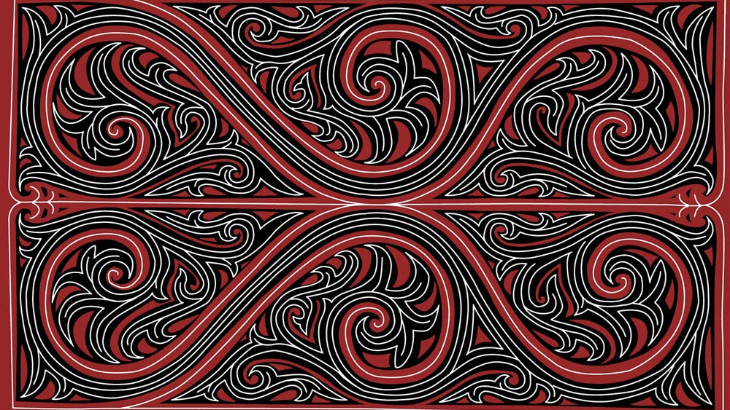
The most famous first motif is the Gorga. For the Batak people, the term gorga refers to the traditional decorations that decorate Batak traditional houses (Rumah Bolon), sopo, musical instruments, and various other traditional objects. This ornament is usually dominated by three main colors, namely red, black and white, each of which has a symbolic meaning in Batak tribal cosmology.
During its development, the gorga motif was then adapted into a batik motif while retaining its characteristic arches, tendrils, spirals and geometric patterns. At first glance, this motif looks very complicated. However, each arch is actually arranged harmoniously to form visual balance.
Philosophically, the gorga symbolizes life, protection, wisdom, and harmonious relationships between humans and the Creator, fellow humans, and nature. In the past, it was believed that gorga carvings were not only decorative, but also had symbolic meaning related to prayer, hope and protection for the occupants of traditional houses.
When translated into batik, these values are maintained so that the gorga-patterned batik cloth becomes a representation of respect for the Batak cultural heritage.
Quote:
2. Motif Out
The second motif is Ulos. In fact, ulos is a traditional woven cloth of the Batak people, not batik. However, the beauty of ulos patterns was later adapted into typical batik designs from North Sumatra, giving birth to batik motifs with typical ulos characteristics.
Neatly arranged geometric patterns are the main characteristic of this motif. Stripes, rhombuses and symmetrical shapes reflect order and togetherness. In Batak culture, ulos has a very special position. This cloth is used in various important events, from births, weddings, giving blessings, to death ceremonies.
Giving ulos is known as mangulosi, which is the act of giving prayers, affection and good wishes to someone. Therefore, batik motifs inspired by ulos also contain a similar philosophy. Its meaning includes affection, respect, brotherhood, warmth, and intergenerational ties.
It is not surprising that ulos patterned batik is often worn at official events and cultural activities as a symbol of respect for ancestral traditions.
Quote:
3. Boraspati motif
The third motif is Boraspati. The name Boraspati comes from an important symbol in Batak culture which is usually depicted as resembling a lizard. For some people who are not familiar with Batak culture, the use of lizard images may sound simple. However, behind this symbol there is a very deep philosophy.
Lizards are known as animals that are able to survive in various conditions. Lizards are able to climb walls, search for food deftly, and adapt to their environment. Because of these characteristics, the Batak people view Boraspati as a symbol of prosperity, toughness, ability to survive, sustenance, and protection for the family.
The Boraspati motif is also often found in carvings of traditional Batak houses as a symbol of hope that the occupants of the house will have a prosperous life and avoid various difficulties.
In modern batik, the lizard shape usually undergoes a stylization process so that it looks more artistic without losing its original identity. The result is a motif that is unique and full of cultural meaning.
Quote:
Why is North Sumatra Batik Different?
When compared with batik from Java, North Sumatran batik has a quite different visual character. Most of the motifs use geometric ornaments, bold lines, spiral shapes, traditional symbols, and contrasting colors. This is influenced by the legacy of Batak carving art which has long been developed in traditional houses and various traditional ceremonial equipment.
In other words, North Sumatran batik is not just about creating new motifs, but adapting traditional decorations into the medium of batik cloth. This approach is an effective way to preserve culture so that it remains relevant to current developments.
Quote:
Batik as Regional Identity
The existence of typical North Sumatran batik also shows that batik is a culture that continues to develop. The recognition of Indonesian batik as an Intangible Cultural Heritage by UNESCO in 2009 does not mean that all motifs have to come from Java. On the contrary, this recognition actually strengthens the enthusiasm of various regions to develop motifs that reflect local identity while still using batik techniques as part of national culture. For this reason, currently almost all provinces in Indonesia have batik motifs that highlight the richness of their respective regions.
North Sumatra is one of the regions that has succeeded in combining Batak heritage with batik art to produce works that have strong characteristics.
Quote:
Preserving Culture Through a Piece of Cloth
In the modern era, batik is no longer only worn at traditional events or official activities. The younger generation is starting to wear batik on various occasions, from educational environments, the world of work, to daily activities.
This phenomenon is good news for the preservation of Indonesian culture. The more people wear batik, the greater the opportunity for various regional motifs to be known by the wider community.
North Sumatra Batik, for example, not only introduces its visual beauty, but also invites the public to recognize the noble values of Batak culture contained in every line and pattern.
Thus, batik is not just a textile product, but a cultural educational medium that can be passed on to the next generation.
Quote:
CLOSURE
The beauty of North Sumatran batik lies not only in its combination of colors and shapes, but also in the philosophy that accompanies it. The Gorga motif teaches about harmony and protection, the Ulos motif symbolizes love and respect, while the Boraspati motif is a symbol of toughness, prosperity and adaptability.
Through these three motifs, we can see that each region in Indonesia has its own way of expressing life values into works of art. A piece of cloth turns out to be able to become a “book” that stores the history, beliefs and hopes of a society. Perhaps this is the reason why culture always lasts longer than trends. Motifs may change with the times, but the inherited meaning behind them still finds a way to live on.
Quote:
SOURCE
Region II Cultural Preservation Center. (2023). Gorga Batak: Traditional Decoration of the Batak People. Ministry of Culture of the Republic of Indonesia.
Ministry of Education, Culture, Research and Technology. (2022). Indonesia’s Intangible Cultural Heritage: Ulos Batak. Directorate General of Culture.
Marbun, M., & Hutapea, I. M. T. (1987). Toba Batak Cultural Dictionary. Library Hall.
Niessen, S.A. (2009). Legacy in Cloth: Batak Textiles of Indonesia. KITLV Press.
UNESCO. (2009). Indonesian Batik. Representative List of the Intangible Cultural Heritage of Humanity.