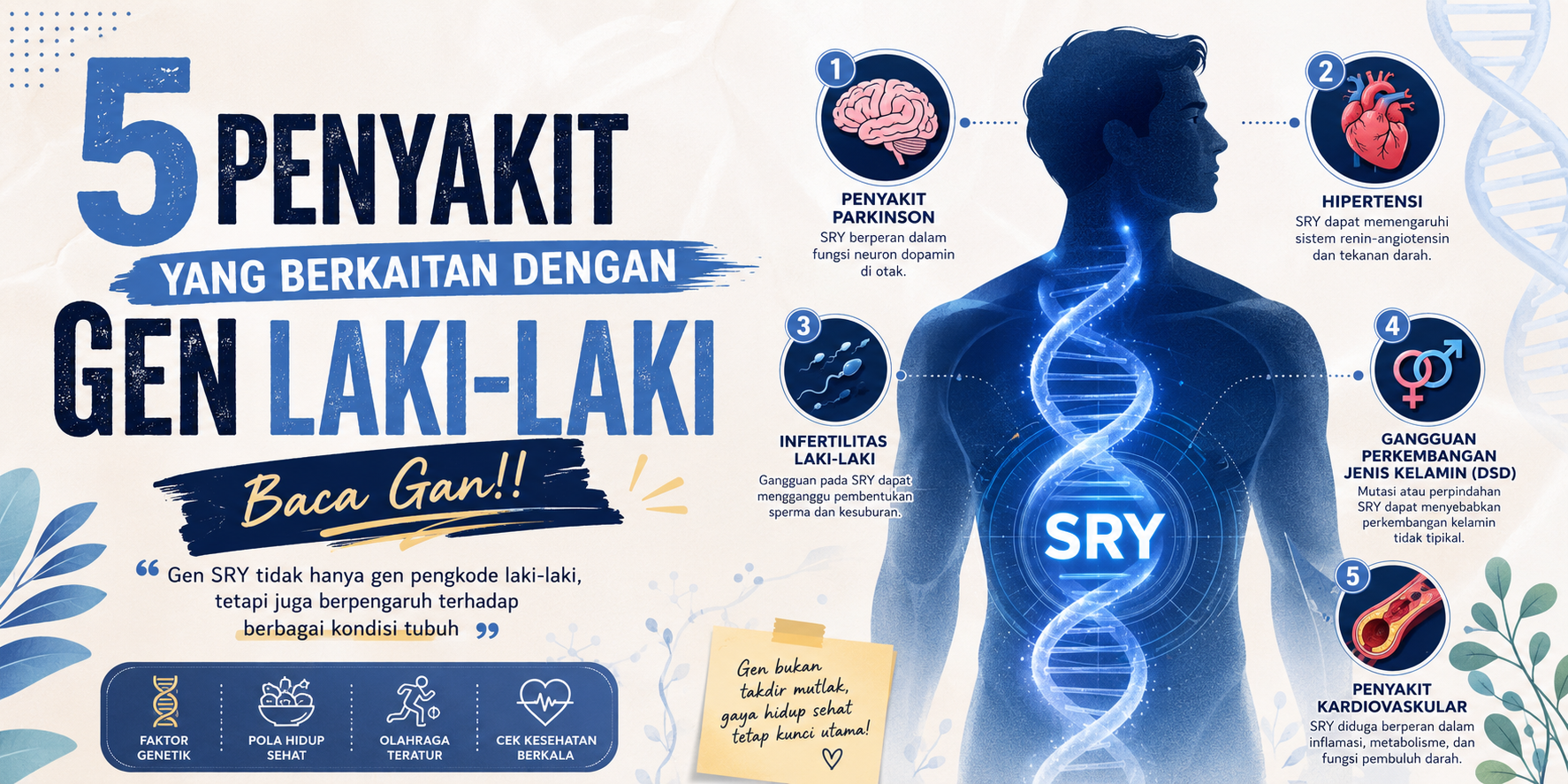
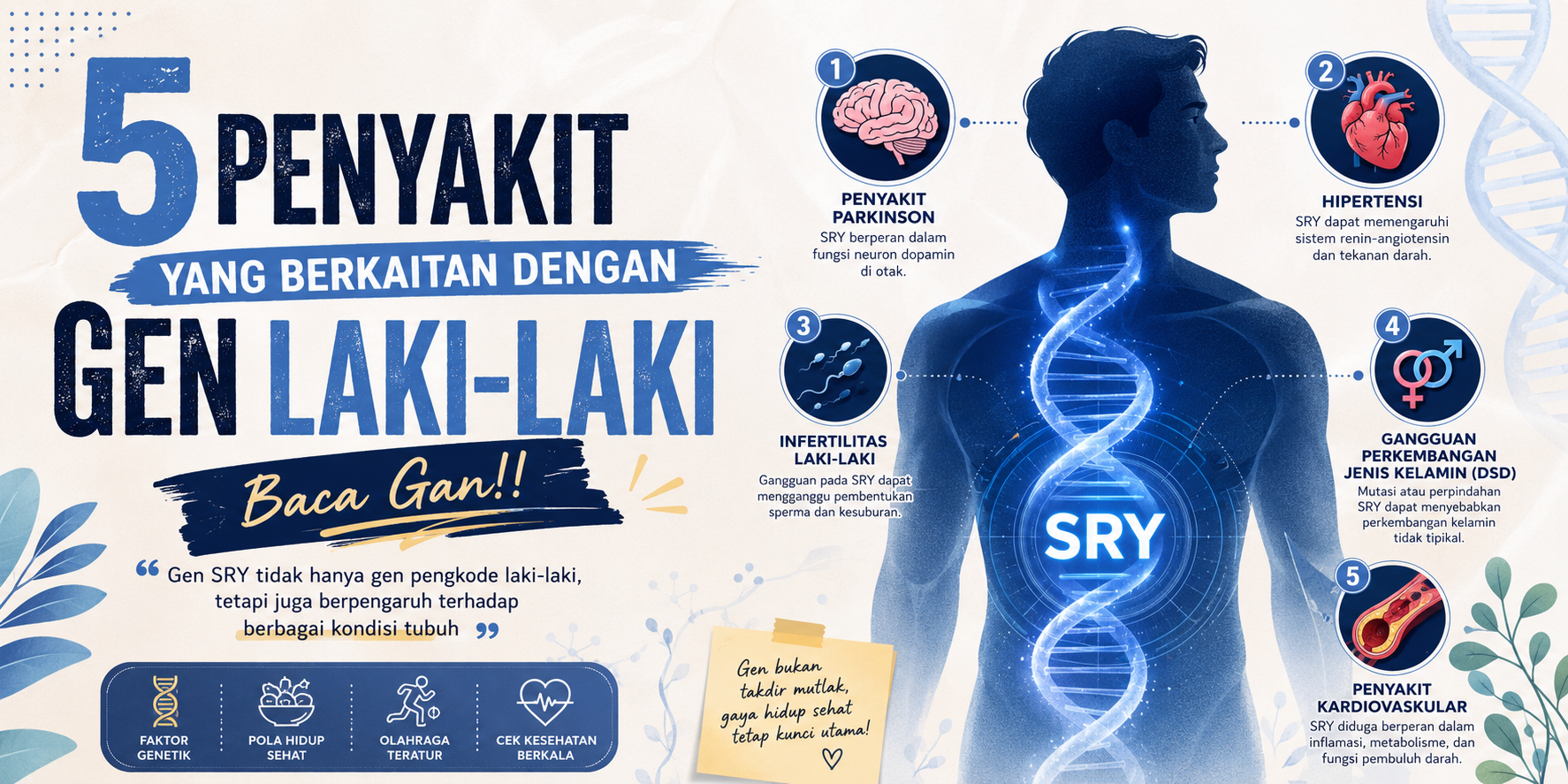
When talking about human gender, most people are only familiar with the X and Y chromosomes. The Y chromosome is often considered the “male determinant” because it carries the SRY gene (Sex-determining Region Y). This gene triggers the formation of testes in the embryo so that biological development leads to male sex.
However, modern genetics shows that the function of the SRY gene is much more complex than simply determining sex. Over the last few decades, researchers have discovered that this gene also affects various other organs, including the brain, cardiovascular system, metabolism, and reproductive system. This means that changes in SRY gene activity can increase the risk of developing certain diseases.
Of course, it is important to understand that the SRY gene is not the only cause of disease. Almost all diseases are the result of interactions between genetics, environment, diet, lifestyle, age and other biological factors. However, the presence of the SRY gene can have a significant influence on a person’s susceptibility to certain conditions.
So, what diseases are known to be related to SRY gene activity? Following is the discussion.
Quote:
1. Parkinson’s disease
One of the most researched associations is the link between the SRY gene and Parkinson’s disease. Parkinson’s disease is a neurodegenerative disorder characterized by damage to dopamine-producing cells in a part of the brain called the substantia nigra. As a result, sufferers experience tremors, muscle stiffness, slow movements, and balance problems.
For years, scientists have noticed that men have a higher risk of Parkinson’s than women. One cause that is being researched is the activity of the SRY gene. Research shows that the SRY gene is not only active in the testicles, but is also found in dopamine-producing neurons. This gene is able to regulate the expression of several genes related to dopamine production, such as tyrosine hydroxylasewhich is an important enzyme in the formation of these neurotransmitters. When this regulation is disrupted, dopamine neurons become more susceptible to damage. This condition is thought to explain why the incidence of Parkinson’s is higher in men than women.
However, Parkinson’s remains a multifactorial disease. Age, exposure to pesticides, other gene mutations, and environmental factors also have a large contribution.
Quote:
2. Hypertension
Not many people think that the SRY gene is also related to blood pressure. Several studies on experimental animals have found that the SRY gene is able to influence the renin-angiotensin system, namely the hormonal system that regulates blood pressure and body fluid balance. If the activity of this system increases excessively, the blood vessels become narrower so that blood pressure also increases. Apart from that, SRY is also thought to influence the activity of the sympathetic nervous system which controls heart rate and blood vessel contractions.
Although in humans this relationship is still being studied, some evidence suggests that genetic variations on the Y chromosome, including the region containing SRY, may influence the risk of hypertension in men. However, hypertension is still more influenced by a diet high in salt, obesity, lack of exercise, smoking, alcohol consumption and general hereditary factors.
Quote:
3. Male Infertility
Because the SRY gene plays a role in testicular formation, disruption of this gene can affect male fertility.
During embryonic development, SRY functions to activate various other genes needed for testicular formation. If this process does not run normally due to mutations or disruption of gene expression, the development of reproductive organs can be disrupted. As a result, a person can experience impaired sperm formation, a very low sperm count, or even not producing sperm at all.
Apart from SRY, there are also various other genes on the Y chromosome, such as the AZF region (Azoospermia Factor), which is also very important in the spermatogenesis process. Therefore, genetic testing is often recommended for men with severe infertility to find out whether there are abnormalities in the Y chromosome.
It should be understood that male infertility can also be caused by infection, hormonal disorders, varicocele, exposure to chemicals, chemotherapy, or lifestyle factors.
Quote:
4. Disorders of Gender Development (Disorders of Sex Development)
One of the most obvious impacts of SRY gene disruption is emergence Disorders of Sex Development(DSD). Under certain conditions, a person can have XY chromosomes but experience genital development that does not match male characteristics. This can happen if the SRY gene undergoes a mutation so that it is unable to carry out its function properly.
On the other hand, in very rare cases, the SRY gene can move to the X chromosome due to an abnormal recombination process. As a result, a person who has XX chromosomes can develop with male biological characteristics. These conditions indicate that the SRY gene is a very important “biological switch” in human sexual development.
Treatment requires collaboration between various medical fields, such as clinical genetics, endocrinology, urology, gynecology, psychology and genetic counseling.
Quote:
5. Cardiovascular Disease
In recent years, research has begun to show that the Y chromosome, including the SRY gene, may influence heart and blood vessel health.
The SRY gene is known to be able to regulate the expression of a number of genes related to inflammation, oxidative stress, hormone metabolism and blood vessel function. Several studies have also found that certain variations on the Y chromosome are associated with an increased risk of coronary heart disease. In addition, there are suggestions that SRY activity can influence the balance of androgen hormones which play a role in the function of the cardiovascular system.
However, this relationship is still being studied. Scientists emphasize that classic risk factors such as high cholesterol, diabetes, hypertension, smoking, obesity and lack of physical activity remain the main causes of heart disease. In other words, the presence of a certain gene does not mean that a person will definitely experience the disease.
Quote:
Genes Are Not Absolute Destiny
Advances in genetics have changed the way we view disease. In the past, genes were thought to serve only as a “blueprint” for the body. It is now known that genes also interact dynamically with the environment.
The SRY gene is an interesting example. Apart from playing a role in determining male gender development, this gene also influences brain function, the reproductive system, blood pressure regulation and heart health. However, having genetic risk factors does not mean someone will definitely get sick. Many studies show that a healthy lifestyle can reduce the risk of various diseases, even in people who have genetic vulnerabilities.
Eating a balanced nutritious diet, exercising regularly, not smoking, limiting alcohol consumption, maintaining an ideal body weight, controlling stress, and carrying out regular health checks remain the best steps in maintaining health.
In the end, genetics does provide “starting capital”, but lifestyle choices still have a large role in determining a person’s health throughout their life. The world of biology loves to make things more complicated than necessary. It turns out that one gene is not satisfied with just taking care of gender, but instead intervenes in matters of the brain, heart, blood pressure and fertility. The human body is really like a company where each division likes to participate in meetings of other divisions.
Quote:
SOURCE
Berta, P., Hawkins, J. R., Sinclair, A. H., Taylor, A., Griffiths, B. L., Goodfellow, P. N., & Fellous, M. (1990). Genetic evidence equating SRY and the testis-determining factor. Nature, 348(6300)448-450.
Graves, J. A. M. (2016). Evolution of vertebrate sex chromosomes and dosage compensation. Nature Reviews Genetics, 17(1)33-46.
Koopman, P. (2001). SRY and Sox9: Mammalian testis-determining genes. Cellular and Molecular Life Sciences, 58(9)1314-1327.
Mayer, A., Lahr, G., Swaab, D. F., Pilgrim, C., & Reisert, I. (1998). The Y chromosome influences dopaminergic neuron development in the mouse substantia nigra. Nature Neuroscience, 1(5)408-413.
Sinclair, A. H., Berta, P., Palmer, M. S., Hawkins, J. R., Griffiths, B. L., Smith, M. J., Foster, J. W., Frischauf, A. M., Lovell-Badge, R., & Goodfellow, P. N. (1990). A gene from the human sex-determining region encodes a protein with homology to a conserved DNA-binding motif. Nature, 346(6281)240-244.
Turner, M. E., Farkas, J., Dunmire, J., Ely, D. L., & Milsted, A. (2009). Which SRY? Effects of multiple copies of the SRY gene on blood pressure and the renin-angiotensin system. Hypertension Research, 32(10)860-864.
Vilain, E., & McCabe, E. R. B. (1998). Mammalian sex determination: From gonads to brain. Molecular Genetics and Metabolism, 65(2)74-84.
World Health Organization. (2023). Infertility. (url)https://www.who.int/news-room/fact-sheets/detail/infertility(/url)
National Institute of Neurological Disorders and Stroke. (2025). Parkinson’s disease. (url)https://www.ninds.nih.gov/health-information/disorders/parkinsons-disease(/url)