

Hi everyone, Shalom Aleichem!


Good evening GanSist everyone! 

Welcome back to the Supergirl Series, which is a series that discusses how teenage girls aged 12–18 years can grow into strong individuals in all aspects, from physical, mental, social, to spiritual. In previous series, we have discussed various things, such as the formation of competence, discipline, mental health, intelligence, empathy and self-development.
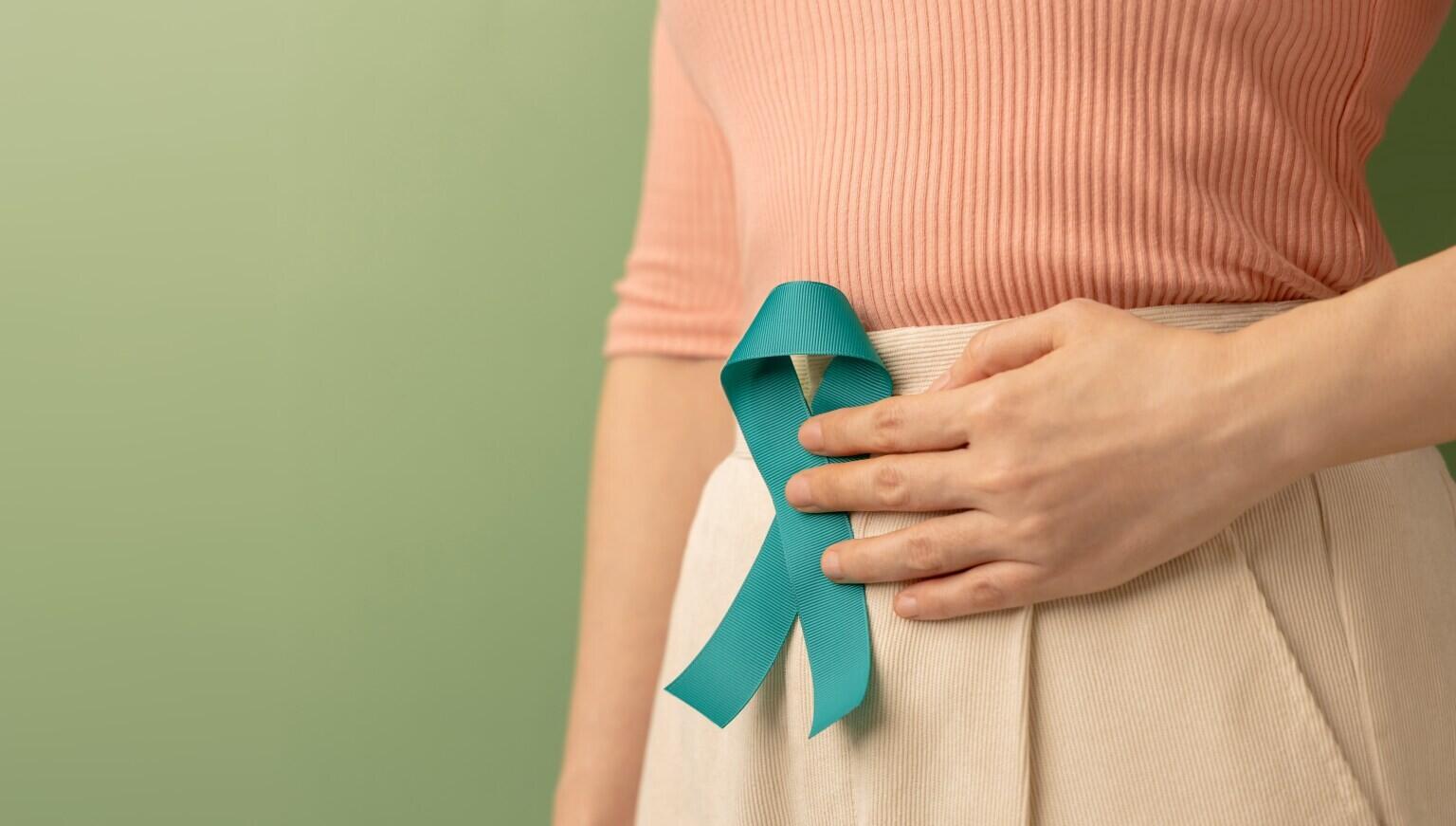
On Supergirl SeriesIn this 18th edition, we will discuss one of the most important health investments that can be made from adolescence, namely Human Papillomavirus (HPV) vaccination to prevent cervical cancer.
Some people still think that the HPV vaccine is only needed when a person is an adult. There are also those who think that the vaccine is not very important because cervical cancer only appears decades later.
In fact, medical science actually shows something different. The earlier the HPV vaccine is given according to medical recommendations, the greater the protection that can be obtained. Therefore, many countries, including Indonesia, include the HPV vaccine in immunization programs for school-aged girls. Why is that? Let’s discuss it together.
Quote:
What is Cervical Cancer?
Cervical cancer is cancer that develops in the cervix, namely the lower part of the uterus that connects the uterus to the vagina.
The main cause of almost all cases of cervical cancer is persistent infection with high-risk Human Papillomavirus (HPV), especially types 16 and 18. HPV is a group of viruses consisting of more than 200 types, but only some of them are associated with cancer formation.
It should be understood that HPV infection does not immediately turn into cancer. In many cases, the immune system is able to clear the virus naturally. However, if the infection persists for years, changes in cervical cells can occur slowly until they eventually develop into cancer.
Because the process takes a very long time, prevention from a young age is a very effective step.
Quote:
Why is the HPV Vaccine Given Since Adolescence?
This question often arises, doesn’t cervical cancer usually appear when you are an adult? The answer is correct. However, the reason for giving vaccines as a teenager is not because cancer appears at that age, but because the response of a teenager’s immune system to vaccines is much better than when they are older.
Research shows that children and adolescents produce higher antibody responses after receiving the HPV vaccine than young adults. Apart from that, the vaccine works best if it is given before a person is exposed to HPV.
Therefore, the world health organization recommends giving the vaccine in early adolescence. In other words, the vaccine is given early as a form of long-term protection, not because the disease appears immediately. This principle is the same as using a seat belt before an accident occurs, not after the accident occurs.
Quote:
HPV Isn’t Just an Adult Problem
Sometimes, there is an opinion that discussing HPV is only relevant for adults. In fact, from a public health perspective, the HPV vaccine is an effort to prevent cancer, not just to treat an infection. Teenagers who receive the vaccine today may not see its greatest benefits until decades later. This is what is known as treatment for preventive purposes, namely preventing disease before it develops.
In the world of health, prevention is always better than treatment. It is easier to prevent cancer than to treat it once it appears. It is better to maintain health than to wait for the body to experience damage.
It is for this reason that the HPV vaccine is one of the public health strategies most supported by scientific research.
Quote:
Why is the Adolescent Immune System More Beneficial?
The immune system has the ability to recognize foreign substances through the formation of antibodies and immune memory cells.
When the HPV vaccine is given at the recommended age, the body builds an “immunological memory” to the viral proteins used in the vaccine.
If one day the body encounters real HPV, the immune system will be better prepared to respond so that the risk of persistent infection can be reduced significantly.
Interestingly, various studies show that a two-dose schedule in certain adolescent age groups can provide excellent protection, making the immunization program more efficient without reducing its effectiveness as recommended by health authorities.
Quote:
How Big are the Benefits?
In the last two decades, countries that have widely implemented HPV vaccination have begun to see encouraging results.
Large-scale research shows a decrease in cancer-causing types of HPV infections, a decrease in genital warts caused by certain types of viruses, a decrease in precancerous cervical lesions, and even in some countries, the incidence of cervical cancer has begun to decrease in young age groups who received the vaccine as teenagers.
These results show that the HPV vaccine is not just a theory. The benefits can be observed through epidemiological research in various countries.
Quote:
Is the HPV Vaccine Safe?
Questions about vaccine safety are normal. Before being widely used, the HPV vaccine underwent a series of laboratory studies, clinical trials, safety evaluations, and monitoring after being marketed.
To date, millions of doses of the HPV vaccine have been administered in various countries. World Health Organization (WHO), Centers for Disease Control and Prevention(CDC), as well as various medical professional organizations state that the HPV vaccine has an excellent safety profile.
The side effects that most often appear are mild, for example pain at the injection site, redness, mild swelling, soreness, mild fever, or temporary dizziness. These effects generally disappear within a short time.
As with other vaccines, severe allergic reactions are very rare and health care facilities have procedures in place to handle them if they occur.
Quote:
Is there no need for screening after being vaccinated?
The answer is still necessary. The HPV vaccine provides protection against certain types of HPV that most often cause cervical cancer, but does not protect against all types of HPV.
Therefore, when women have met the mandatory requirements for screening (are married or have had sexual relations), examinations such as HPV tests or other screening methods according to guidelines are still needed.
In other words, vaccination and screening complement each other. Vaccines help prevent cancer-causing infections, while screening helps detect cell changes as early as possible.
Quote:
The Role of Parents and Adolescents
Decisions regarding immunization during adolescence generally involve parents or guardians. Therefore, good communication is very important.
Teenagers can ask their parents about the benefits of the HPV vaccine. On the other hand, parents also need to seek information from health workers and trusted scientific sources, not from news that has not been proven to be true.
Discussions based on scientific evidence will produce wiser decisions than the fear that arises from misinformation.
Quote:
Being Supergirl Means Taking Care of the Future
In the Supergirl Series, being a strong woman doesn’t just mean being able to study well or having a tough mentality.
Being strong also means having the courage to maintain your health from an early age. The body is a gift that needs to be cared for. Maintaining health is not a sign of weakness, but rather a form of responsibility towards oneself.
Vaccination is one example of how science helps humans prevent diseases that were previously difficult to control. By receiving vaccines as recommended by health workers, teenagers are investing in their health in the future.
Small steps today can have huge benefits years later.
Quote:
CONCLUSION
Cervical cancer is still a health problem for women in various countries. The good news is that most cases can be prevented through a combination of HPV vaccination, health education and screening as recommended.
Giving vaccines from adolescence is not without reason. At this age, the immune system responds very well to vaccines, so that protection can be formed optimally before possible exposure to HPV in the future.
As part of Supergirl Series #18, let’s look at vaccinations not just as injections, but as a form of concern for the future. Strong young women are not only those who excel at school or have high self-confidence, but also those who want to maintain physical health as a basis for achieving their goals, building healthy relationships, and living a life full of gratitude.
Being Supergirl means preparing for tomorrow starting today. One way is to understand the importance of disease prevention based on reliable science.
Quote:
SOURCE
Bruni, L., Albero, G., Serrano, B., Mena, M., Gómez, D., Muñoz, J., Bosch, FX, & de Sanjosé, S. (2023). Human papillomavirus and related diseases report. ICO/IARC Information Centre on HPV and Cancer.
Centers for Disease Control and Prevention. (2024). HPV vaccination recommendations. https://www.cdc.gov/hpv/hcp/vaccinat…ons/index.html
Drolet, M., Bénard, É., Pérez, N., & Brisson, M. (2019). Population-level impact and herd effects following the introduction of human papillomavirus vaccination programmes: Updated systematic review and meta-analysis. The Lancet, 394(10197)497–509.
Garland, S. M., Kjaer, S. K., Muñoz, N., et al. (2016). Impact and effectiveness of the quadrivalent human papillomavirus vaccine: A systematic review of 10 years of real-world experience. Clinical Infectious Diseases, 63(4)519–527.
Ministry of Health of the Republic of Indonesia. (2023). Guidelines for the introduction of HPV immunization in the National Immunization Program. Directorate General of Disease Prevention and Control.
World Health Organization. (2022). Human papillomavirus (HPV) and cervical cancer. Geneva: World Health Organization.
World Health Organization. (2022). Global strategy to accelerate the elimination of cervical cancer as a public health problem. Geneva: World Health Organization.