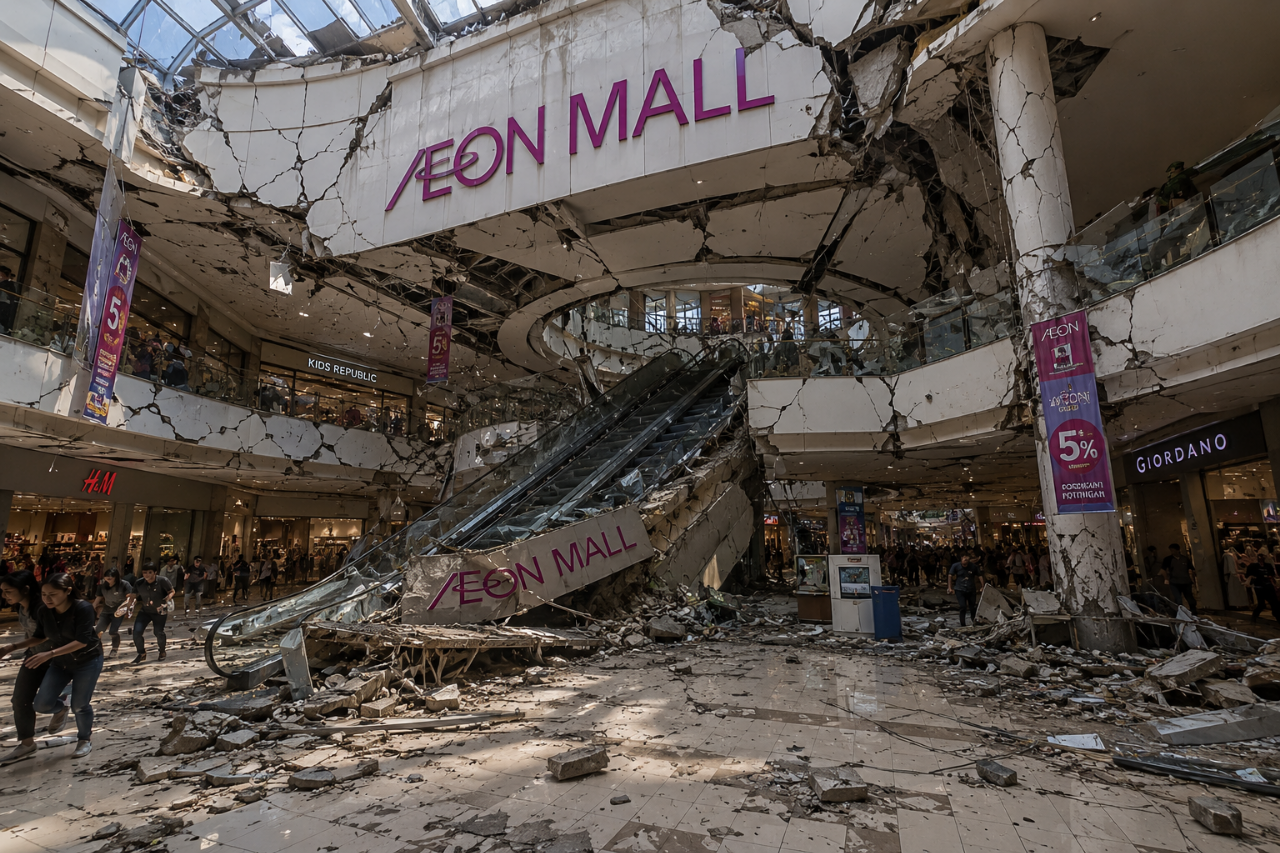
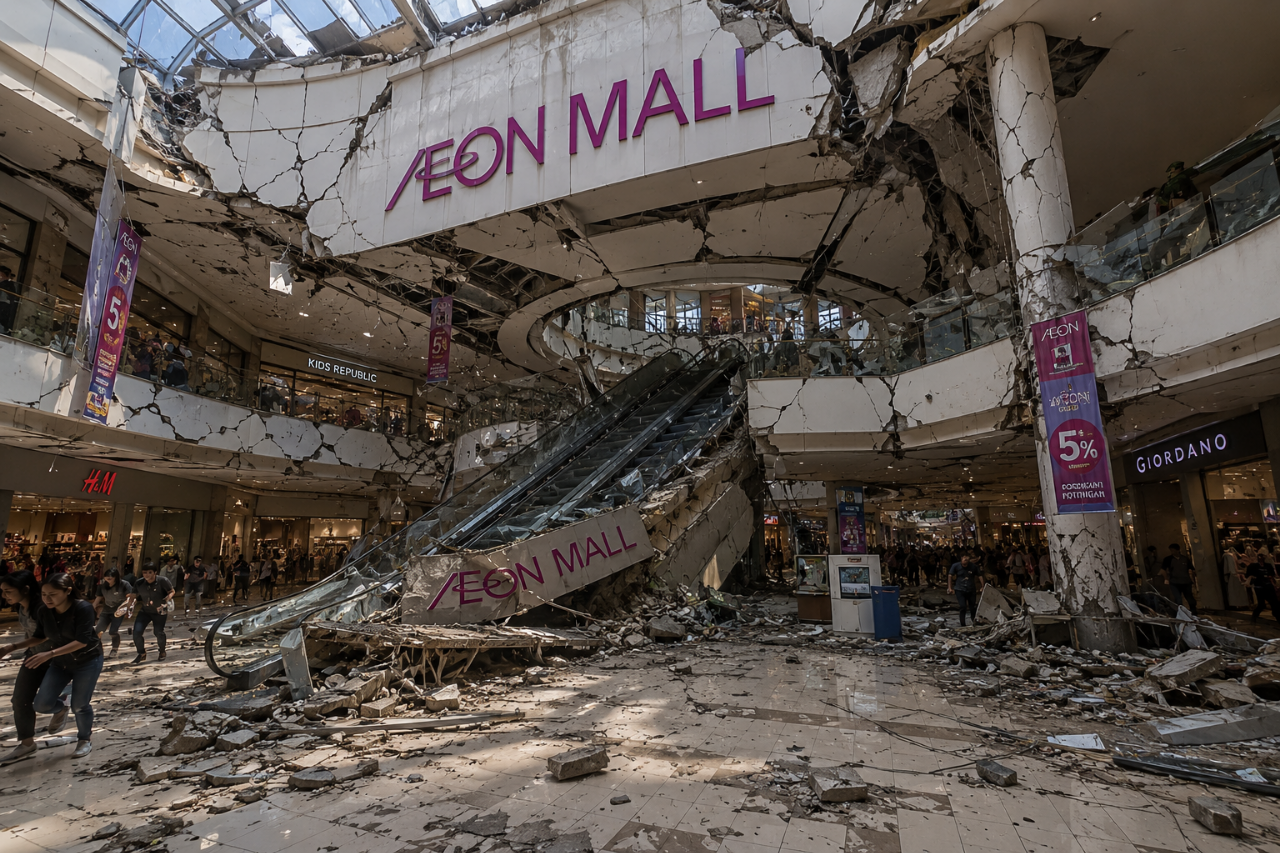
TOKYO, JAPAN – Japan was hit again by a strong earthquake that sparked national alert. An earthquake measuring 7.1 magnitude rocked the southwestern region of Japan, especially the area around Kyushu Island. The shock was felt strongly in a number of areas and prompted the Japanese government to activate an emergency response system, including issuing a tsunami warning for people living in coastal areas.
Shortly after the earthquake occurred, the Japan Meteorological Agency (JMA) immediately carried out an analysis of the strength and location of the earthquake’s epicenter. Preliminary information shows that the earthquake occurred in a tectonically active area at a depth that caused the shaking to be felt quite strongly at the surface.
Japan’s early warning system works in seconds. The public receives emergency notifications via cell phones, television, radio and public speaker systems. Japan’s national television broadcast stopped regular programming to show information about the location of the earthquake, potential tsunamis and evacuation routes that residents should use.
In a number of affected areas, residents were seen immediately leaving the buildings after feeling the shock. Office employees left the building for an open area, while people in the shopping center were directed by security officers to a safe place. Schools also implement safety procedures by asking students to take cover before evacuating.
The tsunami warning issued by the Japanese government made residents in coastal areas move to higher ground. Authorities warned that although the expected tsunami waves would not be as large as previous major tsunami disasters, ocean currents could still endanger people and small vessels.
Local government officials immediately opened a temporary evacuation center. School buildings, sports facilities and government buildings are used as shelters for residents. The refugees received assistance in the form of drinking water, emergency food, blankets and health checks.
The evacuation process proceeded in an orderly manner. The Japanese people, who have been accustomed to participating in disaster training since school age, show discipline in following officers’ directions. There was no big panic because residents understood the procedures that had to be followed when facing an earthquake.
The impact of the earthquake was also felt in the transportation sector. Shinkansen bullet train operators temporarily halted travel on several lines to carry out safety checks. Technical officers check the condition of rails, bridges, electrical systems and travel routes before services are reopened.
Apart from trains, a number of highways and other transportation facilities were also inspected. The police direct traffic so that emergency vehicles such as ambulances, fire engines and rescue vehicles can move unimpeded.
Airports in affected areas are increasing supervision of aviation facilities. Inspections are carried out on the runway, control tower and flight support systems to ensure passenger safety.
Meanwhile, the Japanese government pays special attention to energy facilities, including power plants and nuclear facilities. Energy operators immediately carry out inspections to ensure all safety systems are working properly.
Inspections of nuclear facilities are carried out as standard procedure every time a strong earthquake occurs. Until the initial report, there was no information regarding major disruption to the safety system or indications of radiation leaks.
Hospitals in the affected areas are also increasing their alertness. The medical team ensures that emergency rooms, backup electricity supplies and important equipment remain available in case of an increase in the number of patients due to aftershocks.
The Japanese government urges the public to remain alert because aftershocks are still possible. Residents are asked not to enter damaged buildings before receiving a security check from officers.
Experts explain that Japan is one of the most earthquake-prone countries in the world because it is located in the Pacific Ring of Fire. This region is a meeting zone of several large tectonic plates which continue to move and cause high earthquake activity.
The movement of the Pacific Plate, Philippine Plate, and other plates produces enormous pressure beneath the earth’s surface. When this energy is suddenly released, an earthquake occurs which can be felt in areas far from the epicenter.
Although the threat of earthquakes cannot be eliminated, Japan has developed a very advanced disaster mitigation system. Modern buildings are designed to strict earthquake-resistant standards, while early warning technology helps the public get information more quickly.
The system also helps reduce the risk of casualties by giving people time to take shelter, stopping high-speed trains and deactivating some potentially dangerous industrial machines.
This earthquake reminded Japan of its experience in dealing with previous major disasters, including the 2011 Tohoku earthquake and tsunami. From this experience, Japan continues to strengthen its evacuation system, disaster education and community protection technology.
Experts assess that community preparedness is an important factor in dealing with earthquakes. Sophisticated technology must be supported by citizen awareness so that the impact of disasters can be reduced.
After the emergency response phase is complete, the Japanese government will enter the recovery phase. Collecting data on building damage, repairing public facilities, and providing assistance to affected communities will be the next priorities.
This 7.1 magnitude earthquake is a reminder that natural disasters can occur at any time. However, through preparedness, technology and community cooperation, the impacts can be reduced.
The Japanese government ensures that monitoring of earthquake activity will continue until conditions are completely stable. The public is asked to remain calm and only follow official information from the relevant authorities.