Hi everyone, Shalom Aleichem! 
Good afternoon all of you!
In recent years, a bright green drink called matcha has become increasingly popular in various countries, including Indonesia. Matcha is not only served as a traditional hot tea, but is also present in various products, from lattes, ice cream, to desserts. Behind its popularity, matcha is often promoted as a super healthy food that has many health benefits, from helping you lose weight to reducing the risk of heart disease.
However, are all these claims really supported by scientific evidence? Is a cup of matcha really able to protect the body from obesity and heart attacks?
Let’s discuss it scientifically  .
.
Quote:
What is Matcha?
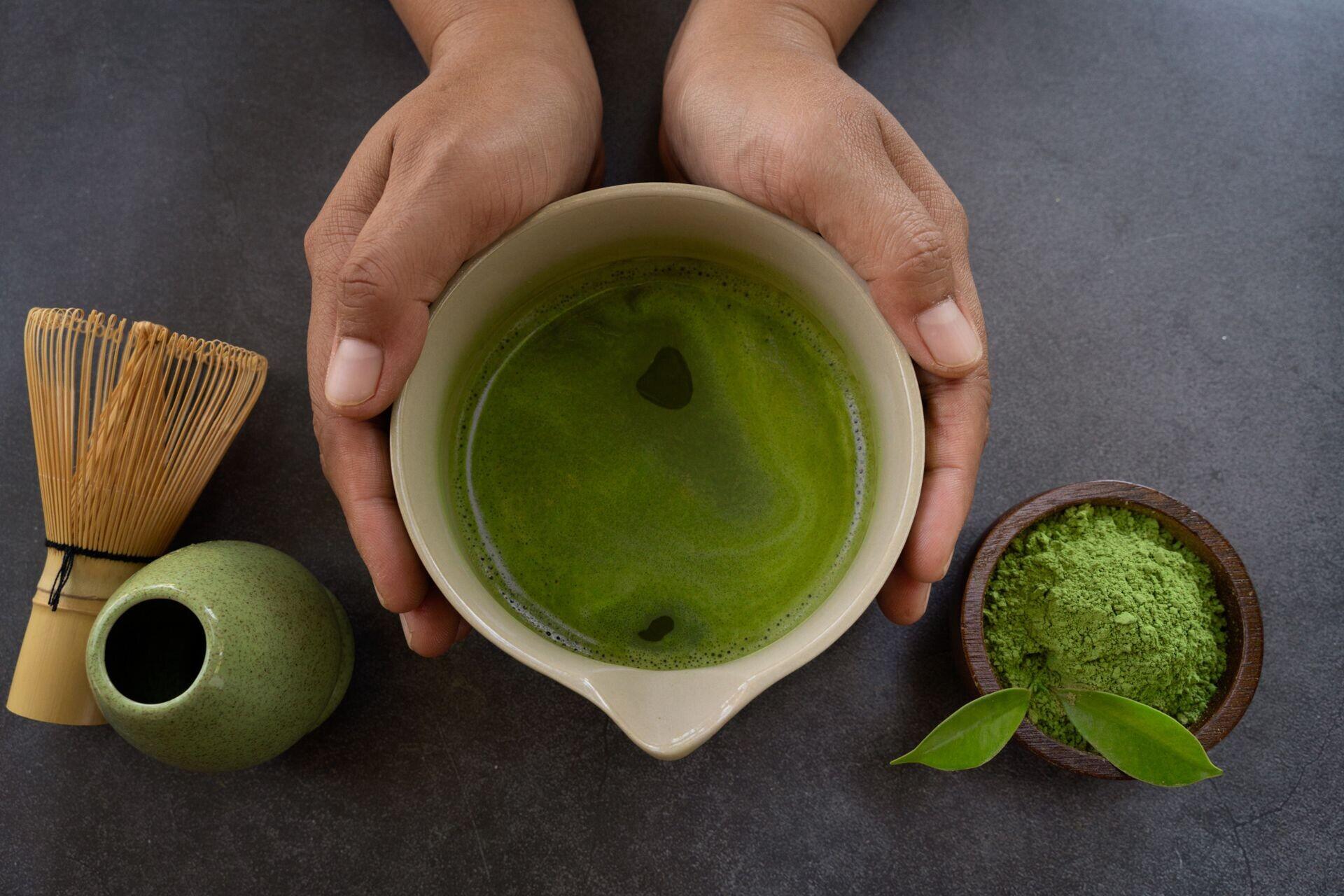
Matcha is green tea powder that comes from plant leaves Camellia sinensis. Unlike ordinary green tea which is brewed and then the dregs are discarded, with matcha all the tea leaves that have been dried and ground are consumed directly in powder form.
The matcha cultivation process is also quite unique. Tea plants to be harvested are usually covered from exposure to sunlight for several weeks before being picked. This technique increases the content of chlorophyll and several active compounds, especially amino acids and polyphenolic compounds.
Because the entire leaf is consumed, the concentration of active substances in matcha is generally higher than in regular green tea. One of the most researched compounds is catechin, especially epigallocatechin gallateor EGCG.
Quote:
Matcha and its Antioxidant Content
Antioxidants are compounds that help protect body cells from damage caused by free radicals. Free radicals themselves can cause oxidative stress, a condition that contributes to premature aging and various chronic diseases, including heart disease and obesity.
Matcha contains various types of antioxidants such as catechins (especially EGCG), flavonoids, quercetin, chlorophyll and vitamin C in small amounts.
Research shows that EGCG is one of the most powerful antioxidants found in green tea. This compound is able to inhibit the process of fat oxidation, reduce inflammation, and influence the body’s metabolism.
Due to its high antioxidant content, matcha has been linked to various health benefits.
Quote:
Does Matcha Really Reduce the Risk of Heart Attack?
Heart disease is still one of the highest causes of death in the world. Many factors increase the risk of this disease, such as high cholesterol, high blood pressure, diabetes, obesity, smoking and poor diet.
A number of studies show that consuming green tea, including matcha, can provide benefits for heart health.
1. Helps Lower Cholesterol Levels
High levels of bad cholesterol or LDL can accumulate on blood vessel walls and form plaque. Over time, this plaque can block blood flow and increase the risk of heart attack.
Several studies have found that regular consumption of green tea can reduce LDL and total cholesterol levels.
The mechanisms thought to play a role include inhibiting fat absorption in the intestine, increasing cholesterol disposal through the liver, and reducing LDL oxidation. Oxidized LDL is considered more dangerous because it more easily triggers plaque formation in blood vessels.
2. Reduces Inflammation
Heart disease is not only caused by high cholesterol, but also by chronic inflammatory processes.
The EGCG in matcha is known to have anti-inflammatory properties. This compound can help reduce the activity of several molecules that play a role in inflammation, thereby potentially reducing the risk of blood vessel damage.
3. Helps Maintain Blood Pressure
Several observational studies show that green tea consumption is associated with lower blood pressure. Although the effect is not as great as antihypertensive drugs, a small reduction in blood pressure still has benefits for heart health in the long term.
Can Matcha Prevent Heart Attacks Directly?
The answer is not yet certain. Most studies show a link between green tea consumption and a reduced risk of heart disease. However, this does not mean that drinking matcha alone is enough to prevent heart attacks.
The risk of heart disease is influenced by many factors, such as diet, physical activity, body weight, sleep quality and smoking habits.
In other words, matcha can be part of a healthy lifestyle, but it is not a “miracle cure” that directly prevents heart attacks.
Quote:
Matcha and the Risk of Obesity
Apart from being linked to heart health, matcha is also often referred to as a drink that helps you lose weight. Is that true?
1. Increase Energy Expenditure
Several studies show that the catechins and caffeine in green tea can increase thermogenesis, which is the body’s heat production process which requires energy. When thermogenesis increases, the body burns more calories.
However, the effect is relatively small. Drinking matcha won’t burn hundreds of calories instantly.
2. Increases Fat Oxidation
EGCG can increase the use of fat as an energy source, especially during physical activity.
Therefore, several studies have found that consuming green tea can help with weight loss programs if combined with exercise and a healthy diet.
3. Helps control appetite
There is research that shows that green tea can make some people feel full longer. However, research results regarding this effect are still inconsistent.
How Big is the Influence?
Weight loss due to green tea consumption is generally relatively small.
Many studies have found weight loss of only a few kilograms after regular consumption over a certain period of time.
This means that matcha is not an instant solution to overcome obesity. However, if combined with a good diet and sufficient physical activity, matcha can be a supporting medicine in weight management.
Quote:
Matcha Improves Concentration and Memory
One of the unique things about matcha is that it contains an amino acid called L-theanine.
This compound is able to cross the blood-brain barrier and influence the activity of several neurotransmitters.
The combination of L-theanine and caffeine is thought to improve focus, increase alertness, help concentration, and support short-term memory function.
Some studies even show that the combination of these two compounds can improve performance on tasks that require attention and thinking skills.
This is one of the reasons why matcha is often consumed while studying or working.
Quote:
Is Matcha Safe to Consume?
In general, matcha is safe to consume in reasonable amounts. However, there are several things you need to pay attention to.
1. Caffeine content
Because whole tea leaves are consumed, the caffeine content in matcha can be higher than regular green tea. Excessive caffeine consumption can cause heart palpitations, difficulty sleeping, anxiety, and headaches.
2. Contamination Risk
Tea plants can absorb heavy metals from the environment, such as lead or cadmium. Therefore, it is important to choose matcha products that come from trusted producers and have good food safety standards.
3. Does not replace treatment
For people with high cholesterol, hypertension, diabetes or heart disease, matcha should not be considered as a substitute for medication or doctor’s recommendations. Matcha is just one component of a healthy lifestyle.
Quote:
So, does matcha really reduce the risk of obesity and heart attacks?
Based on various scientific studies, the answer is that there are possible benefits, but they are not magical and are not a single solution.
Some conclusions that can be drawn are:
1. Matcha is rich in antioxidants, especially EGCG
2. This content can help lower cholesterol levels and reduce inflammation
3. Green tea consumption is associated with a reduced risk of cardiovascular disease
4. Matcha may slightly increase fat burning and support weight management
5. The L-theanine and caffeine content can help improve concentration and cognitive function
6. The effect will be more optimal if accompanied by a healthy diet, exercise and a good lifestyle
Thus, the claim that matcha can help reduce the risk of obesity and heart disease does have a scientific basis. However, these benefits do not occur instantly and cannot replace the basic principles of healthy living.
A cup of matcha may not be a panacea, but it can be part of a healthy habit that supports overall body health.
Quote:
SOURCE
Basu, A., Sanchez, K., Leyva, M. J., Wu, M., Betts, N. M., Aston, C. E., & Lyons, T. J. (2010). Green tea supplementation affects body weight, lipids, and lipid peroxidation in obese subjects with metabolic syndrome. Journal of the American College of Nutrition, 29(1)31–40.
Boehm, K., Borrelli, F., Ernst, E., Habacher, G., Hung, S. K., Milazzo, S., & Horneber, M. (2009). Green tea (Camellia sinensis) for the prevention of cancer. The Cochrane Database of Systematic Reviews, 2009(3)CD005004.
Hodgson, J. M., & Croft, K. D. (2010). Tea flavonoids and cardiovascular health. Molecular Aspects of Medicine, 31(6)495–502.
Hursel, R., Viechtbauer, W., & Westerterp-Plantenga, M. S. (2009). The effects of green tea on weight loss and weight maintenance: A meta-analysis. International Journal of Obesity, 33(9)956–961.
Kuriyama, S. (2008). The relation between green tea consumption and cardiovascular disease as evidenced by epidemiological studies. Journal of Nutritional Science and Vitaminology, 54(2)167–172.
Mancini, E., Beglinger, C., Drewe, J., Zanchi, D., Lang, U. E., & Borgwardt, S. (2017). Green tea effects on cognition, mood and human brain function: A systematic review. Phytomedicine, 3426–37.
Suzuki, T., Pervin, M., Goto, S., Isemura, M., & Nakamura, Y. (2016). Beneficial effects of tea and the green tea catechin epigallocatechin-3-gallate on obesity. Molecules, 21(10)1305.
Yang, C. S., Wang, H., Sheridan, Z. P., & Chen, L. (2018). Studies on prevention of obesity, metabolic syndrome, diabetes, cardiovascular diseases and cancer by tea. Journal of Food and Drug Analysis, 26(1)1–13.