
Hi everyone, Shalom Aleichem!


Good afternoon GanSist everyone! 

When discussing the background of the presidents of the Republic of Indonesia, quite a few people mentioned Bacharuddin Jusuf Habibie as the first president with mixed ethnic blood. This assumption arose because Habibie was born to a Bugis father, Alwi Abdul Jalil Habibie, and a blue-blooded mother from the Javanese palace, RA Tuti Marini Puspowardojo. This fact is true. However, if what is meant is the first Indonesian president who came from a marriage between two different tribes, then Habibie is not the first person.
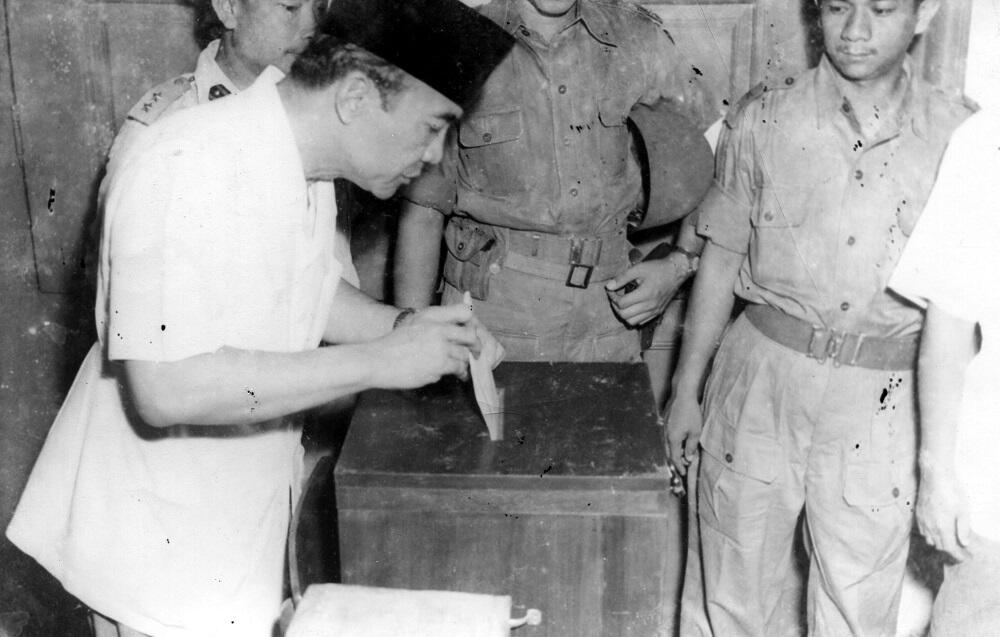
The first President of the Republic of Indonesia, Ir. Soekarno, in fact, already had a family background from two different ethnic groups. His father, Raden Soekemi Sosrodihardjo, was a teacher of Javanese blue blood, while his mother, Ida Ayu Nyoman Rai or who is familiarly called Nyoman Rai Srimben, was a Balinese woman. Thus, Soekarno was born into a family that combined Javanese and Balinese culture long before Indonesia became independent.
This misperception probably arises because people more often highlight Habibie’s life journey as a modern figure who is known to come from two different cultural backgrounds. Meanwhile, the origins of Soekarno’s family are often only briefly discussed in history lessons without an explanation of the ethnic background of his parents.
Soekarno’s father, Raden Soekemi Sosrodihardjo, was a teacher who came from Javanese nobility. He once taught in Bali during the Dutch East Indies government. It was on the island of Bali that he met Ida Ayu Nyoman Rai, a Balinese woman who came from a Brahmin family. The meeting then continued until the two of them got married and started a family.
The combination of Javanese and Balinese culture in the Soekarno family was an interesting aspect of his life journey. From his father, Soekarno received a strong education regarding discipline, enthusiasm for learning, and intellectual traditions. From his mother, he also learned about Balinese cultural values which are rich in philosophy, respect for tradition and spiritual life. Although Soekarno later grew up in Javanese society because most of his childhood was spent in East Java, the fact of his mother’s lineage remained an important part of his family’s identity.
Official documents from the National Archives of the Republic of Indonesia (ANRI) clearly record that Soekarno was the son of Raden Soekemi Sosrodihardjo and Ida Ayu Nyoman Rai. Her mother’s name is not just a personal name, but also shows her social identity as a Balinese woman. This strengthens that Bung Karno indeed has Balinese lineage from his mother’s side.
Meanwhile, BJ Habibie does have a family background that also comes from two large tribes in Indonesia. His father came from a Bugis family in South Sulawesi, while his mother came from a Javanese family in Yogyakarta. This cultural combination forms the Habibie family environment which is known to highly uphold education and national values.
However, in the chronology of the history of the Indonesian presidency, Habibie only served as the third president in 1998. In contrast, Soekarno became the first president since the Proclamation of Independence in 1945. Therefore, if the discussion is about “the first Indonesian president with mixed ethnic blood”, the answer is Ir. Soekarno, not BJ Habibie.
It should also be understood that the term “mixed” in this context refers to the ethnic origin of both parents, not different nationalities or races. Both the Javanese, Balinese and Bugis are part of the ethnic diversity of the Indonesian nation. Therefore, the term “mixed” is more accurately interpreted as a combination of cultural backgrounds between ethnic groups within one family.
Misunderstanding of historical facts like this is actually quite common. Much historical information is simplified from one generation to the next until it is finally accepted as truth without any examination of primary sources or official documents. In today’s digital era, information that is often repeated is not necessarily the most accurate information.
The official state archives actually provide a much clearer picture of the Soekarno family tree. ANRI explained in detail that Bung Karno’s father came from Java, while his mother was Ida Ayu Nyoman Rai who came from Bali. Similar information is also found in various national history publications and academic studies regarding Soekarno’s life.
This fact also shows that Indonesia’s diversity has been reflected since the beginning of Indonesia’s founding. Indonesia’s first president himself was the son of a family that combined two Indonesian cultures. This is in line with the idea of unity which Soekarno continued to fight for while leading the nation.
Interestingly, even though he has Balinese blood from his mother’s side, Soekarno is more widely known as a Javanese figure because of the environment in which he grew up, the language used daily, the education he took, and his political activities that developed on the island of Java. In anthropology, a person’s cultural identity is not only determined by lineage, but is also influenced by the socialization process, the environment in which they grow up, and their life experiences.
Therefore, it is not surprising that some people are not aware that Bung Karno also has Balinese lineage. In fact, this fact has long been recorded in various credible historical documents.
In conclusion, the assumption that BJ Habibie is the first president of the Republic of Indonesia with mixed ethnic blood is a mistake. Habibie did come from a Bugis father and a Javanese mother, but he was the third president of the Republic of Indonesia. Before that, Ir. Sukarno was born to a Javanese father, Raden Soekemi Sosrodihardjo, and a Balinese mother, Ida Ayu Nyoman Rai. Thus, when talking about the first Indonesian president who came from a family with two different ethnic backgrounds, the answer is Ir. Sukarno.
History often seems simple on the surface, but becomes much more interesting when traced through reliable sources. Therefore, before accepting a claim as fact, it is a good idea to double-check official documents and reliable historical literature. After all, history is not a matter of who repeats information the most, but rather who is supported by evidence.
Quote: