Hi everyone, Shalom Aleichem!
Good evening GanSist everyone! 
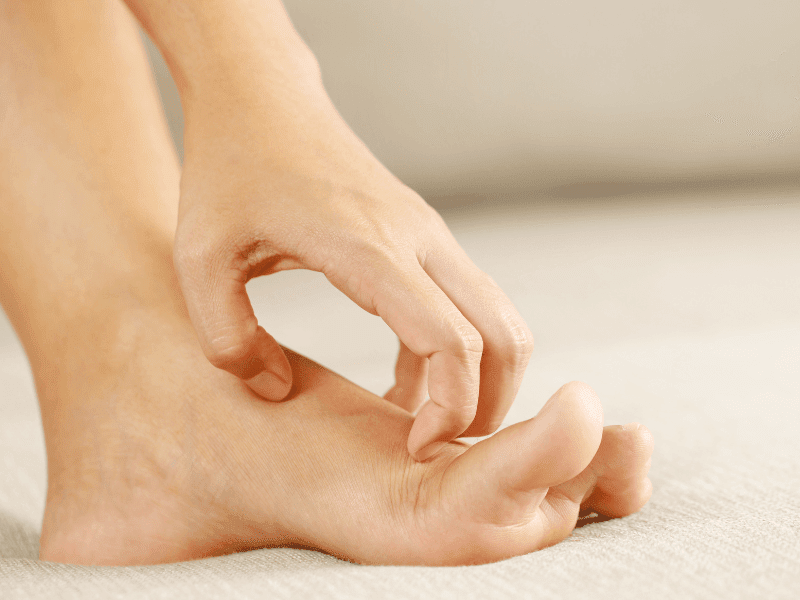
When they hear the term Madurese foot disease, some people may think that this disease is only found on Madura Island or is a disease typical of certain communities. However, this assumption is not correct. The disease known in the medical world as maduromycosis (mycetoma) is a chronic infectious disease that can attack anyone, especially those who often carry out barefoot activities in tropical and subtropical areas.
Even though it is a disease that has been known for a long time, maduromycosis is still a neglected tropical disease (neglected tropical disease or NTD). This means that this disease still receives less attention than other infectious diseases, even though its impact on the quality of life of sufferers is very large. Many sufferers experience permanent disability, lose their ability to work, and even have to undergo amputation if the disease has progressed very seriously.
So, what does Madurese foot disease actually look like? Why is this disease so dangerous? Let’s discuss it in more depth.
Quote:
What is Maduromycosis?
Maduromycosis or mycetoma is a chronic infection that attacks the skin, subcutaneous tissue, and bones. This disease develops slowly over years so it is often not noticed in the early stages.
The cause can be fungi (eumiketoma) or filamentous bacteria (actinomycetoma). Because this discussion focuses on maduromycosis due to fungus, this means that what is meant is eumiketoma, which is a systemic fungal infection that can spread to deeper tissue if left untreated.
This disease was first reported in the Madurai region, India. From the name of this area, the term emerged Madura footor Madurese foot disease. This name does not mean that this disease only exists in Madura or that it originates from Indonesia.
Quote:
Why is it called Madura Foot Disease?
About 70 to 80 percent of cases occur in the feet. This is because the feet are the part of the body that most often experiences direct contact with the ground, plant thorns, wood chips, or other sharp objects which are the entry point for fungi.
However, maduromycosis can also attack other parts of the body such as the hands, arms, calves, shoulders, back, even the head and face.
The location of the infection depends on the part of the body that is injured and exposed to the causative microorganism.
Quote:
How Do Fungi Enter the Body?
The fungus that causes maduromycosis actually lives freely in the environment, especially in soil, straw, rotting wood and plant thorns.
Infection usually starts when a person experiences a small puncture wound, for example due to stepping on broken glass on the ground, being hit by a splinter of wood, being scratched by a sharp thorn, or a wound resulting from agricultural activities.
The wound is often so small that it is ignored. However, it is precisely through this gap that the fungus enters the body’s tissues and begins to multiply slowly.
What is interesting and scary is that the development of this disease is very slow. It is not uncommon for someone to become aware of the disease after months or even years after the first injury occurred.
Quote:
Early Symptoms That Are Often Ignored
In the early stages, sufferers usually only find small lumps that do not feel painful. Because it is painless, many people think of it as just an ordinary boil or scar.
Over time, the lump will enlarge into a chronic swelling and then small channels appear in the skin (sinuses) which secrete fluid mixed with small granules called grains. Grain is a collection of fungal colonies which is one of the characteristic features of maduromycosis. The size of the grains is very small, but their presence helps doctors determine the cause of infection through laboratory examination.
Quote:
Three Typical Signs of Maduromycosis
Doctors usually recognize this disease through three main symptoms, namely chronic swelling, formation of sinus tracts, and grains coming out with fluid. These three signs are known as triad classic mycetoma.
Unfortunately, these three symptoms do not always appear together in the early stages so diagnosis is often delayed.
Quote:
Why is this disease so dangerous?
Many people think that skin diseases only attack the surface of the body. In maduromycosis, this assumption does not apply. Fungi can penetrate deeper into fat tissue, muscles, tendons, joints and even bones.
If the bone has become infected, the healing process becomes much more difficult. Bone damage can cause changes in the shape of the legs, walking problems, chronic pain, and even the threat of permanent disability and death.
In some very serious cases, amputation is the last option to prevent the spread of infection and save the patient’s life.
Quote:
Is This Disease Contagious?
The good news is that maduromycosis is not transmitted from human to human. This disease does not spread through touching, shaking hands, air, coughing, food and drink. Infection only occurs if the fungus enters the tissue directly through a wound.
Therefore, sufferers do not need to be shunned or isolated.
Quote:
Who is at High Risk?
The groups that most often experience maduromycosis include farmers, gardeners, shepherds, field workers, construction workers, and people who often walk barefoot.
This disease is often found in tropical areas with hot and dry climates, including several regions in Asia, Africa, Latin America and the Middle East.
Quote:
How Do Doctors Make a Diagnosis?
Diagnosis is not enough just to look at the wound. Doctors usually carry out several examinations, such as physical examination, grain sampling, microscopic examination, fungal culture, histopathological examination, ultrasound, x-rays, and even CT scans or MRI if it is suspected that bone has been affected.
Identification of fungal species is very important because each fungus can respond differently to antifungal drugs.
Quote:
Treatment Requires Patience
One of the biggest challenges in maduromycosis is the length of therapy. Treatment can last for months or even more than a year. Some antifungal drugs that are often used include:
1) Itraconazole
2) Ketoconazole (its use is now more limited due to certain side effects)
3) Posaconazole in certain cases.
4) Voriconazole for special indications
In extensive infections, doctors can combine drug therapy with surgery to remove infected tissue. The earlier the disease is discovered, the greater the chance of recovery without disability.
Quote:
Why Do Many Patients Come Late?
There are several reasons why sufferers are often late in seeking medical help. First, the disease progresses very slowly. Secondly, in the initial stages it is almost painless. Third, some people think that the lump is just an ordinary wound. Fourth, access to health services in several endemic areas is still limited.
As a result, patients only come when the swelling is very large and the bones are starting to break down.
Quote:
Prevention is Much Better than Cure
Because the infection originates from wounds exposed to soil, prevention is actually quite simple. Some steps that can be taken include using footwear when working outdoors, wearing gloves when gardening, properly cleaning even the smallest wounds, checking yourself immediately if a lump appears that doesn’t heal, and avoiding leaving open wounds exposed to the ground.
These simple steps can reduce the risk of fungus entering body tissues.
Quote:
Why is WHO Paying Special Attention?
In 2016, the World Health Organization added mycetoma to its list Neglected Tropical Diseases(NTD). This decision was taken because this disease causes a large health burden, but research, funding, and access to diagnosis and treatment are still limited in many developing countries.
Through this recognition, it is hoped that more research will be carried out to find faster diagnosis methods, more effective therapy, and prevention strategies that can be applied in endemic areas.
Quote:
CLOSURE
Maduromycosis is not just an ordinary skin disease. This disease is a chronic infection that can attack deep tissue to the bones, develops slowly without noticeable symptoms, and has the potential to cause permanent disability or death if treated too late.
Even though it is known as “Madurese foot disease”, this disease does not originate from Madura Island and does not only attack people in that area. This name is a historical term originating from the Madurai area in India.
The good news is that this disease can be prevented with simple steps, such as using footwear, keeping wounds clean, and immediately checking lumps that don’t heal. Public awareness of early symptoms is the main key so that a diagnosis can be made more quickly so that treatment can provide better results.
Despite its simple-sounding name, maduromycosis is a tropical disease that you should be wary of. Nature does provide many useful things, but it also harbors microorganisms that don’t care whether humans are in a rush to the rice fields or just lazy about wearing sandals. Mold knows no mercy, only opportunity.
Quote:
SOURCE
Bonifaz, A., Tirado-Sánchez, A., Calderón, L., Saúl, A., Araiza, J., Hernández, M., González, GM, & Ponce, RM (2018). Mycetoma: Experience of 482 cases in a single center in Mexico. PLOS Neglected Tropical Diseases, 12(8)e0006890.
Centers for Disease Control and Prevention. (2024). Mycetoma. (url)https://www.cdc.gov(/url)
Emery, D., Denning, D. W., & others. (2022). The global distribution of actinomycetoma and eumycetoma. PLOS Neglected Tropical Diseases, 16(5)e0010382.
World Health Organization. (2024). Mycetoma. (url)https://www.who.int/news-room/fact-sheets/detail/mycetoma(/url)
Zijlstra, E. E., van de Sande, W. W. J., Welsh, O., Mahgoub, E. S., Goodfellow, M., & Fahal, A. H. (2016). Mycetoma: A unique neglected tropical disease. The Lancet Infectious Diseases, 16(1)100-112.