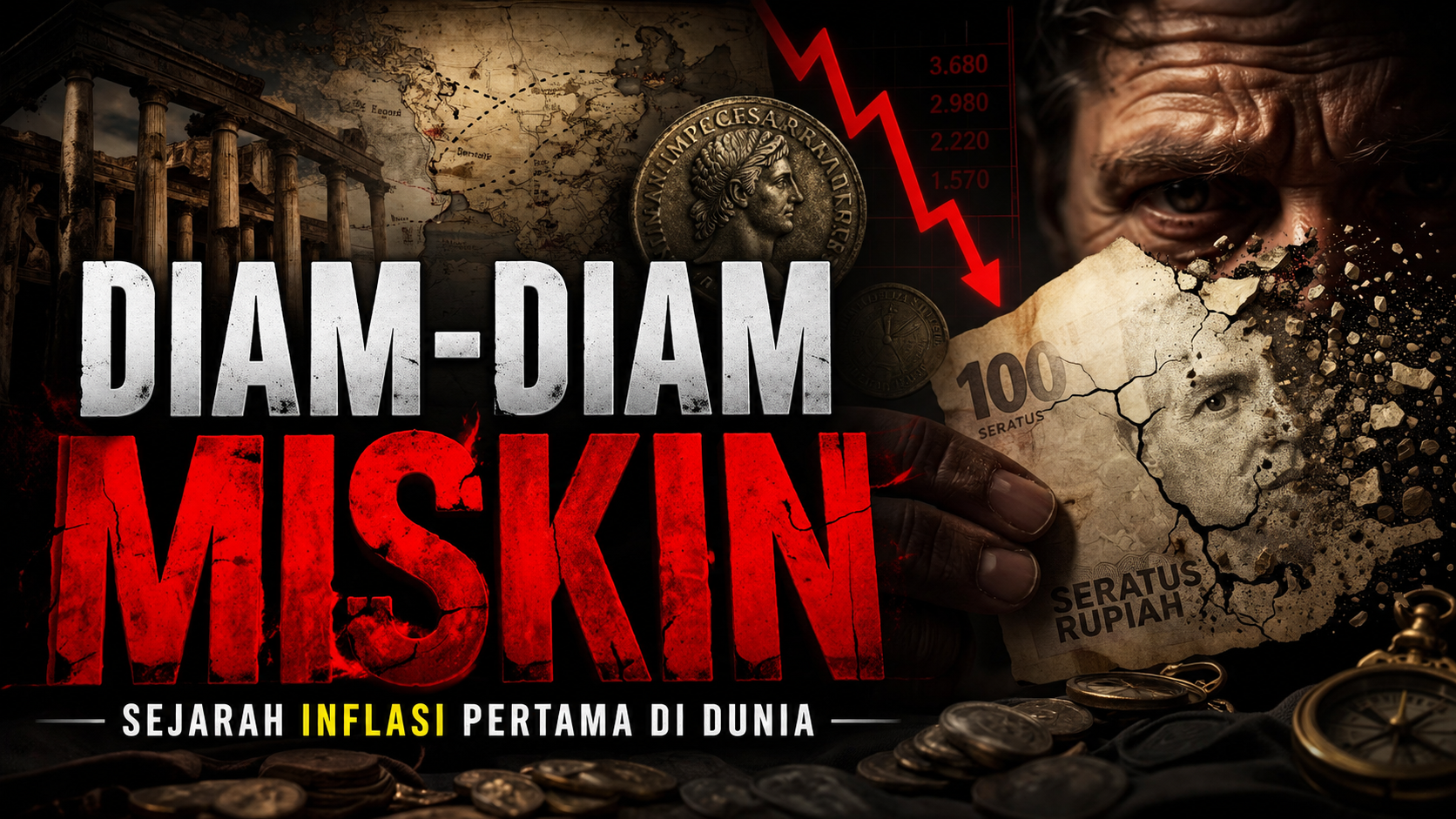
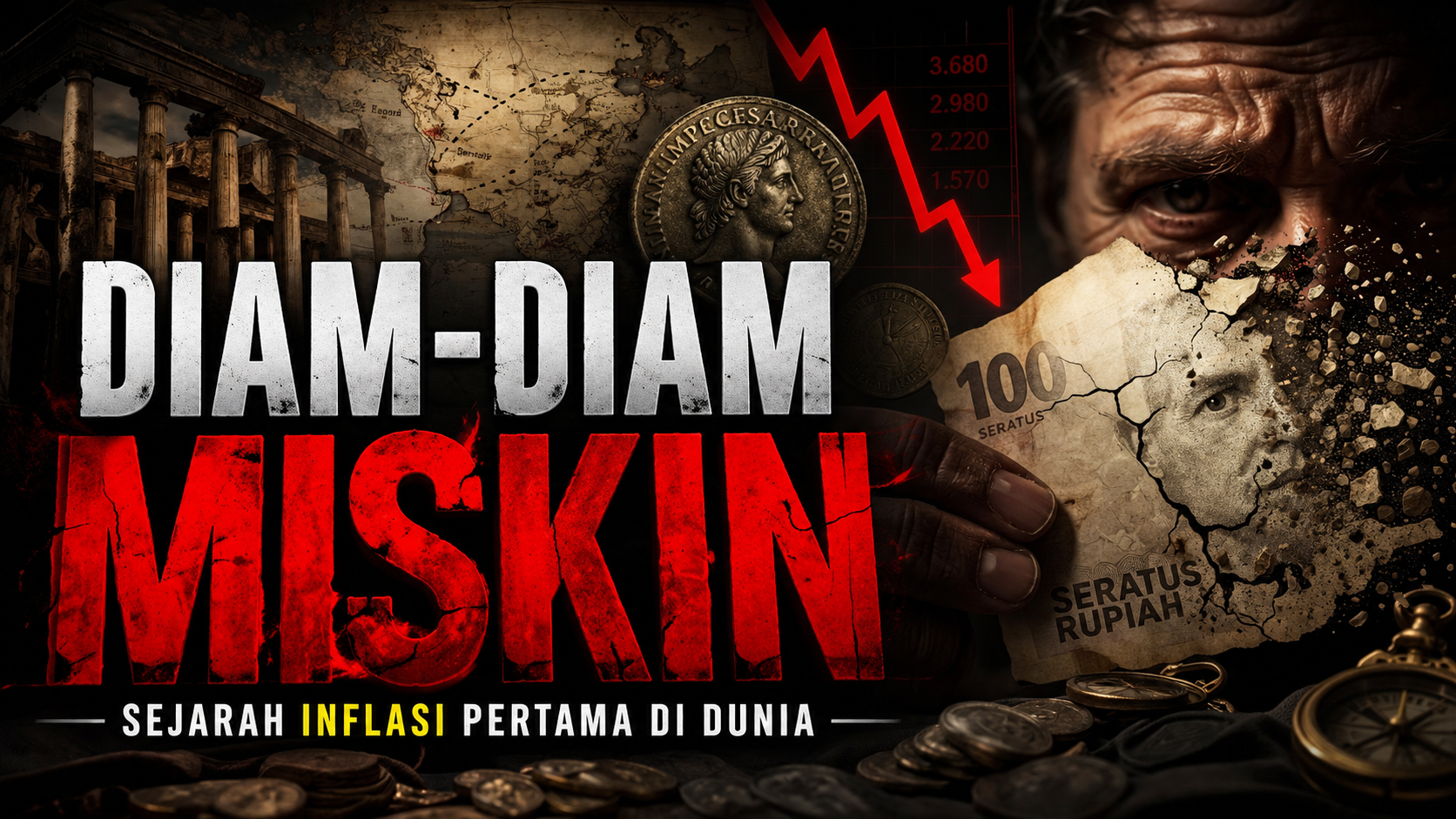
So far, we often think that inflation is a modern economic problem. Many people think that inflation only appeared after the existence of a central bank or after the government started printing banknotes.
However, the reality is not that simple.
Long before paper money was invented, even when humans still used gold and silver coins, practices that triggered inflation were already occurring.
One example is when several kingdoms began to reduce the gold or silver content in coins. The shape and nominal remain the same, but the value of the metal has been greatly reduced. At first glance, it looks like nothing has changed, but people’s purchasing power is slowly decreasing.
If you think about it, this pattern still feels relevant today. It’s just that the shape has changed.
Now we no longer reduce the gold content in coins, but the amount of money in circulation can grow much faster than the growth of goods and services. As a result, prices slowly rise and the value of the money we hold continues to decline from year to year.
What makes me even more curious is one question:
Is inflation something that cannot be avoided, or is it actually just the result of human policies over thousands of years?
After reading several historical references, it turns out that the journey of money from the barter system, metal coins, paper money, to the modern fiat system has a very long story. Many historical events turned out to be the cause of the birth of the world’s first inflation.
I then summarized everything in one video to make it easier to understand, starting from the history of the birth of money, the emergence of inflation, to the reasons why money almost always loses its value.
If anyone is interested in discussing economic history from a simpler point of view, the video can be watched here:
What do you guys think here?
Is inflation really needed to keep the economy running, or is the current system making people continue to lose purchasing power without really realizing it?