 Image Source:Artificial Intelligence
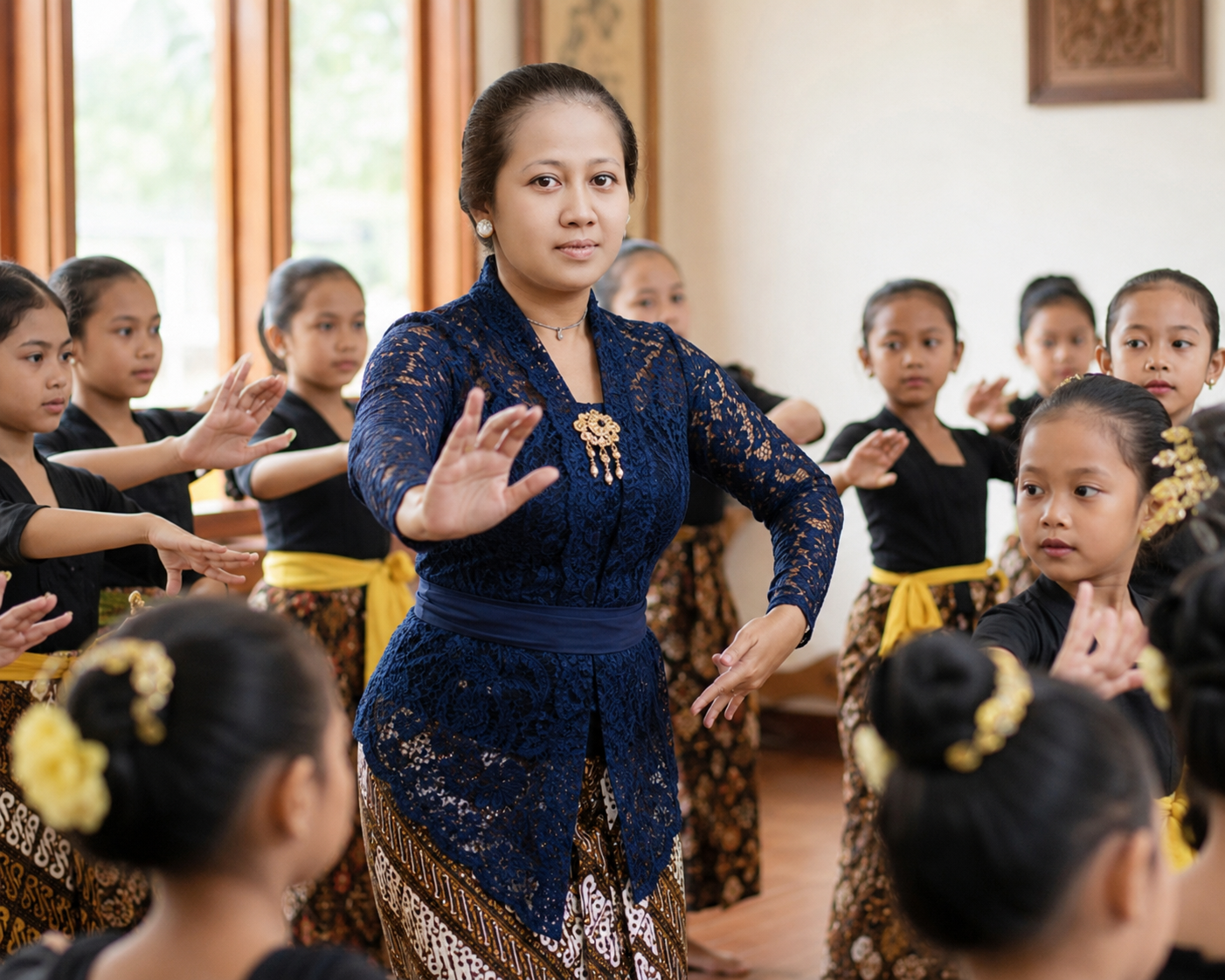
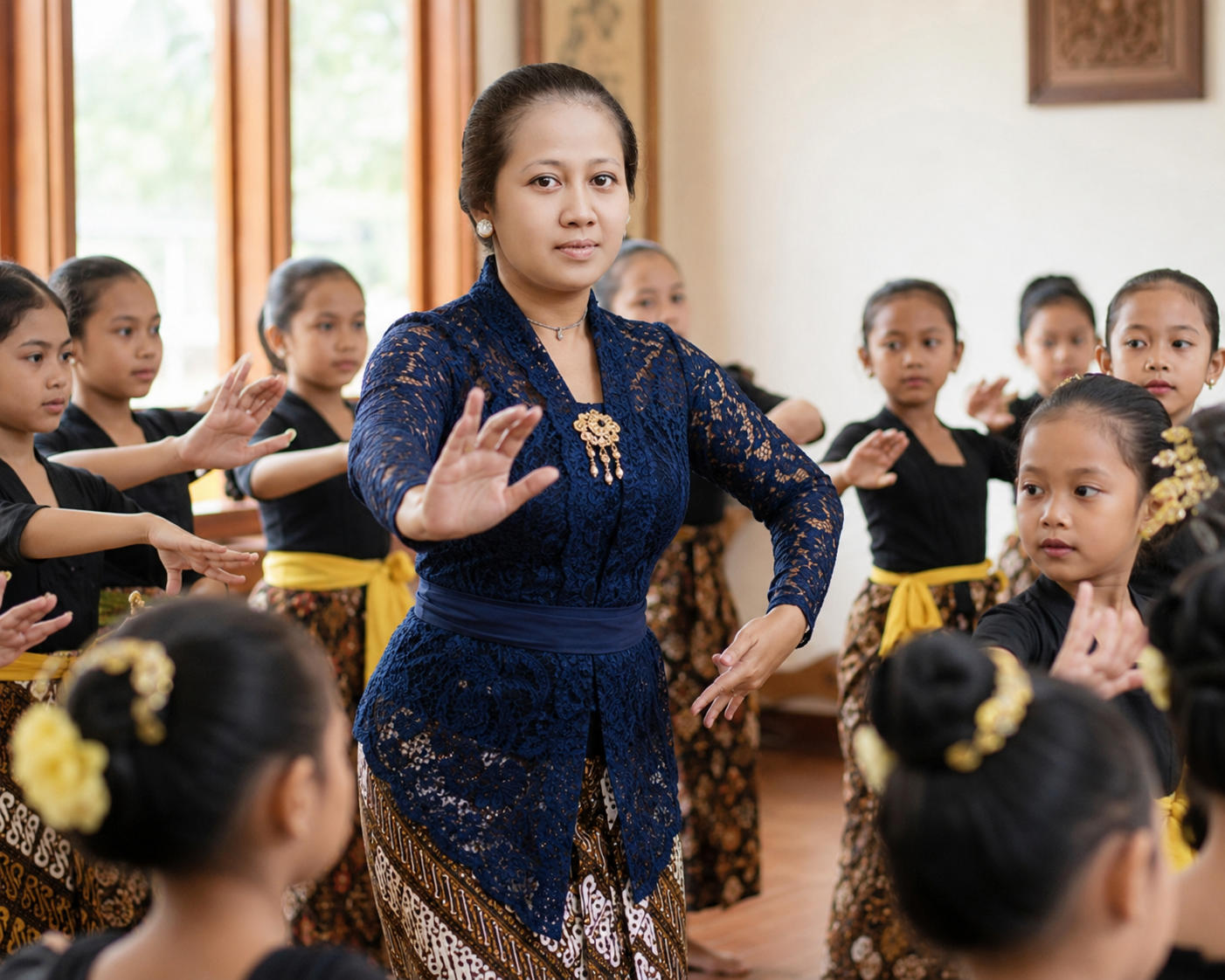
 (illustration of RA Kartini as a Javanese dance teacher)
Hi everyone, Shalom Aleichem!
Good evening GanSist everyone! 
In several previous discussions, the Superwoman Series continued to raise the theme of how women can grow into strong individuals physically, mentally, socially and spiritually. Starting from managing finances, building competence, maintaining health, to learning to face failure, everything leads to one goal, namely forming women who are able to stand firmly in facing various life challenges.
On social media, the impression often appears that the measure of a woman’s happiness is whether she has a partner or not. There is quite a bit of content that depicts as if life is only considered complete when someone is in a romantic relationship.
In fact, psychology shows that the well-being of life (well-being) is built by many factors. Healthy relationships can indeed be a source of happiness, but not the only one. Physical health, financial stability, positive social relationships, a sense of purpose in life, and the ability to develop oneself play an equally important role. This means that a woman can still live a life that is full of meaning, productive and happy, whether she is single or when she one day starts a family.
As part of Superwoman Seriesthe 148th, here are 8 things that young women should be grateful for besides having a partner.
Quote:
1. Independent and have a stable income
The ability to generate your own income is a very valuable form of independence. Being independent doesn’t mean refusing help from others or feeling like you have to do everything yourself. Being independent means having the ability to meet basic needs, making responsible decisions, and not being completely dependent on other people in living your life.
A stable income also provides room to plan better for the future. A person can save, help parents, develop skills, invest in education, or support social causes.
Financial independence is also often associated with increased self-confidence because a person feels they have greater control over their life.
Quote:
2. Have emergency savings equal to three times your monthly income
Life doesn’t always go according to plan. There are times when someone loses a job, experiences an emergency, or faces unexpected expenses.
Therefore, having emergency savings is a form of readiness to face uncertainty. Many financial planners recommend that a person have an emergency fund that can cover several months of living expenses. The amount can of course be adjusted to each condition.
Emergency savings does not mean expecting disaster to come. On the other hand, emergency savings provide peace of mind knowing that there are reserves that can be used when really needed. This sense of security is often far more valuable than purchasing items that only provide instant gratification.
Quote:
3. Have Health Insurance
Nobody expects to get sick. However, everyone has the possibility of experiencing health problems.
Health insurance is not a sign that someone is pessimistic about the future. In contrast, insurance is a form of risk planning.
The cost of health services can be a huge burden if not prepared properly. With appropriate protection, a person can focus more on the recovery process without being overly burdened by financial worries.
Of course, insurance is no substitute for a healthy lifestyle. Exercise, a balanced diet, adequate sleep, and medical examinations as needed remain the main basis for maintaining health.
Quote:
4. Gifted with the Talent to Teach Others
Not everyone has the ability to explain things easily. Therefore, if you have the talent to teach, accompany or guide others, this is a very valuable gift.
Teaching is not just a teacher’s job. Teaching younger siblings to study, guiding friends, training community members, sharing skills in playing musical instruments, teaching foreign languages, are all forms of education.
When knowledge is shared, the benefits do not stop with just one person. This knowledge can continue to develop through the people who receive it. This is a form of social contribution that has a long-term impact.
Quote:
5. Gifted with the discipline to exercise regularly
Exercise is often seen as just a way to maintain body shape. In fact, the benefits are much wider. Regular physical activity helps maintain heart, bone, muscle and mental health.
More importantly, sport trains discipline. Not everyone can afford to wake up early to walk. Not everyone is able to continue training when the weather is less favorable. However, the discipline built through sport is often carried over to other areas of life, such as work, education and time management.
Small habits carried out consistently often produce much greater results than enthusiasm that only appears occasionally.
Quote:
6. Have a Healthy Friends Club
Humans are social creatures. Therefore, the friendship environment has a big influence on the way you think and act.
A healthy friendship club doesn’t mean all members are perfect. The most important thing is that they encourage each other to develop.
Good friends will be happy when we succeed. They also dare to remind us when we make mistakes.
On the other hand, an environment filled with gossip, bullying, or pressure to follow an unhealthy lifestyle can actually hinder personal development.
Having a few genuine friends is often more valuable than being known by many people but not having deep relationships.
Quote:
7. Have a cheap or free hobby as a positive escape
Everyone needs time to rest from routine. However, how you spend your free time also determines the quality of life.
Cheap or even free hobbies can be a sustainable source of happiness, for example reading books from the library, walking, writing, drawing, gardening, practicing a musical instrument that you already own, learning a foreign language through free learning resources, or cooking using ingredients available at home. Hobbies like this help reduce stress without having to spend a lot of money.
In addition, some hobbies can also develop into useful skills or even become a source of income in the future.
Quote:
8. Having God as a Place of Worship and Searching for the Meaning of Life
Apart from health, work and social relationships, many studies show that spiritual life can also be a source of psychological strength for many people.
For Indonesian women, worship is not just a routine, but an opportunity to reflect on life, be grateful, improve oneself, and gain inner peace. A healthy spiritual life also encourages a person to respect others, maintain integrity, and have hope when facing difficulties.
Although the form of worship differs according to each person’s beliefs, having a life orientation that goes beyond one’s own interests often helps someone live a more meaningful life.
Quote:
CLOSURE
As part of Superwoman Series #148, this discussion reminds us that a woman’s happiness is not only determined by the status of her romantic relationship.
A healthy relationship is indeed a gift to be grateful for. However, there are many other things that are no less important. Financial independence. Emergency fund. Health protection. Teaching ability. Exercise discipline. Healthy friendship environment. A constructive hobby. As well as a spiritual life that gives direction and meaning. All of this is the basis that helps someone live life calmer, more confident, and better prepared to face challenges.
Strong women are not those who have perfect lives. Strong women are those who are able to appreciate every gift they have, continue to develop their own potential, and use these abilities to bring benefits to their family, community and the surrounding environment.
Because gratitude does not make someone stop growing. On the other hand, gratitude gives strength to go further without constantly feeling less than others.
Quote:
SOURCE
Y*ut*be’s account is one hundred percent male (but adapted to a female style).
American Psychological Association. (2023). Building Your Resilience. American Psychological Association.
Diener, E., Oishi, S., & Tay, L. (2018). Advances in subjective well-being research. Nature Human Behaviour, 2(4)253-260.
Koenig, H. G. (2012). Religion, Spirituality, and Health: The Research and Clinical Implications. ISRN Psychiatry, 2012278730.
Lusardi, A. (2019). Financial literacy and the need for financial education. Swiss Journal of Economics and Statistics, 155(1).
World Health Organization. (2020). WHO Guidelines on Physical Activity and Sedentary Behaviour. World Health Organization.
@hahahaha@salamsehaat @jokingwet