 Image Source:Artificial Intelligence
Hi everyone, Shalom Aleichem! 
Good morning all of you! 
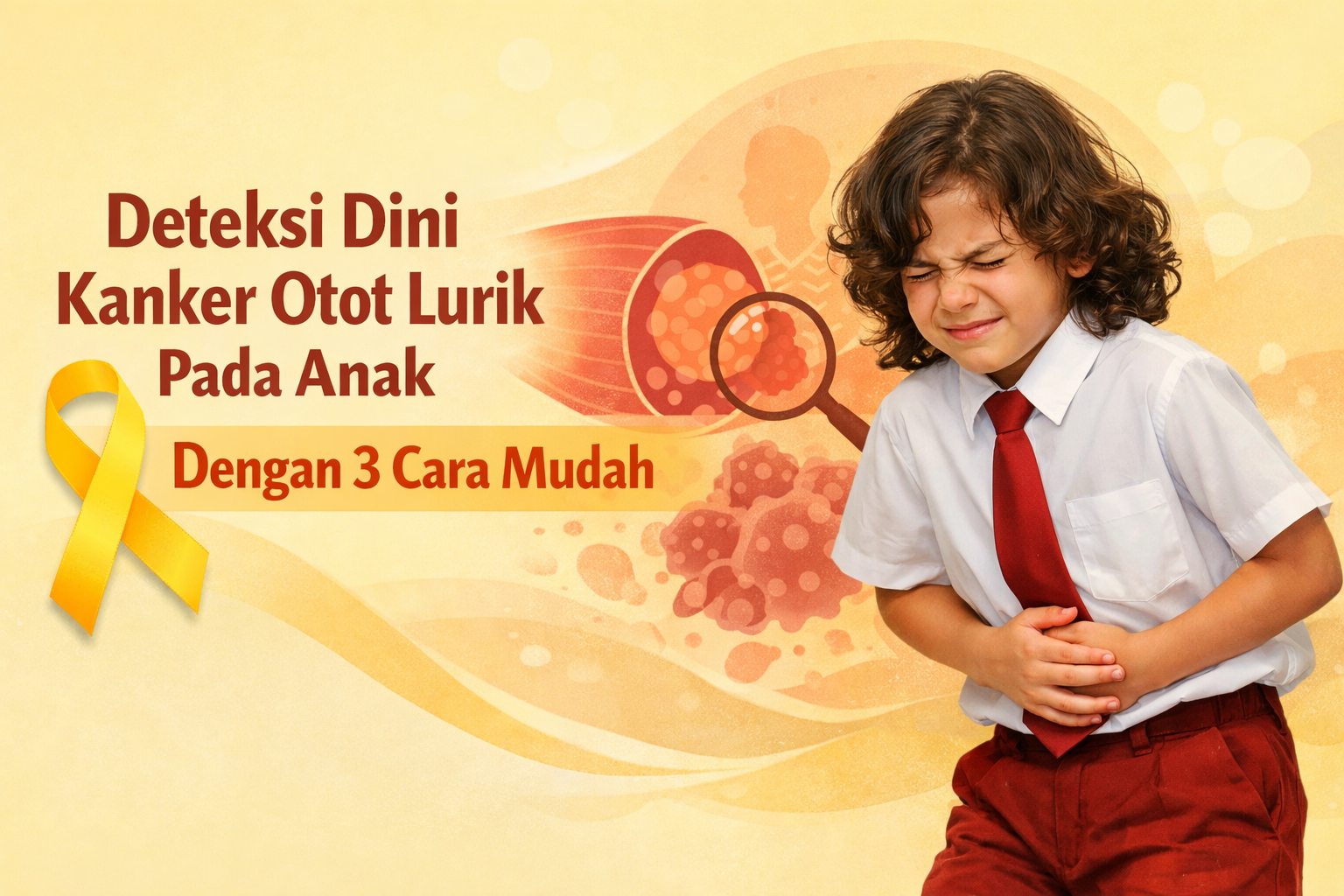
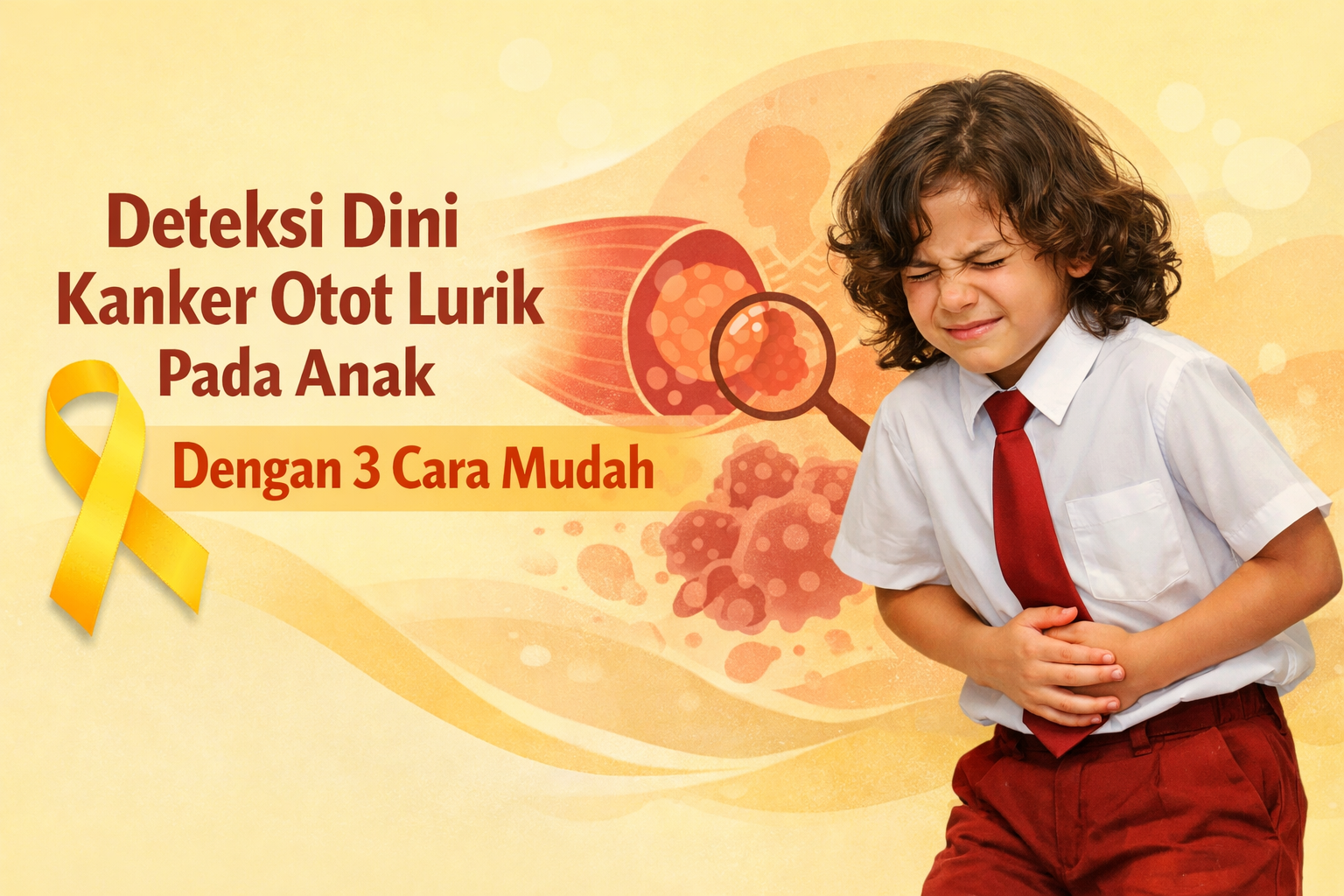
On this very valuable opportunity, I, Miss Rora, will discuss early detection of striated muscle cancer in children  .
.
In commemoration Sarcoma Awareness Month on July 2026this thread was created to share important information that is often overlooked regarding a rare type of cancer in children, namely rhabdomyosarcoma.
This thread is organized in the form of a popular article. The hope is that this thread can increase our awareness of early symptoms which are often considered trivial.
Quote:
What Is Rhabdomyosarcoma?
Rhabdomyosarcoma is a malignant cancer that originates from the cells that form striated muscle (skeletal muscle). This disease most often occurs in children and adolescents, although it can also be found in adults.
According to medical literature, rhabdomyosarcoma can appear in various parts of the body, especially:
1. Face and neck (including nasal cavity and sinuses)
2. Genitals (bladder and vagina)
3. Limbs (arms and legs)
The main problem with this cancer is that the symptoms often resemble minor everyday complaints. As a result, many cases of this cancer are only detected at an advanced stage.
It is important to know that rhabdomyosarcoma cannot be prevented with certainty, but can be detected early through recognizing early symptoms.
Quote:
Why is Early Detection Important?
Early detection plays a major role in increasing the chances of successful therapy, reducing the risk of cancer spreading (metastasis), and improving the patient’s quality of life.
Therefore, recognizing the slightest early signs is a very important step.
Quote:
3 Easy Ways to Detect Rhabdomyosarcoma in Children Early
Quote:
1. Don’t underestimate repeated nosebleeds in children
Nosebleeds (epistaxis) are a common condition in children, especially boys.
Biologically, there is a hypothesis that boys experience nosebleeds more often due to genetic factors, especially the influence of the gene encoding male sex, namely the SRY gene (Sex-determining Region Y). This gene is thought to play a role in increasing the density of blood vessels in the nasal septum area.
Additionally, nasal capillaries in boys tend to be closer to the surface and more susceptible to tearing due to minor injuries.
However, this is not a reason to ignore nosebleeds, especially if they occur repeatedly.
Be alert if nosebleeds occur repeatedly over a short period of time, there is no clear cause, the blood volume is quite large, and are accompanied by a blocked or painful nose.
In rhabdomyosarcoma in the face and neck area, nosebleeds can occur due to tumors that damage blood vessel tissue.
In conclusion, repeated nosebleeds that are too frequent cannot be considered normal. If your child’s nosebleed is too unusual, immediately have your child checked by a doctor.
Quote:
2. Don’t underestimate a prolonged blocked nose
A stuffy nose is often considered a symptom of the common cold. However, under normal conditions, nasal congestion will usually improve within a few days. What you need to be careful of is if the symptoms of a blocked nose last a long time and do not improve.
The danger signs are:
1. Blockage only on one side of the nose
2. Does not improve with regular medication
3. Accompanied by nosebleeds
4. There is facial swelling
5. There is a smell disorder
Rhabdomyosarcoma in the nasal cavity or sinuses can cause obstruction due to the growth of the tumor mass. Because the symptoms resemble sinusitis, this condition is often misdiagnosed in its early stages.
Further examinations that may be needed are nasal endoscopy and CT scan or MRI.
In conclusion, nasal congestion in children for a long time is not a common flu, so don’t let it go.
Quote:
3. Don’t underestimate the first menstruation without signs of puberty
In girls, one sign that is rarely noticed is bleeding which is thought to be the first menstruation.
In fact, normally, the first menstruation (menarche) is preceded by signs of puberty, such as:
1. Breast enlargement
2. Hair growth in the armpits and private areas
3. Change in hip width
Be alert if bleeding in girls occurs without signs of puberty, occurs at an early age (>9 years), is accompanied by abnormal vaginal discharge, and there are lumps in the genital area.
In some cases, rhabdomyosarcoma of the vagina or cervix can cause bleeding that resembles menstruation.
This is often misinterpreted as early puberty, so diagnosis is delayed.
In conclusion, not all bleeding from below is menstruation, so medical evaluation is needed.
Quote:
CONCLUSION
Three simple symptoms that are often considered trivial can actually be early signs of serious illness, namely:
1. Recurrent nosebleeds
2. Prolonged nasal congestion
3. Abnormal bleeding in girls
Not all cases mean cancer, but ignoring the symptoms can be fatal.
Quote:
CLOSURE
Gansist everyone, rhabdomyosarcoma is indeed a rare disease and cannot be completely prevented. However, by increasing awareness of early symptoms, we can help with earlier detection and increase the chances of recovery.
In the momentum of Sarcoma Awareness Month, let’s be more concerned about the health of the children around us.
Remember, it’s better to have something checked that turns out to be harmless, than to find out too late about a serious condition.
Hopefully this thread is useful and can broaden our insight  .
.
Thank you for reading until the end  .
.
Quote:
SOURCE
American Cancer Society. (2023). Rhabdomyosarcoma. American Cancer Society. https://www.cancer.org/cancer/rhabdo…yosarcoma.html
National Cancer Institute. (2024). Childhood Rhabdomyosarcoma Treatment (PDQ®)–Patient Version. National Institutes of Health. https://www.cancer.gov/types/soft-ti…-treatment-pdq
Skapek, S. X., Ferrari, A., Gupta, A. A., Lupo, P. J., Butler, E., Shipley, J., Barr, F. G., & Hawkins, D. S. (2019). Rhabdomyosarcoma. Nature Reviews Disease Primers, 5(1)1–19.
World Health Organization. (2020). WHO classification of tumours: Soft tissue and bone tumours(5th ed.). International Agency for Research on Cancer.
Pappo , AS , & Shapiro , DN (2020). Rhabdomyosarcoma. Available in RM Kliegman et al. (Eds.), Nelson Textbook of Pediatrics (21st ed.). Elsevier.
@vale79791 @strangerfdotnet @jokingwet