Hi everyone, Shalom Aleichem!
Good afternoon GanSist everyone! 
Term indigo is already very popular in Indonesia. Not a few people associate it with the ability to see supernatural beings, communicate with spirits, or feel the presence of something that most people cannot perceive. Television shows, films and social media have also strengthened the opinion that indigo is synonymous with the supernatural world.
However, if viewed from a scientific perspective, the discussion about indigo is actually much more interesting than just the issue of ghosts. Science does not have an official definition of an “indigo person” as a person who is able to see supernatural beings. However, neuroscience, genetics, psychology and physiology actually show that every human being has different sensory abilities. In some people, these differences can be so striking that they are able to perceive stimuli that other people are not aware of.
This is what often gives the impression that someone has a “sixth sense”, even though the explanation can come from real biological mechanisms.
Quote:
Humans Don’t Only Have 5 Senses
Since we were in school, we have been taught that humans have 5 senses, namely eyes, ears, nose, tongue and skin. In fact, this concept is a simplification to make learning easier.
In modern medical science, humans have far more receptor systems whose job is to detect various changes inside and outside the body.
Some of them are:
1) Proprioceptors, namely receptors that tell the position of body parts without needing to look at them.
2) Vestibular, namely the balance system located in the inner ear so that humans can stand, walk and maintain body orientation.
3) Nociceptors, namely receptors that detect pain.
4) Thermoreceptors, namely receptors that detect heat and cold.
5) Chemoreceptors, namely receptors that detect changes in levels of oxygen, carbon dioxide and various chemical substances.
6) Baroreceptors, namely receptors that monitor blood pressure.
This means that the term “five senses” does not actually fully describe the complexity of the human nervous system. Our bodies are filled with millions of receptors with very diverse functions.
Quote:
Do Humans Have Geomagnetic Receptors?
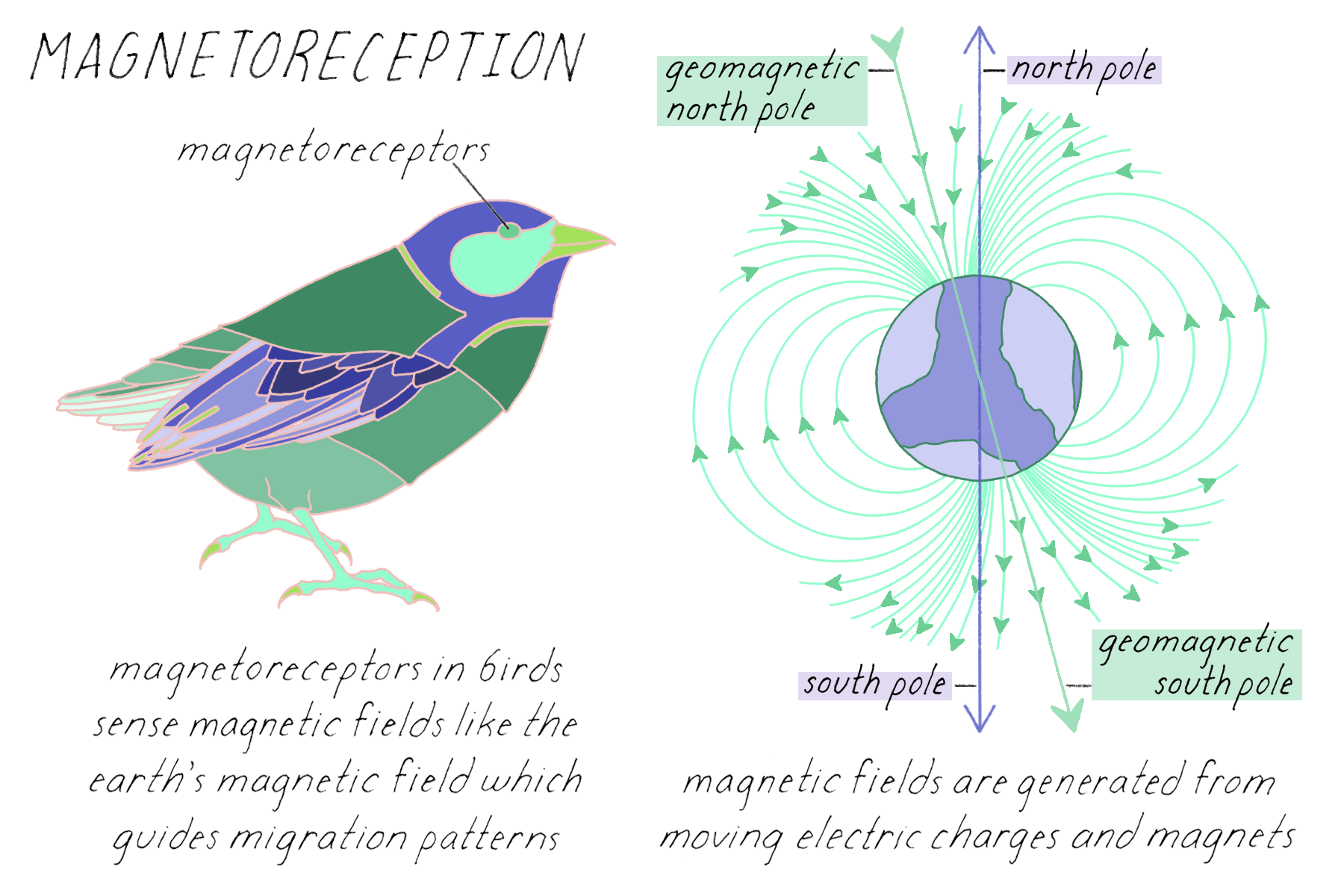
This question is still an interesting research topic. Many animals are known to be able to detect the Earth’s magnetic field. Migratory birds, sea turtles, salmon and bees use this ability to determine the direction of their journey.
What about humans? A number of studies show that the human brain also responds to changes in the Earth’s magnetic field, although this response is not consciously realized. Research led by geophysicists and neuroscientists shows changes in brain waves when participants are exposed to changing magnetic fields under controlled laboratory conditions.
These findings cannot yet be concluded as evidence that humans have a “biological compass” that functions as it does in animals. However, the results suggest that the human nervous system may still retain some sensitivity to magnetic fields. In other words, the possibility of a magnetoreception mechanism in humans is still being researched and cannot yet be used as a basis for explaining supernatural phenomena.
Quote:
Not Everyone Has the Same Sensory Sensitivity
Genetics makes each human have different sensory abilities. One of the most famous examples is tetrachromacy.
Most humans have three types of cone cells in the retina, so they are called people with trichromacy (normal). However, a small percentage of humans, especially women (XX chromosomes, where the X chromosome contains the gene coding for cone cell protein), have 4 types of cone cells, so they are called people with tetrachromasis. This ability allows them to distinguish millions of additional colors that appear the same to most people.
Imagine two fabrics that we think are identical in color. Someone with tetrachromacy may immediately say that the two are different because they actually see the difference. This phenomenon is not a lie, but has been documented in various vision studies.
Another example is the ability to hear high frequency sounds. Some people, especially toddlers, have a wider hearing range than the average population. They can hear electronic sounds, the hum of certain devices, or high-frequency tones that others are completely unaware of. On the other hand, there are also people who are very sensitive to touch, light, aroma, or changes in temperature. These are all normal biological variations.
Quote:
The Brain Is a Pattern Recognition Machine
In addition to sensory abilities, the human brain has an extraordinary ability to recognize patterns. This ability helped humans survive over millions of years of evolution. By quickly recognizing suspicious faces, voices or movements, the chances of survival are greater.
However, this ability has consequences. Sometimes, the brain finds patterns that don’t actually exist. This phenomenon is known as pareidolia.
The simplest example is seeing faces in clouds, rocks, tree trunks, or the surface of the moon. In fact, the object has no face at all. Likewise, when someone thinks they see a certain figure in a dark place. In conditions of minimal lighting, the brain tries to “complete” less clear visual information so that certain interpretations emerge. This phenomenon is a normal neurological process and is experienced by almost everyone.
Quote:
The Role of Perception and Experience
Human perception is not only formed by information entering through the senses. Life experiences, culture, beliefs, emotions and expectations also influence how the brain interprets stimuli.
For example, two people hear the same sound at night. Someone might think of it as the sound of the wind. Others consider it a sign of the presence of supernatural beings. These differences are not solely caused by the senses, but also by the interpretation process in the brain.
For this reason, psychology always distinguishes between sensation (information received by the senses) and perception (the way the brain interprets that information).
Quote:
Highly Sensitive People Do Exist
Science also recognizes the term people with high sensory sensitivity. Some people find it easier to notice changes in facial expressions, tone of voice, aroma, room temperature, or small changes in the surrounding environment. This kind of ability often makes a person appear to have very sharp intuition. In fact, it could be that his brain simply processes a greater amount of sensory information than the average person.
In psychology, the ability to read social cues very well can also make someone seem like they are able to “know” what is going to happen or what other people are feeling. In fact, the person is piecing together many small clues subconsciously.
Quote:
Have All Indigo Phenomena Been Explained by Science?
The answer is not yet. Science works on evidence that can be tested, repeated, and verified. Until now, there is no scientific evidence that can show that humans are able to see supernatural beings using known biological mechanisms.
However, this does not mean that all of a person’s personal experiences are automatically considered lies.
Science recognizes that subjective experiences are real to the person experiencing them. The question is the cause of this experience.
In many cases, the cause may be sensory sensitivity, perceptual illusions, neurological processes, psychological conditions, or a combination of factors that are still being researched.
Therefore, the scientific approach always tries to look for explanations that can be tested before drawing conclusions.
Quote:
CONCLUSION
The discussion about indigo becomes much more interesting when viewed from a scientific perspective. The human body apparently has a sensory system that is much more complex than the concept of the 5 senses usually taught in school. Apart from vision, hearing, smell, taste and touch receptors, humans also have various other receptors, such as the balance system, proprioceptors, nociceptors, thermoreceptors, and the possibility of sensitivity to magnetic fields which is still being researched.
On the other hand, genetic factors can make someone have sensory abilities that most people do not have, for example tetrachromacy which allows seeing a wider variety of colors or a wider hearing range for high frequencies. Coupled with the brain’s ability to recognize patterns and interpret various stimuli from the environment, various experiences emerge that are sometimes considered extraordinary.
Thus, discussions about indigo do not always have to be directed at ghost stories or mystical matters. Instead, neuroscience, genetics, physiology, and psychology show that the human body still retains many capabilities that are not yet fully understood. It turns out that the human biological world is amazing enough without always having to involve supernatural explanations.
Quote:
SOURCE
Churchland, P. S., & Sejnowski, T. J. (2016). The Computational Brain. WITH Press.
Goldstein, E. B. (2021). Sensation and Perception(11th ed.). Cengage Learning.
Kandel, E. R., Koester, J. D., Mack, S. H., & Siegelbaum, S. A. (2021). Principles of Neural Science (6th ed.). McGraw-Hill.
Lohmann, K. J. (2010). Q&A: Animal behaviour. Magnetic-field perception. Nature, 464(7292)1140-1142.
Mouritsen, H. (2018). Long-distance navigation and magnetoreception in migratory animals. Nature, 558(7708)50-59.
Murphy, G. (2019). How We Sense the World: The Human Body and Its Amazing Senses. Princeton University Press.
Nordby, K., Sharpe, L. T., & Stockman, A. (1998). L-cone pigment spectra and the potential for tetrachromacy. Vision Research, 38(21)3359-3365.
Wang, C. X., Hilburn, I. A., Wu, D. A., Mizuhara, Y., Cousté, C. P., Abrahams, J. N., Bernstein, S. E., Matani, A., Shimojo, S., & Kirschvink, J. L. (2019). Transduction of the geomagnetic field as evidenced from alpha-band activity in the human brain. eNeuro, 6(2)ENEURO.0483-18.2019.
Wolfe, J. M., Kluender, K. R., Levi, D. M., Bartoshuk, L. M., Herz, R. S., Klatzky, R. L., Lederman, S. J., Merfeld, D. M., & Merabet, L. B. (2020). Sensation & Perception (6th ed.). Oxford University Press.